

Products


Effects Of Lighting Technology On Pig Welfare And Performance
• healthier, more active horses
• more opportunities for better visual contact
• better fertility
• thinner winter coat
• no ‘light circles’ in indoor riding arenas
Send Inquiry
Product Introduction
Shenzhen Benwei Lighting Technology Co., Ltd. is one of the best manufacturers and suppliers of effects of lighting technology on pig welfare and performance in China. Welcome to buy durable products for sale here and get pricelist from our factory. All customized products are with high quality and competitive price.
Can Artificial Lighting Technology Improve Pig Welfare and Performance?
Although it is generally overlooked, lighting is an important part of pig management. For example, light can directly influence the pig’s biological clock, such as the biorhythm, social behavior, and overall activity. The right lighting technology solution depends on several factors, including spectrum, distribution, flicker, light intensity, and photoperiod.
For example, a light period of more than 16 hours increases feed intake, growth, and health of young and growing pigs compared to the 8 hours per day. On the other hand, light intensity and spectrum play an important role in pig welfare by affecting behavioral rhythms and emotional states.
Introduce to Various Aspects of Lighting Technology
Light Spectrum
The light spectrum is the visible part of the electromagnetic spectrum. Pigs have a visible spectral range of 380-694nm with peak wavelengths at 439nm (blue) and 556nm (green). On the other hand, there is a difference between spectral sensitivity based on cone sensitivity and spectral sensitivity based on behavioral responses. Therefore, when considering improving pig welfare and performance, it is best to look at spectral sensitivity based on behavioral responses. With the right light solution according to the pig's visible spectrum, the pig's vision will improve, resulting in better behavior, better use of the environment, and less stress.
Light Distribution
The light distribution shows how evenly the light is distributed in the pig house. When the light is evenly distributed, there are no highlights and shadows. Pigs displayed an aversion to highlights, shadows, blacked-out patterns, and white-painted patterns. For example, pigs may back away when shadows or bright spots fall on the sidewalk or fence. These behavioral responses are caused partly by their instincts and rearing environment. Therefore, lighting solutions must provide uniform light distribution to prevent highlights and shadows.
Light Flicker
Flicker is a rapid change in the light output of a lamp. This rapid change in light output can be perceived consciously and unconsciously. Pigs perceive light flickering similarly to humans, which means pigs will notice a similar level of flickering. In humans, flickering can cause headaches, eyestrain, and poor concentration. It could mean that the pig's health is also affected by the light flicker. Therefore, a 100% flicker-free lighting solution is strongly recommended for pig houses.
Light Intensity
Light Intensity represents the brightness of light, measured in lux. Several studies have been conducted on the light intensity at different life stages to understand that pigs exhibit specific light intensity preferences. However, according to the current study results, there is no clear answer. But it is confirmed that fertility, growth, etc. can be improved by using the correct light intensity.
Photoperiod
The photoperiod represents the number of light hours in a day, which is the number of hours the lights are on in the pig house. Long photoperiods have a positive effect on production results. On the other hand, to optimize performance, it is important to provide the correct photoperiod at each stage of the pig's life. Correct photoperiod in each stage has several advantages, such as better feed conversion.
Benwei Pig Lighting Technology

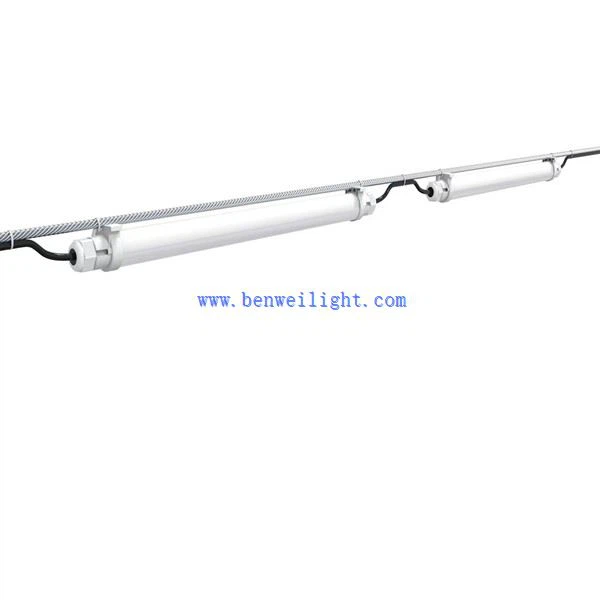
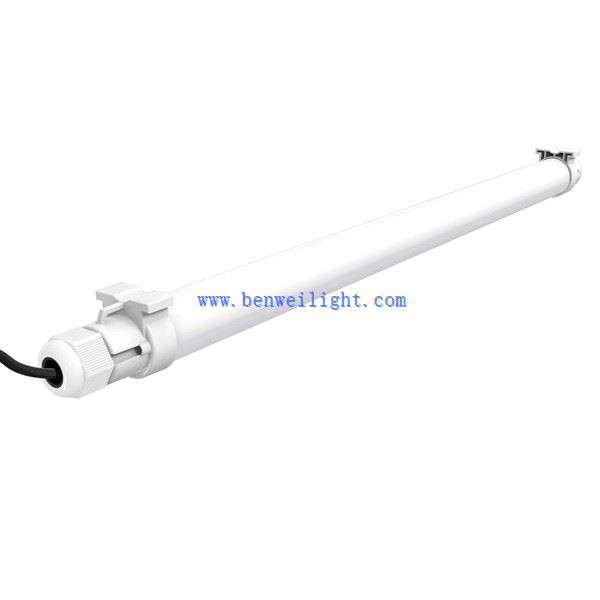
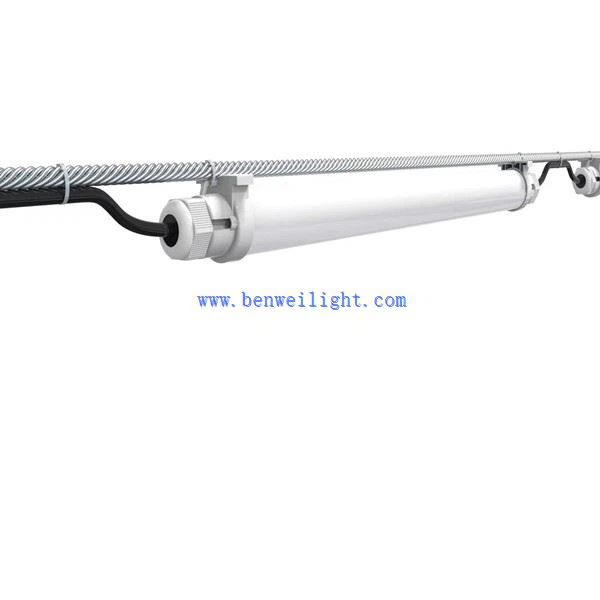
For pigs, optimal lighting optimizes their line of sight, increases welfare and performance, and meets their needs at different stages of the production cycle. We have introduced Pig Lighting Solutions with high-quality LED lights to improve pig performance significantly. The lighting solution includes two types of LED lights: T12 LED Pig Farm Lighting and T8 Pig Farm Lighting. Both products feature a cable design for series connection, optimal light distribution, and long life of over 50,000 hours. In addition, with an IP67 water resistance rating, the lighting remains resistant to high-pressure water jets, ammonia, and other cleaning chemicals.

Product Features:
1) Power: 10-25W
2) Size: 60cm, 120cm, 150cm
3) Input voltage:AC85-265V, DC12V DC24V
4) colour temperature: 3000K,4000K,5000K,6000K
5) luminous flux:120-160LM/W
6) Tube Materials:Aluminum Body+ PC cover,
7) PF>0.90
8) CRI 90
9) IP65 Waterproof
10) Dimmable IC: 0-10V or TRIAC dimmable is optional
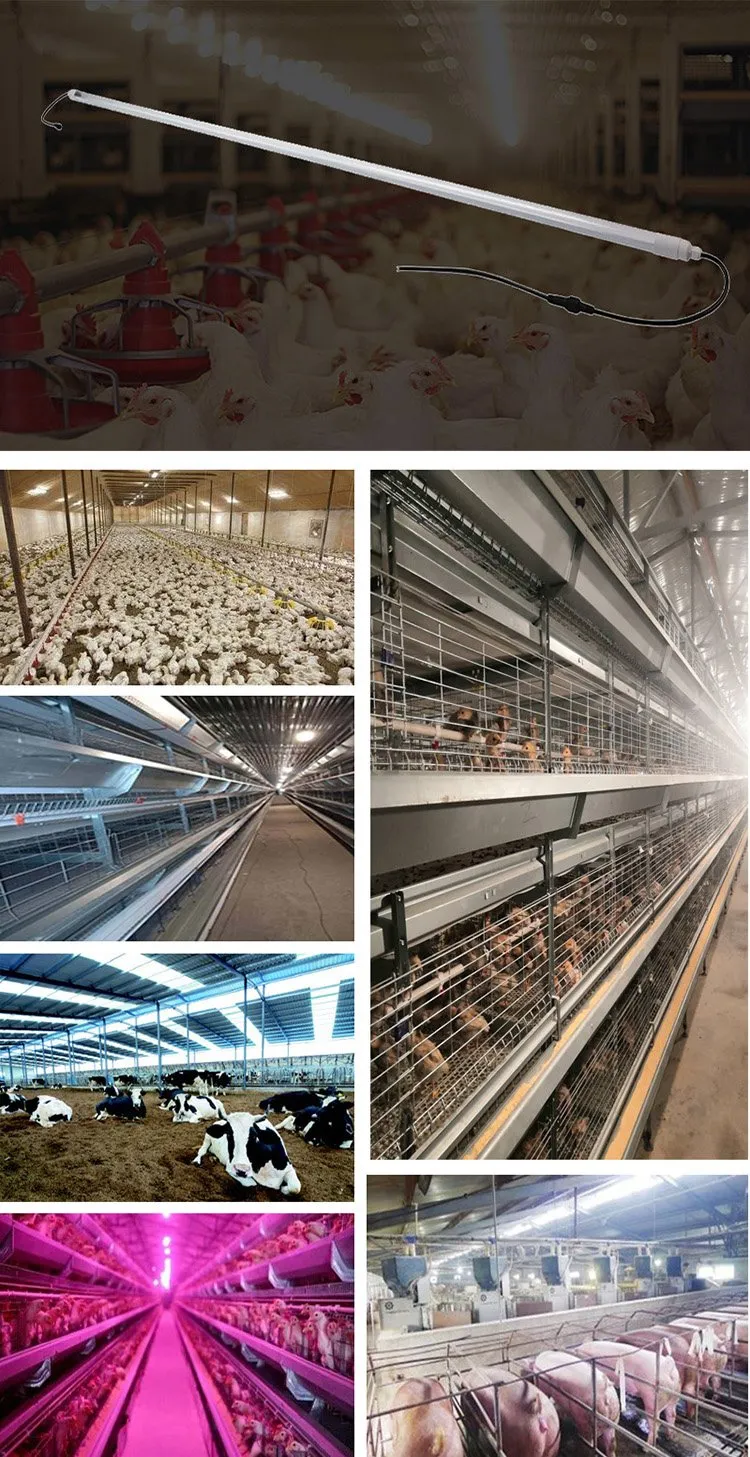
11) Applications: poultry farm lighting,farm animal lights, swine lights, LED Lights for Dairy Cow Barns...
Product Specification:
Lighting for Pig Units
| Name | Lighting for Pig Units |
| Size | 300/600/900/1200/1500MM |
| Wattage | 10W-25W |
| Base | R17D / FA8 / G13 |
| Voltage | DC 12V 36V 48V or 85-265V |
| Lumen | 120-160LM/W |
| Chip | SMD2835 |
| Materials | Alu.+PC/Plastic/Glass |
| RA/PF | RA90/PF0.9 |
| Warranty | 5 Years Warranty |
Seasonality and Productivity
A pig's reproductive success can be seasonally-affected, with reduced reproduction during the summer months; the predominant reason for this being temperature-related.
Controlling day-length in pig units can affect reproductive behaviour and success. However, lighting only plays a minor part in this subject with the real impact coming from sire line traits.
Other important effects of seasonality:
Increasing day length (15–18 hours) increases piglet suckling
Increasing day length increases food intake in growers/finishers
24- hour light can increase stress levels and disruptive behaviour can reduce productivity (especially in young pigs).
Welfare
Twenty-four hour light can increase stress levels in pigs. Bright luminance can also result in eye damage and weight loss. Aside from these issues, generally, pig behaviour is affected very little by lighting factors and they are highly tolerant/adaptable to artificial lighting regimes.


Test report:

Hot Tags: effects of lighting technology on pig welfare and performance, China, suppliers, manufacturers, factory, buy, price, best, cheap, for sale, in stock, free sample
Previous:
Mushrooom Growing Lighting
Next:
Lighting For Pig Units
Send Inquiry


