365nm UV Light Tubes: The Core Wavelength for Industrial Curing, Non‑Destructive Testing, and Fluorescence Inspection
One of the most popular and well-established solutions in the domains of UV curing, non-destructive testing (NDT), and fluorescence inspection is the 365nm UVA light tube. Many professional devices, including UV curing systems, inspection lamps, and fluorescent leak detectors, use the 365nm UV tube as their standard light source, making it significantly more widespread in industrial applications than the 360nm UV tube. From technical principles to important applications to selection criteria to integration with LED technology, this paper examines the usefulness of 365nm UV tubes from an industry perspective.
1.365 nm's Ultraviolet Spectrum Position
There are three distinct bands in the ultraviolet spectrum: UVA (315–400 nm), UVB (280–315 nm), and UVC (200–280 nm). Among the most prominent peak wavelengths in long-wave UV, 365 nm is located in the center of the UVA band.
To a lesser extent than UVB and UVC, moderate-energy radiation is less damaging to the skin and eyes than deep ultraviolet light (e.g., 254 nm). It is appropriate for the examination and curing of particular materials due to its good penetration, which allows it to pass through some plastics, glasses, and coatings. An abundance of optical brighteners, fluorescent dyes, and magnetic fluorescent powders exhibit robust absorption peaks at 365 nm, indicating a high efficiency in excitation of fluorescence. These factors contributed to the 365nm UV tube's meteoric rise to prominence as the go-to UVA source for labs and factories.
2.The Second Option for 365 nm UV Tubes in Terms of Technology
2.1 Conventional UV Light Bulbs
In order to transform the 254nm mercury line into a broad-band UV emission around 365nm, they employ low-pressure mercury lamps in conjunction with certain phosphors. Despite its maturity and inexpensive entry price, this technology has major downsides:
Dangerous to the environment due to mercury content Needs a 5-to 15-minute warm-up period to achieve consistent output. Limited lifespan (around 8,000 hours) Repetitive on/off cycling hastens the ageing process. Excessive heat production - could impact items that are sensitive to heat.
2.2 Light-Emitting Diode UVB Tubes
In order to achieve this, they employ UV LED chips, which release a narrow-band spectrum at 365 nm. Thanks to recent advancements in packaging and LED epitaxy, 365nm LEDs now meet industrial standards for power, efficiency, and longevity.

3. Primary Uses for 365 nm UV Light Tubes
3.1 UV Curing
Among the "golden wavelengths" for UV curing, 365 nm is a common choice. A lot of the photoinitiators that go into UV adhesives, inks, and coatings absorb a lot of light at 365 nm. Examples of common uses are:
- Bonding of electronic components
- Coating curing for optical fibers
- Photopolymerization of photosensitive resins in 3D printing
- Instant drying for screen printing and label printing
- UV bonding of medical devices
Compared with near‑UV LEDs at 395nm or 405nm, 365nm often gives better cure depth and surface hardness. Compared with deep UV at 254nm, 365nm is safer for operators and produces no ozone.
3.2 Non‑Destructive Testing (NDT) – Fluorescent Magnetic Particle & Penetrant Inspection
In the aerospace, automotive, and pressure vessel industries, NDT is a critical safety link. 365nm UV tubes are widely used for:
- Fluorescent magnetic particle inspection – After magnetizing a part, fluorescent magnetic particles are applied; under 365nm light, leakage fields at defects attract the particles and produce bright fluorescent indications.
- Fluorescent penetrant inspection – Penetrant enters surface cracks; after cleaning and developer application, defects show as yellow/green fluorescence under a 365nm UV lamp.
365nm produces the strongest fluorescence contrast with minimal visible‑light background interference. International standards (e.g. ASTM E1417, ASTM E3022) explicitly recommend 365nm UV sources.
3.3 Fluorescent Leak Detection
In air‑conditioning/refrigeration systems, hydraulic lines, and oil circuits, a fluorescent tracer is added; a 365nm UV lamp quickly pinpoints the leak. This method is fast and intuitive, widely used in auto repair and industrial equipment maintenance.
3.4 Banknote, Document and Anti‑Counterfeiting Inspection
Currencies such as the RMB, Euro, US dollar, as well as passports and ID cards, often use fluorescent anti‑counterfeiting features that are excited by 365nm UV. Banks, customs, and entertainment venues use 365nm UV tubes in large numbers for verification.
3.5 Mineral and Gemstone Identification
Many minerals (e.g. fluorite, calcite, diamond) show characteristic fluorescence under 365nm UV, making it an important tool for geological exploration and gemstone identification.
3.6 Photocatalysis and Surface Cleaning
365nm UV can activate photocatalysts such as titanium dioxide (TiO₂) to produce highly reactive hydroxyl radicals that break down organic pollutants, bacteria and odors. Applications include air purifiers, self‑cleaning glass, and water treatment.
4. Comparison of 365nm vs. 360nm vs. 395nm
| Wavelength | Characteristics | Typical Applications |
|---|---|---|
| 360nm | Between 365 and 355; used by some special photoinitiators | Special ink curing, research |
| 365nm | Industry standard wavelength; highest fluorescence excitation efficiency; widest use in curing | NDT, UV curing, anti‑counterfeiting, leak detection |
| 395nm | Closer to visible violet light; human eye sees violet‑blue | Currency verification, novelty black lights, some low‑end curing |
For most professional industrial applications, 365nm is the most reliable and most consistent choice.
5. How Professional Buyers Should Select 365nm UV Tubes
5.1 Check Irradiance (μW/cm²)
Irradiance determines curing speed or fluorescence brightness. For curing applications, the 365nm tube should provide adequate power density at the working distance (typically ≥ 50 mW/cm² for fast curing). For inspection applications, background light should be very low (<20 lux) while UV irradiance should be ≥ 1000 μW/cm².
5.2 Pay Attention to Wavelength Purity (Narrow‑Band Characteristic)
LED UV tubes typically have a full width at half maximum (FWHM) of 10‑15nm, whereas conventional fluorescent tubes may have a FWHM of 30‑50nm. Narrow band means less wasted radiation and higher effective energy. Benwei 365nm tubes use high‑purity LED chips with minimal wavelength shift.
5.3 Tube Length and Beam Angle
Choose length to match the illuminated area: 60cm for small inspection benches, 120/150cm for conveyor belts or large curing areas.
Beam angle: 120° for uniform illumination at short distances; 180° for wide‑area coverage; for long‑distance focused applications, lens‑encapsulated options are available.
5.4 Protection Rating and Heat Dissipation
Industrial environments may contain dust, humidity or chemical solvents. An IP65 or higher rating extends tube life. Although LED tubes generate low heat, high‑power models still need good thermal management to maintain lifetime.
5.5 Certifications and Compliance
Export to North America: UL/cUL or ETL
Export to Europe: CE / RoHS / ENEC
UV safety: IEC 62471 photobiological safety certification
6. Economics of Upgrading from Traditional Fluorescent to LED 365nm
Take an inspection line running 8 hours per day as an example:
| Item | Traditional Fluorescent 365nm Tube | LED 365nm Tube |
|---|---|---|
| Power | 40W | 18W |
| Annual consumption (300 days × 8h) | 96 kWh | 43.2 kWh |
| Annual electricity cost ($0.12/kWh) | $11.5 | $5.2 |
| Tube lifetime | 8,000 hours | 50,000 hours |
| Replacements per year | 2‑3 times | 0.2 times (once every ~5 years) |
| Annual maintenance cost | High (labor + spares) | Very low |
| Contains mercury | Yes | No |
Over three years, the total cost of ownership of an LED 365nm tube is 60‑80% lower than that of a conventional tube.
7. Conclusion
The 365nm UV tube is a core product in industrial UVA lighting. Whether it is achieving millisecond drying on a UV curing line, accurately detecting tiny cracks in aircraft maintenance, or quickly verifying the authenticity of banknotes, the 365nm wavelength plays an irreplaceable role.
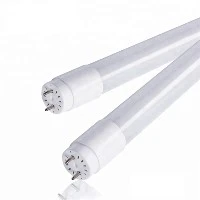
As LED technology has fully matured, traditional mercury‑containing fluorescent UV tubes are being replaced by highly efficient, environmentally friendly, long‑life LED 365nm tubes. The Benwei 365nm UV tube series offers 10‑24W power, multiple lengths, 120°/180° beam angles, and IP65 protection, suitable for curing, NDT, leak detection, anti‑counterfeiting, and other professional applications. With a 50,000‑hour lifetime, a 3‑5 year warranty, and mercury‑free/ozone‑free operation, they are the first choice for upgrading your UV lighting solution.
Inquire today for samples and technical support.