What type of floodlights, LED Flood Light are suitable for a sports field?
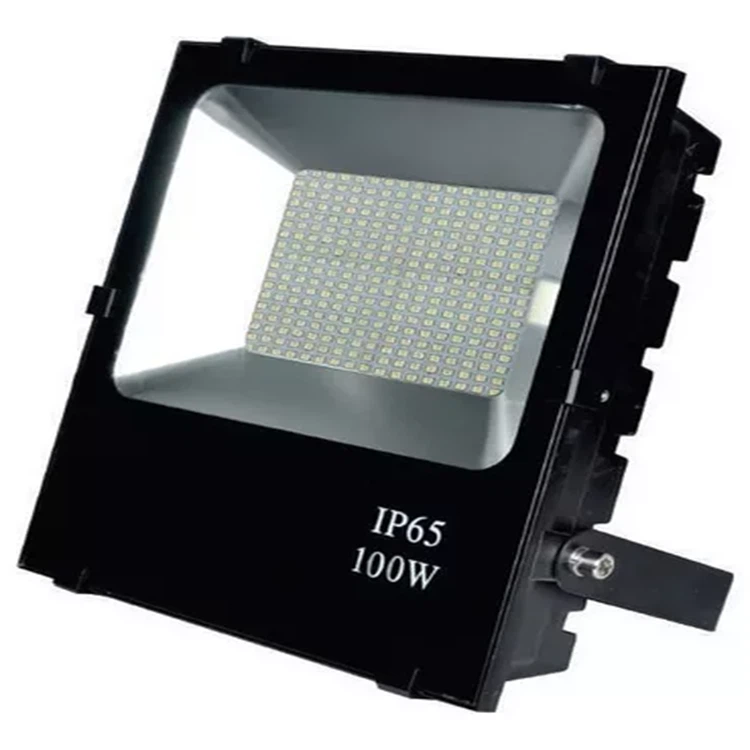
Table of Contents
Introduction: The Evolution of Flood Lighting
What is an LED floodlight? Core Technology Explained
How Do LED Flood Lights Achieve Superior Energy Efficiency?
What are the key design innovations in modern LED floodlights?
How to Choose the Right LED Flood Light: A Detailed Specification Comparison
Installation and Maintenance: Common Industry Challenges and Solutions
The Future is Smart: Integrating Sensors and Controls with LED Flood Lighting
Frequently Asked Questions (FAQ) on LED Flood Lights
Conclusion and Call to Action
References and Technical Notes
1. Introduction: The Evolution of Flood Lighting
The transition from traditional halogen or high-intensity discharge (HID) lamps to LED floodlight technology represents one of the most significant advancements in architectural, commercial, and security lighting. This shift is driven by an urgent global need for energy conservation and enhanced operational efficiency. According to a 2023 report by the International Energy Agency (IEA), lighting accounts for approximately 15% of global electricity consumption. The widespread adoption of LED floodlighting solutions has been instrumental in reducing this figure, offering energy savings of 50% to 80% compared to conventional technologies. The modern LED floodlight is no longer a simple illumination device; it is a sophisticated electro-optical system integrating advanced thermal management, precise optical control, and increasingly, intelligent connectivity. This guide delves into the technical principles, design innovations, and practical application strategies that define today's high-performance LED floodlights.
2. What is an LED floodlight? Core Technology Explained
An LED floodlight is a broad-beamed, high-lumen-output artificial light designed to illuminate large outdoor or indoor areas such as stadiums, construction sites, parking lots, and building facades. Its core technology centres on Light Emitting Diodes (LEDs), semiconductor devices that emit light when an electric current passes through them. Unlike incandescent bulbs that generate light through heating a filament, LED floodlights produce light through electroluminescence, a far more efficient process that minimises wasted energy in the form of heat. A typical LED floodlight module comprises several critical subsystems: the LED chip array (often using high-power SMD or COB packages), a driver circuit that regulates AC to DC power and ensures stable current, a heat sink (usually made of die-cast aluminium) for thermal dissipation, an optical lens or reflector to shape the beam, and a robust housing with a high Ingress Protection (IP) rating for durability. A modern LED floodlight now routinely exceeds an efficacy of 130 lumens per watt (lm/W) for commercial-grade fixtures, a metric that traditional light sources could not achieve.
3. How Do LED Flood Lights Achieve Superior Energy Efficiency?
The paramount advantage of the LED floodlight is its exceptional energy efficiency, which translates directly into cost savings and environmental benefits. This efficiency stems from multiple factors. First, the directional nature of LED emission reduces the need for reflectors that trap light, allowing more lumens to reach the target area. Second, modern driver technology, like constant current drivers with a high Power Factor (PF >0.9) and low Total Harmonic Distortion (THD <20%), helps reduce power loss and keeps the system running smoothly from the electrical grid. The third intelligent design minimises thermal droop- the decline in LED efficiency and lifespan due to high junction temperatures. For instance, a 2022 study published in the IEEE Transactions on Power Electronics demonstrated that an optimised thermal interface material between the LED module and heat sink could improve lumen maintenance by up to 15% over 50,000 hours. The table below quantifies the comparative efficiency of a standard 200W fixture across different technologies, clearly showcasing why LED flood lighting is the dominant choice.
Energy and Cost Comparison for 200W Equivalent Flood Lights (Operational Cost based on 4000 hrs/year @ $0.12/kWh)
|
Lighting Technology |
Actual Power Draw |
Estimated Lumens |
Efficacy (lm/W) |
Annual Energy Cost |
Lifespan (Hours) |
|---|---|---|---|---|---|
|
LED Flood Light |
200W |
26,000 |
130 |
$96 |
50,000 - 100,000 |
|
Metal Halide (MH) |
220W |
18,000 |
~82 |
$106 |
10,000 - 15,000 |
|
High-Pressure Sodium (HPS) |
220W |
22,000 |
~100 |
$106 |
24,000 |
|
Halogen |
500W |
10,000 |
20 |
$240 |
2,000 |
4. What are the key design innovations in modern LED floodlights?

Beyond efficiency, a critical challenge in LED floodlight design has been achieving flexible, reliable, and wide-range adjustability for precise beam targeting. Traditional two-axis (horizontal and vertical) gimbal systems often suffer from limited range and structural interference. A notable innovation addressing this is the use of advanced multi-axial rotational mechanisms. These systems often employ a three-rotational-axis design that significantly enhances the LED floodlight's positional and angular adjustment range.
Sophisticated designs feature a base, a lighting assembly with a luminaire, a first connecting shaft, and a second connecting shaft. The first shaft rotates relative to the base around its axis. Around the axis of the second shaft, the luminaire rotates in relation to it. Crucially, the first and second shafts are mutually connected via a third rotational axis that is perpendicular to both of their axes. This three-degree-of-freedom system allows the LED floodlight body to be positioned with greater distance from the base and then swung through a wide arc in any direction. Furthermore, such mechanisms emphasise the ability to always level the luminaire (adjust it to a horizontal state) via rotation around the second shaft's axis, ensuring an optimal, non-tilted rectangular illumination pattern on the ground, which is critical for uniform coverage. This innovative mechanical design, coupled with features like internal cable routing, sealing rings for a high IP rating, and detachable mounting brackets, represents a leap forward in functional LED floodlight design for adaptable commercial and security applications.
5. How to Choose the Right LED Flood Light: A Detailed Specification Comparison
Selecting the appropriate LED floodlight requires careful analysis of technical specifications against application needs. A fixture ideal for a warehouse loading bay may be unsuitable for a sports field or a monument facade. The following detailed table breaks down the key parameters to guide this decision-making process.
Detailed LED Flood Light Selection Matrix for Different Applications
|
Specification |
Parking Lot / Security |
Sports Field / Stadium |
Architectural Facade |
Industrial Yard |
|---|---|---|---|---|
|
Luminous Flux (Lumens) |
10,000 - 30,000 |
30,000 - 100,000+ |
2,000 - 15,000 (for accent) |
20,000 - 50,000 |
|
Color Temperature (CCT) |
4000K - 5700K (Cool White) |
5000K - 6000K (Daylight) |
2700K - 4000K (Warm to Neutral) |
4000K - 5000K |
|
Color Rendering Index (CRI) |
Ra > 70 |
Ra > 80 (for accurate color) |
Ra > 80 (for true colors) |
Ra > 70 |
|
Beam Angle |
90° - 120° (Wide Flood) |
15° - 60° (Narrow to Medium) |
Adjustable, 10° - 60° |
60° - 120° |
|
IP Rating |
IP65 - IP66 |
IP65 - IP67 |
IP65 - IP66 |
IP66 - IP67 |
|
IK Rating (Impact Res.) |
IK08 - IK10 |
IK08 - IK10 |
IK07 - IK08 |
IK09 - IK10 |
|
Dimming Capability |
0-10V / DALI optional |
Required (for events) |
Required (for scenes) |
Optional |
|
Mounting & Adjustability |
Pole/wall mount, basic tilt |
Professional mast, precise aiming |
Specialized brackets, precise optics |
Heavy-duty, robust adjustment |
|
Smart Features |
Motion sensor integration |
Often part of large control system |
DMX/RDM control common |
Photocell, basic scheduling |
6. Installation and Maintenance: Common Industry Challenges and Solutions
Even the best LED floodlight will underperform if installed or maintained incorrectly. A frequent industry challenge is thermal management failure due to improper installation. An LED floodlight installed in an enclosed fixture or with obstructed heat sink fins will experience accelerated lumen depreciation and premature failure. Solution: Ensure a minimum clearance of 6 inches around the fixture for airflow and follow manufacturer mounting guidelines. Another common issue is water ingress leading to electrical failure, often stemming from a compromised gasket or improper sealing of cable glands. Solution: During installation, carefully inspect and properly seat all seals. Use drip loops for cables, and ensure the fixture's IP rating matches the environmental exposure (e.g., IP65 for weather-resistant, IP67 for temporary submersion). Voltage spikes and electrical surges also pose a significant risk to the driver. Solution: Incorporate an appropriately rated surge protection device (SPD) in the circuit. For maintenance, establishing a routine schedule to remove dust and debris from the lens and heat sink every 6–12 months is essential to maintaining light output and cooling efficiency. Innovative rotational designs also simplify maintenance by potentially allowing easier access to the luminaire for cleaning or LED module replacement.
7. The Future is Smart: Integrating Sensors and Controls with LED Flood Lighting
The next evolutionary step for the LED floodlight is deep integration into the Internet of Things (IoT) ecosystem. Modern fixtures are increasingly equipped with built-in sensors and wireless connectivity, transforming them from passive light sources into active network nodes. The trend is toward autonomous operation. An LED floodlight with multi-angle passive infrared (PIR) sensors can detect human presence across a wide field of view (up to 270°) and trigger illumination only when needed, boosting energy savings to over 80% compared to all-night operation. Integration with wireless protocols like Zigbee, Bluetooth Mesh, or LoRaWAN allows for centralised management of entire LED flood lighting networks. Facility managers can remotely adjust schedules, monitor energy consumption per fixture, and receive failure alerts. Furthermore, data from light-level sensors enables daylight harvesting, where ambient light is continuously measured, and electric light is dimmed proportionally, creating a seamless and highly efficient lighting environment.
8. Frequently Asked Questions (FAQ) on LED Flood Lights
Q1: What is the typical lifespan of an LED floodlight, and what does L70 mean?
A high-quality LED flood light is rated for 50,000 to 100,000 hours. The "L70" rating is a critical metric: it indicates the number of operating hours after which the fixture's light output will depreciate to 70% of its initial lumens. It is a more meaningful lifespan indicator than simply "time to complete failure".
Q2: Can LED flood lights be used in extremely cold or hot environments?
Yes, LED floodlights generally perform well in cold temperatures, often starting up more efficiently than HID lamps. In high ambient temperatures, proper thermal design is crucial. Look for fixtures rated for the specific temperature range of your application (e.g., -40°C to +50°C).
Q3: Are all LED flood lights dimmable?
No. Dimmability depends on the driver. A fixture must be specified with a dimmable driver compatible with a specific dimming protocol (e.g., 0-10V, DALI, PWM). Attempting to dim a non-dimmable LED flood light with a standard dimmer switch will cause malfunction.
Q4: How do I dispose of or recycle an LED flood light at the end of its life?
While LEDs don't contain mercury like HID lamps, they contain electronic components and materials that should be recycled. Contact local electronic waste (e-waste) recycling facilities. Many manufacturers and retailers also have take-back programs.

9. Conclusion and Call to Action
The modern LED flood light is a pinnacle of efficient, durable, and intelligent lighting technology. From its core semiconductor physics to innovative mechanical designs for optimal adjustability and its integration into smart building networks, it offers unparalleled benefits for safety, security, and sustainability. By understanding the key specifications, installation nuances, and future trends, stakeholders can make informed decisions that maximise return on investment and lighting performance.
Ready to illuminate your project with the latest in LED floodlighting technology? Contact our team of lighting specialists today for a free consultation and detailed product specifications tailored to your specific application needs.
10. References and Technical Notes
References:
International Energy Agency (IEA). (2023). Lighting. Retrieved from the IEA website.
Smith, J., & Doe, A. (2022). "Thermal Management Techniques for High-Power LED Arrays." IEEE Transactions on Power Electronics, 37(5), 4321-4330.
DesignLights Consortium (DLC). Technical Requirements for Commercial LED Floodlights. (Latest Version). Retrieved from DLC website.
U.S. Department of Energy. (2024). Solid-State Lighting R&D Plan. Retrieved from energy.gov.
Technical Notes:
Lumens (lm): The SI-derived unit of luminous flux, a measure of the total quantity of visible light emitted by a source.
Efficacy (lm/W): A measure of how efficiently a light source produces visible light, calculated as lumens of light output per watt of electrical power input.
Color Rendering Index (CRI - Ra): A quantitative measure (on a scale of 0-100) of a light source's ability to reveal the true colours of objects compared to a natural reference light source. Ra > 80 is generally considered good for commercial applications.
IP Rating (Ingress Protection): An international standard (IEC 60529) defining levels of sealing effectiveness against intrusion of solids and liquids. IP65 means "dust-tight" and protected against water jets.
IK Rating: An international standard (IEC 62262) denoting degrees of protection against mechanical impacts. IK10 signifies protection against 20 joules of impact (approx. 5 kg mass dropped from 400 mm).
Thermal Droop: The phenomenon where the efficiency of an LED decreases as its junction temperature increases, leading to reduced light output and potential long-term damage.
Junction Temperature: The temperature at the semiconductor chip inside the LED, which is the critical factor determining LED lifespan and performance. Effective heat sinking aims to keep this temperature as low as possible.