A Deep Dive Into The LT Series Batteries: How They Function And Why You Need Them

click here for more information
Today's blog post is on the Low Temperature, or LT, series of lithium batteries from BENWEI. Having a battery made specifically for low-temperature conditions can help extend the life of your battery and keep you powered because lithium batteries have limited charging capabilities below 32°F (0°C).
We will go through what LT is, why it's important, how LT models work, and how to pick the best LT model for your application today.
Low Temperature (LT) Models: What Are They?
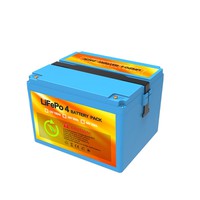
The RB20-LT, RB52-LT, RB100-LT, and RB300-LT are all part of the BENWEI LT family of products. The RB stands for BENWEI Battery, the number denotes the amp hour capacity, and LT denotes low temperature in accordance with our usual naming procedure. Additionally, LT models have a heating element that evenly warms the battery's cells to a safe temperature so that it can be charged at the maximum advised current.

What happens if LT is absent?
When a battery is charged or discharged, the electrolyte inside the battery transports lithium ions between the anode and the cathode. This is how LiFePO4 batteries work.
All batteries work best in moderate to warm regions because the electrochemical reaction slows down as the temperature drops. It is completely safe to discharge your LiFePO4 batteries at temperatures as low as -4°F (-20°C), notwithstanding the possibility that you will notice diminished capacity.
Lithium ions intercalate into the cathode when the battery is being discharged. Discharge intercalation may be compared to the lithium ions returning "home" to the lithium iron phosphate cathode after a day of work, which they do without any problems under cold temperatures.
The situation is different when charging in subfreezing temps. Lithium ions have trouble finding their way to "work" within the graphite anode under cold charging conditions. These ions end up plating the anode's surface rather than intercalating. Plating, which lowers battery capacity and raises resistance, can be brought on by charging in extremely cold temperatures. If enough plating accumulates, it has the potential to pierce the separator and start a potentially harmful cell short.
Without the LT heating element, a regular BENWEI lithium battery may be charged between 113° and -4°F (45° and -20°C). The following rules must be observed in cold conditions to avoid producing the plating damage indicated above. Batteries may only be charged at a rate of.1C when the temperature is between 32° and 14°F. Batteries cannot be charged at a rate of more than.05C when the temperature is between 14° and -4°F. These restrictions lengthen the charging process and make it more difficult because you may not be aware of how chilly it could become throughout a charging cycle.
Imagine going to bed in weather that is 45°F and waking up to a cold front that is 15°F. Without BENWEI LT type batteries, irreversible harm would have been done if an automated charging cycle started in the middle of the night.
How Are LT Models Operated?
The battery management system (BMS) directs the electricity to the heating element rather than the cells when a charge cycle is started in a cold environment. When the battery's uniform internal temperature reaches the specified safe temperature, the heating element stops working and the current can start charging the cells.
Since many of the external heating blanket options currently on the market are unable to detect the internal temperature of the cells, they may not be completely successful in heating the battery throughout, uniform internal heating is a key feature of the LT model. The BMS supplies 5 to 15 charging amps to power the heating element, depending on how cold it is and which LT models you are using. Batteries need to be completely heated for one to one and a half hours to reach the desired temperatures. Although LT batteries can be connected in parallel, series connections are not permitted.
It's vital to keep in mind that when utilising a shunt-based battery gauge with LT models, the gauge won't distinguish between heating amps and charging amps, therefore your battery gauge may read as full before the charge is finished. Be sure to let the charge finish even if the gauge reads 100% to make sure your batteries are fully recharged.
Selecting the Best LT Model
Almost every cold weather application may utilise our LT batteries, and the batteries you choose should be based on your capacity demands as well as your space and weight constraints. As we've said in other posts, you can discover how to determine your consumption requirements here.
Please get in touch with us if you have any questions regarding our LT Series or need assistance choosing the right model for your requirements.