A Practical Guide to LED Pole Lights: Key Facts and Selection Criteria
LED pole lights have become a fundamental component of modern outdoor lighting, providing enhanced visibility and safety for various public and private spaces. These fixtures deliver uniform illumination from elevated positions, effectively eliminating dark spots in areas such as streets, parking facilities, sports venues, and parks. To maximize the benefits of this technology, it is essential to understand the core principles of proper LED pole light selection and installation.
This guide explores the critical factors that determine lighting effectiveness and offers practical advice for planning successful LED pole light projects.
Core Considerations for Effective LED Pole Light Systems
Successful outdoor lighting depends on several interconnected factors. Ignoring any of these can result in inadequate illumination, energy waste, or unnecessary expense.
1. Pole Height: The Foundation of Light Distribution
The mounting height of a light directly determines its coverage area and intensity.
Short Poles (4-6 meters / 13-20 feet): Suitable for walkways, small parks, and pedestrian areas. They provide intimate, localized lighting but have a limited coverage radius.
Medium Poles (8-10 meters / 26-33 feet): The standard for streets, residential roads, and standard parking lots. This height offers a ideal balance between coverage area and light intensity on the ground.
Tall Poles (10+ meters / 33+ feet): Necessary for wide-area applications like highway interchanges, large stadium fields, and expansive commercial parking lots. Higher mounting requires more powerful luminaires to maintain adequate ground-level illuminance.
A pole that is too short for a large area will create a bright spot directly underneath while leaving the periphery in darkness. Conversely, an excessively tall pole may spread light too thinly, reducing useful visibility.
2. Understanding Light Output: Watts vs. Lumens
A common mistake is selecting lights based on wattage (W) alone. Wattage measures energy consumption, not brightness. The true measure of light output is Lumens (lm).
Lumen Output: For pole lights, focus on the total lumen package of the fixture. A higher lumen count means a brighter light.
Color Temperature (CCT): Measured in Kelvins (K), this describes the light's appearance. LED pole lights typically range from 4000K (neutral white) to 5000K-6000K (cool, daylight white). Cooler temperatures are often preferred for security and alertness as they enhance contrast.
3. Area Dimensions and Layout: Planning for Uniformity
Before installation, a detailed assessment of the site is crucial.
Calculate the Area: Measure the total square footage that needs illumination.
Identify Obstacles: Note any features that might block light, such as tall trees, buildings, or uneven terrain.
Determine Spacing: The pole height and the light's beam angle will dictate the optimal distance between poles to achieve consistent, overlapping pools of light without dark zones.
4. Budget and Total Cost of Ownership (TCO)
While the initial investment in quality LED pole lights may be higher than traditional options, the long-term savings are substantial.
Energy Efficiency: LEDs consume significantly less electricity to produce the same amount of light.
Longevity: High-quality LED fixtures can last 50,000 to 100,000 hours, drastically reducing maintenance and replacement costs.
Durability: LEDs are solid-state devices, making them highly resistant to shock and vibration.
View LED pole lights as a long-term investment where higher quality upfront leads to lower operational expenses over time.

Primary Applications for LED Pole Lights
These lights are versatile solutions for a wide range of settings:
Roadways and Streets: The primary application, enhancing safety for drivers, cyclists, and pedestrians by providing uniform illumination and improving nighttime visibility.
Parking Lots: Essential for preventing accidents and deterring crime. Well-lit parking areas ensure clear visibility of pedestrians, obstacles, and potential threats, making users feel secure.
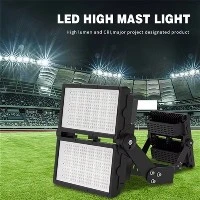
Sports Fields and Stadiums: Require high-powered, uniform lighting with specific optical controls to eliminate glare for players and provide excellent visibility for spectators, simulating daytime conditions for play.
Public Parks and Gardens: Improve safety for evening visitors, extend the usable hours of public spaces, and can be used to highlight architectural or landscape features.
Pathways and Alleys: Illuminate narrow, potentially hazardous spaces to deter criminal activity and provide safe passage for pedestrians.
A Practical Sizing Guide
The following table provides general guidelines for matching pole height and light output to different applications. Actual requirements may vary based on specific standards and desired light levels.
| Application Example | Suggested Pole Height | Suggested LED Fixture Lumen Output | Typical Wattage Range |
|---|---|---|---|
| Pathways, Small Parks | 4-6 m (13-20 ft) | 5,000 - 10,000 lm | 40W - 80W |
| Residential Streets, Alleys | 8-10 m (26-33 ft) | 10,000 - 20,000 lm | 80W - 150W |
| Large Parking Lots, Main Roads | 10-12 m (33-39 ft) | 20,000 - 40,000 lm | 150W - 300W |
| Highways, Large Stadiums | 12 m+ (39 ft+) | 40,000 lm+ | 300W+ |
Note: Always consult with a lighting professional or refer to relevant lighting standards (e.g., IES, DIN) for precise calculations.
Avoiding Common Pitfalls
Under- or Over-lighting: Conduct a photometric analysis to model the light distribution before purchase. This prevents installing lights that are either too weak or wastefully powerful for the space.
Ignoring Light Pollution: Choose fixtures with proper shielding and cut-off angles to direct light downward onto the target area, minimizing glare and "light trespass" into surrounding properties and the night sky.
Choosing on Price Alone: The cheapest option often has inferior components, leading to premature failure, color shift, and higher long-term costs.

Conclusion
LED pole lights are a powerful tool for enhancing safety, security, and the functionality of outdoor spaces. A successful installation depends on a holistic approach that considers pole height, light output (in lumens), the specific dimensions of the area, and a realistic understanding of long-term value. By carefully evaluating these factors, you can implement an efficient, effective, and durable LED lighting system that delivers optimal performance for years to come. For complex projects, engaging a lighting specialist is always a recommended step to ensure the best possible outcome.