Are these eye protection methods reliable?
During the epidemic,
Most people stay at home for a long time,
The time for eye use is getting longer and longer.
Children not only watch TV, but also take online lessons every day;

The elderly always follow the news and chat on WeChat without stopping;
Young people return to work on their computers and keep their mobile phones in their hands after get off work;
Mobile phones, TVs, tablets, and electronic products are changed for fun,
Over time, I feel sore eyes and decreased vision.
Many people start looking for eye protection prescriptions in all aspects,
For example, blue light glasses, projectors, eye protection lights...
Do these actually work?
1. Anti-blue light glasses
Someone pointed out: The high-energy short-wave blue light announced by electronic products is the main culprit for dry eyes, astringent eyes, and tired eyes. As a result, anti-blue glasses came into being, and the sales were good.
In fact, Blu-ray is not unique to mobile phones, tablets, computers, and TV screens, but is found everywhere in the environment in which we live. Blue light can affect sleep, mood and circadian rhythm, but on the contrary, it can also promote growth and vision development. Therefore, blue light is not completely harmful to the body.
In terms of the propaganda principle of anti-blue glasses, wearing anti-blue glasses to prevent myopia is unreliable.
2. Projector
Many people feel that electronic products such as TVs and mobile phones are very damaging to their eyes because of their display screens. I heard the propaganda from the business that the projector is reflected light, and the light is close to natural light, which is much less irritating and affecting the eyes than the direct light of electronic products. So many people choose to use a projector to chase the drama.
The fatigue and damage of the eyes are determined in a comprehensive manner in terms of screen clarity, brightness, and environmental brightness during viewing. The projector needs to be used in low light, and the projection is not as clear as the TV, which will increase the degree of eye use.
Through experiments, it is concluded that after the same group of people watched the same length of TV and projector, through objective evaluation data, it was found that people who watched the projection were obviously more severe visual fatigue than those who watched ordinary TV.
3. Eye protection light
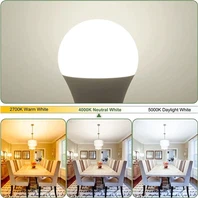
Many businesses say: The eye protection lamp is a Led lamp, which is brighter and more power-saving than incandescent lamps, and has a good eye protection effect! As a result, whether it was the desk lamp for children to do homework or the lighting around the adult's computer, they were all replaced with eye protection lights.
In fact, not all eye protectors can protect eyes!
The principle of the eye protection lamp is to provide a standardized light source to protect people's eyes. However, some eye protection lamps may have stroboscopic frequency and narrow frequency spectrum, which will affect eyesight.
Therefore, when choosing a table lamp, we must first choose a table lamp that does not have stroboscopic light, meets the brightness, and has a wide spectrum; secondly, do not blindly refer to the selection of Led lamps. It is recommended to choose incandescent lamps and fluorescent lamps, so as to achieve the effect of eye protection.
These eye protection methods are very effective
1. Eye environment
Try to use your eyes in a bright place. If the environment is too dark, be sure to turn on the light.
Due to the dark environment, the pupils of the human eye will spread out unconsciously, and will be more irritated when looking at the light on the mobile phone screen. Not only does it increase visual fatigue, it may also induce glaucoma.
2. Correct posture
We have been educated since we were young. When we read and write, we should do "one foot, one inch, one punch", that is, hold the pen finger one inch from the tip of the pen, punch the chest away from the table, and the book one foot away from the eyes.
In daily use of computers, TVs and tablets, we must abide by the 1:2:10 rule, that is, the viewing interval between mobile phones and e-books should be 1 foot (30cm); computer viewing should be 2 feet (60cm); TV viewing The separation should be at least 10 feet (3m).
3. Pay attention to the moment
Regardless of whether you are reading a book or looking at a mobile phone, computer, or tablet, you should follow the 20:20:20 rule at the time of viewing, that is, after 20 minutes of reading, writing, looking at mobile phones and computers, you must look up at least 20 feet (6 meters away) into the distance More than 20 seconds.
4. Blinking repeatedly
Staring at the screen for a long time, people often forget to blink because they are too focused.
The human eye needs to evenly apply tears to the cornea by blinking. If the eye does not blink for a long time, the tears on the corneal surface will evaporate, which will simply cause dry eyes. If the habit of blinking is not corrected, problems such as dry eye may also be induced.
To reduce eye discomfort, make sure to blink at least 15 times per minute.
5. Hot compress
In addition to excretion of tears, the eyes can also excrete a small amount of oil to help moisturize and reduce the evaporation of tears. But sometimes, the glands that excrete oil will be blocked, and then cause eye discomfort.
Applying a hot towel to the eyes can dredge the blocked glands and effectively relieve dry eyes; you can also choose to use a hot towel to warm the eyes for 1-2 minutes when washing your face with hot water in the morning and evening.
6. Artificial tears
As it is, artificial tears use various materials to imitate natural tears. Their ingredients are relatively simple and have very few side effects. Among them, artificial tears without preservatives are safer and are currently internationally recognized as drugs for the treatment of dry eye. But all eye drops can only be used for emergency, not long-term use.