Beyond Brightness: How the LED Lighting Revolution is Actively Combating Climate Change
The question we often encounter is a profound one: "Can switching my light bulbs really help fight climate change?" The answer, resoundingly, is yes. While no single action is a silver bullet, the collective global transition to LED lighting represents one of the most straightforward, cost-effective, and impactful strategies for reducing our carbon footprint. This isn't just about saving on electricity bills; it's about a fundamental shift in how we consume energy for illumination, with direct benefits for the planet's health.
At the heart of this transition is a commitment to cleaner technology. All our LED lighting fixtures, for instance, are RoHS (Restriction of the use of Hazardous Substances) certified. This certification, whether explicitly stated on a spec sheet or not, is a critical pledge. It means the product is manufactured without using dangerous materials like lead, mercury, cadmium, and other toxins that can leach into soil and groundwater from landfills, posing long-term risks to ecosystems and human health. This is a foundational difference from traditional lighting, establishing LEDs as the cleaner choice from cradle to grave.
The Urgent Need for an Electrical Evolution
To understand the impact of LEDs, we must first grasp the sheer scale of energy consumption for lighting. Globally, lighting accounts for approximately 15% of global electricity consumption and 5% of worldwide greenhouse gas emissions. That's equivalent to the emissions from all the world's airplanes and ships combined. For decades, we have illuminated our homes, offices, and streets with profoundly inefficient technologies.
The most significant misconception that has slowed this evolution is the conflation of wattage with brightness. We were conditioned to think a "100-Watt bulb" is inherently bright. In reality, wattage only measures energy input, not light output. The true measure of light is lumens.
This is where LEDs deliver a knockout blow:
A traditional 60-watt incandescent bulb produces about 800 lumens.
An LED bulb produces the same 800 lumens using only about 8-10 watts.
This represents an 80-85% reduction in energy consumption for the same amount of light. Now, multiply that single bulb by the billions of light points in the world, and the potential for energy savings becomes astronomical.
The Multi-Faceted Climate Benefits of LED Lighting
The environmental advantage of LEDs is not a single benefit but a cascade of positive effects.
1. Direct Reduction in Greenhouse Gas Emissions
The most direct link to climate change is through reduced energy demand. The majority of the world's electricity is still generated by burning fossil fuels-coal, oil, and natural gas-which releases massive amounts of carbon dioxide (CO₂) into the atmosphere. By slashing the electricity needed for lighting, we directly reduce the load on power plants, leading to lower CO₂ emissions. The U.S. Department of Energy estimates that widespread LED adoption could save over 1,800 Terawatt-hours of electricity by 2035, equivalent to the annual electrical output of 300 large power plants and avoiding 1.5 billion metric tons of CO₂.
2. The Mercury Menace: A Toxic Legacy Avoided
Compact Fluorescent Lamps (CFLs), a previous "efficient" alternative, contain a hidden environmental cost: mercury. When a CFL breaks in a home or ends up in a landfill, this neurotoxin can be released. Mercury bioaccumulates in the food chain, causing severe ecological damage. LEDs, being solid-state devices, contain no mercury whatsoever, making their disposal far safer and eliminating this toxic risk entirely.
3. Reduced Resource Consumption and Waste
An incandescent bulb lasts about 1,000 hours. A typical LED lasts 25,000 to 50,000 hours. This 25x to 50x longer lifespan means:
Fewer bulbs need to be manufactured, saving on the raw materials, industrial energy, and transportation fuels required for production and distribution.
Dramatically less waste ends up in landfills. Instead of changing 25-50 incandescent bulbs, you change one LED. This reduces the volume of waste and the associated environmental burden of disposal.
4. Lowering the Urban Heat Island Effect
Incandescent bulbs are essentially miniature heaters; 90% of the energy they consume is wasted as heat. In large, densely populated cities, especially during summer, the cumulative heat from millions of inefficient lights contributes to the "Urban Heat Island Effect," raising city temperatures and increasing the demand for air conditioning. LEDs emit very little heat, helping to keep buildings and urban areas cooler, which in turn reduces the energy needed for cooling-a virtuous cycle of energy savings.
Case in Point: The Industrial and Commercial Sector
The impact is magnified in large-scale applications. Factories, warehouses, and commercial buildings are among the largest consumers of energy. Traditionally lit by high-intensity discharge (HID) lamps like Metal Halide or High-Pressure Sodium, these spaces required immense power.
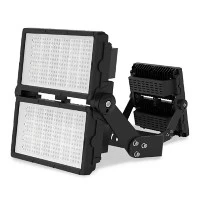
The switch to high-efficiency fixtures like UFO LED High Bay Lights is a game-changer. A 150W LED High Bay can often replace a 400W Metal Halide fixture, providing superior, flicker-free light while cutting energy use by over 60%. For a single factory running hundreds of lights 24/7, this translates to thousands of dollars in annual savings and a corresponding massive cut in its carbon footprint. This makes corporate sustainability goals not just achievable, but financially advantageous.
Beyond the Bulb: A Holistic Approach to Climate Action
Adopting LED lighting is a powerful first step, but it works best as part of a broader eco-conscious lifestyle. Here are additional upgrades that synergize with your lighting switch to create a greater collective impact:
Embrace Smart Energy Management: Install programmable thermostats and smart plugs to eliminate "vampire power" and optimize heating and cooling. Pairing LEDs with smart motion sensors and daylight harvesting systems ensures lights are only on when and where needed, pushing savings even further.
Rethink Domestic Habits: Simple changes like washing clothes in cold water and air-drying them instead of using energy-intensive dryers can significantly reduce a household's carbon footprint.
Advocate for Green Urban Planning: Support and engage in local tree-planting initiatives. Trees are natural carbon sinks, absorbing CO₂ and helping to cool urban environments.
Transform Your Commute: Where possible, choose public transportation, cycling, walking, or carpooling. The transportation sector is a leading source of emissions, and reducing private vehicle use is one of the most effective personal actions against climate change.
A Collective Responsibility for a Brighter Future
The evidence is clear and compelling. Switching to LED lighting is far more than a personal choice for better illumination and lower bills; it is a tangible, impactful act of environmental stewardship. It directly reduces greenhouse gas emissions, eliminates toxic waste, conserves natural resources, and integrates seamlessly with other smart energy practices.
The climate crisis can feel overwhelming, but the path forward is illuminated by the choices we make today. By making the switch to RoHS-certified LED technology and adopting a more conscious lifestyle, we are not just saving money-we are actively participating in the preservation of our planet. Every light we change is a vote for a cleaner, safer, and more sustainable world. The switch is simple, the benefits are undeniable, and the time to act is now.