Can Lighting Harm You? – A Guide to the Hidden Risks of Lamps and How to Choose Safe Lighting
Every day, we live, work, and study under various types of artificial light. From the first ceiling light that wakes us up in the morning to the desk lamp that stays with us late at night, lighting has become an indispensable part of modern life.
But have you ever wondered – could that seemingly soft, bright light actually be quietly harming your body? Many people assume that "if it's bright enough, it's a good light" or "as long as it doesn't hurt my eyes, it's safe." The truth is far from that. Poor‑quality or inappropriate light sources can, without you noticing, damage your vision, disrupt your sleep, affect your mood, and even cause long‑term biological harm to your eyes and skin.
So, what are the potential dangers of lighting? And how can we scientifically choose lamps to get good illumination while minimizing health risks? Let's take a detailed look.
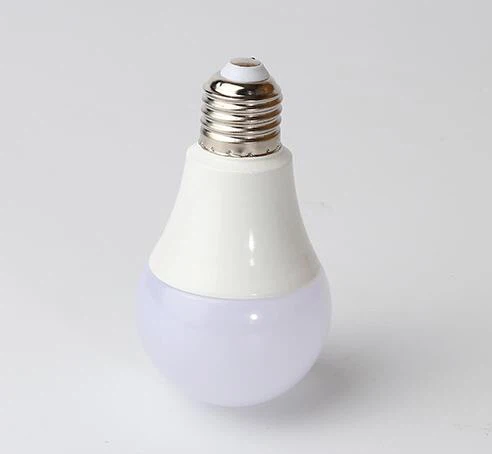
1. Five Major Ways Lighting Can Harm the Human Body
1.1 Blue Light Hazard: The "Invisible Killer" of the Eyes
Blue light is the highest‑energy band in the visible spectrum (approximately 400‑500 nm, shortest wavelength). It is abundant in natural sunlight as well as in electronic screens and LED lamps. Moderate blue light is harmless, but excessive, long‑term, high‑intensity exposure can have serious consequences:
- Retinal damage – High‑energy blue light can penetrate the crystalline lens and reach the retina. Chronic exposure may cause atrophy or even death of retinal pigment epithelial cells, accelerating the development of macular degeneration.
- Increased visual fatigue – Blue light's short wavelength makes it scatter easily inside the eye, causing glare and forcing the ciliary muscles to constantly strain, which leads to dry eyes, eye strain, and headaches.
- Disrupted sleep – Blue light suppresses the pineal gland's secretion of melatonin, disturbing the body's circadian rhythm. Excessive blue light at night makes it hard to fall asleep and reduces sleep quality.
Important note: Not all blue light is harmful. The riskiest part of the blue light spectrum is primarily in the 400‑450 nm range (high‑energy short‑wave blue light). Blue light from 455‑500 nm is involved in color perception and circadian regulation. The real danger comes from excessive, prolonged, high‑proportion exposure to the harmful band.
1.2 UV and IR Hazard: Damage You Cannot See
Although most household LED lamps claim to be "UV‑free", poor‑quality LEDs with flawed phosphor coating or aged lamp covers may still leak small amounts of ultraviolet radiation. In addition, halogen lamps and some old‑fashioned incandescent bulbs can emit UV or infrared (IR) light.
- Ultraviolet (UV) – Long‑term exposure can cause photokeratitis (snow blindness), accelerate cataract formation, and also age the skin, cause sunburn, and even increase the risk of skin cancer.
- Infrared (IR) – High‑intensity IR radiation at close range can cause infrared cataracts and thermal retinal injury (commonly seen in occupational settings like glass blowing and steelmaking).
Although these risks are low in typical home environments, UV/IR hazards cannot be ignored in lamps used at close range – such as makeup mirrors, nail lamps, grow lights, and desk lamps – if they lack proper protection.
1.3 Glare: The "Chronic Poison" for Vision
Glare is not simply about a light source being too bright; it is visual discomfort caused by an uneven brightness distribution. Examples include the headlights of an oncoming car at night, bare bulbs directly in your field of view, or glaring reflections from a glossy desk surface.
- Disability glare – Directly reduces visual clarity and contrast, making it hard to see details. Long‑term exposure forces the eyes to work harder, leading to severe visual fatigue.
- Discomfort glare – Although it does not reduce the ability to see objects, it causes discomfort such as eye muscle tension, frequent blinking, and forward head posture, which over time can lead to neck pain and headaches.
In classroom and office lighting, glare has been proven to be a major cause of reduced attention and lower productivity among students and employees.
1.4 Poor Color Rendering: A "Filter" That Distorts the Real World
The Color Rendering Index (CRI/Ra) measures how accurately a light source reveals the true colors of objects. Sunlight has a Ra of 100. Many cheap lamps have a Ra of only 60‑70 or even lower.
- Visual misjudgment – Under low‑CRI light, red may look dark brown, and fresh meat may appear gray. In applications that require accurate color discrimination (e.g., operating rooms, design studios, food sorting), low CRI can cause serious safety and quality issues.
- Increased visual fatigue – When colors are distorted, the eyes take longer to recognize and focus. The ciliary muscles constantly adjust, leading to dry eyes and eye strain.
1.5 Inappropriate Color Temperature: A "Cheat" That Disrupts Your Biological Clock
Color temperature is measured in Kelvin (K). Low color temperature (2700‑3000K) gives a warm, yellowish light; high color temperature (5000‑6500K) gives a cool, bluish‑white light.
- Using high‑color‑temperature (cool) light at night – High‑CCT light contains more blue light, suppressing melatonin secretion and keeping you alert. This disrupts the natural sleep rhythm and over time may lead to chronic insomnia and reduced immunity.
- Using low‑color‑temperature (warm) light during the day – Can make you feel drowsy and reduce work efficiency and focus.
Therefore, "one color temperature for all situations" is unscientific – different times of day and different scenes should be matched with appropriate color temperatures.
2. How to Scientifically Choose Lamps to Avoid These Hazards
✅ Step 1: Look for Photobiological Safety Certification
The international standard IEC 62471 (Photobiological Safety of Lamps and Lamp Systems) classifies lamps into risk categories: Risk Group 0 (RG0 – No Risk) > RG1 (Low Risk) > RG2 (Moderate Risk) > RG3 (High Risk).
Always prefer RG0 (No Risk) products, especially for desk lamps, bedside lamps, eye‑care lights, children's lamps, and any other lights used at close range for long periods.
✅ Step 2: Control Blue Light Hazard – Look for "Low Blue Light" or "RG0"
- Check the test report for blue‑light weighted radiance or blue‑light hazard group.
- Choose lamps with a color temperature ≤4000K as your main nighttime lighting (below 4000K, the blue light proportion drops significantly).
- For reading and computer work, choose 3000K‑4000K rather than cool white above 5000K.
- Some premium products use blue‑light‑reducing chips or phosphor conversion technology to actively lower the intensity of the hazardous blue‑light band.
✅ Step 3: Reject Glare – Check Anti‑Glare Design
- Choose lamps with frosted covers, anti‑glare grids, or deep‑well (black‑light) technology to prevent direct chip‑to‑eye exposure.
- Desk lamps should meet National Standard Grade A or AA illuminance and adopt edge‑lit + light guide plate technology for uniform, soft light distribution.
- For downlights and spotlights, refer to the UGR (Unified Glare Rating) – UGR ≤19 is suitable for general offices; UGR ≤16 for drafting rooms and other fine visual work.
✅ Step 4: Ensure High Color Rendering – Ra ≥ 90
- For residential lighting, we recommend Ra ≥ 90; for children's study desk lamps, choose Ra ≥ 95.
- For tasks requiring accurate color (e.g., makeup, painting, design, medical examinations), Ra ≥ 97 is even better.
- Also pay attention to the R9 value (red rendering). The higher the R9, the more natural and vibrant red objects (skin, food, etc.) will appear.
✅ Step 5: Match Color Temperature to the Scene – Avoid "Same CCT for the Whole House"
- Living room / dining room – 2700K‑3000K warm light, creates a cozy and comfortable atmosphere.
- Kitchen / study / office – 3500K‑4000K neutral light, balances clarity and comfort.
- Bedroom – 2700K‑3000K warm light; for bedside lamps you can even use 2200K amber (nearly blue‑free) light.
- Consider adjustable‑CCT lamps – set to 4000K during the day to stay alert, and switch to 2700K in the evening to promote sleep.
✅ Step 6: Protect Against UV/IR – Be Wary of Poor‑Quality Sources
- Choose fully enclosed LED lamps to reduce the risk of UV leakage.
- Avoid using UV disinfection lamps, nail lamps, or counterfeit detectors to shine directly onto eyes or skin without protection.
- Stay away from unbranded, no‑specification LED modules, especially those used for close‑range DIY lighting.
3. Common Misconceptions (Q&A)
Q: Are all LED lamps harmful to the eyes?
A: No. Qualified, compliant LED lamps (RG0, low blue light, high CRI, anti‑glare) are very safe. The harmful ones are low‑quality products with high blue light, no protection, and poor design.
Q: Is lower color temperature always safer?
A: Not entirely. 2700K‑3000K indeed helps with nighttime sleep, but using such low CCT during the day can make you feel drowsy. The key is to match CCT to the time and scene, not blindly chase the lowest CCT.
Q: Do I need an "anti‑blue‑light desk lamp" on my office desk?
A: If the desk lamp is certified as low blue light (RG0) and has a color temperature ≤4000K, it can significantly reduce blue light hazard. But note that "anti‑blue‑light" does not mean eliminating all blue light – a completely blue‑free light would have severely distorted color (appearing orange‑red) and is unsuitable for normal reading.
Q: When a child does homework, is brighter always better?
A: Quite the opposite. Excessive brightness creates severe glare and reflections, aggravating visual fatigue. The correct approach is: sufficient illuminance (Grade AA), but non‑dazzling, uniform, no direct glare, and high CRI. A desk lamp with a soft diffuser and edge‑lit design is recommended.
Q: If my phone camera shows no stripes on the light, is it a good lamp?
A: Not accurate. A phone camera detects flicker, not blue light, CRI, CCT, or glare. A flicker‑free lamp can still have excessive blue light or serious glare. So "no stripes on phone" should not be your only purchase criterion.
Final Thoughts
Light is meant to illuminate our world. But if we ignore the hidden risks within it, lighting can become a silent accomplice that slowly harms our family's health. Blue light hazard, UV leakage, glare, poor color rendering – these invisible threats are often more deserving of your attention than flicker.
Choosing science‑based lighting is actually simple: RG0 photobiological safety, Ra ≥ 90 high color rendering, CCT adjustable for different scenarios, and uniform, glare‑free light. A high‑quality lamp may cost a little more, but in return you get long‑term eye health for you and your family, better sleep, and a safe light environment.
Don't let a poor‑quality lamp become the most underestimated health risk in your life.