Compatibility Issues in Retrofitting Old Lamps with LED Lamps
Retrofitting old lamps with LED technology offers significant benefits, including energy efficiency, longer lifespans, and reduced maintenance costs. However, this transition is not without challenges, as several compatibility issues can arise due to differences in electrical requirements, physical design, and operational characteristics between traditional lighting and LEDs.
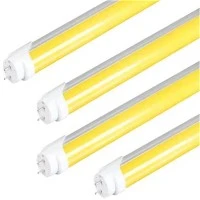
One of the primary concerns is electrical incompatibility with existing control systems. Many older lamps rely on ballasts, transformers, or dimmers designed for incandescent, fluorescent, or halogen bulbs. LEDs operate on direct current (DC) and require drivers to convert alternating current (AC) to DC, which means traditional magnetic or electronic ballasts used in fluorescent fixtures may not work with LED replacements. For example, using an LED tube in a fixture with an unmodified magnetic ballast can cause flickering, reduced lifespan, or even complete failure. Similarly, old dimmer switches often cause LED bulbs to flicker or buzz because they were engineered to regulate the high wattage of incandescent bulbs, not the low-voltage requirements of LEDs.
Physical dimensions and fitting compatibility also pose challenges. Older fixtures may have unique socket types-such as E14, B22, or specialized halogen connectors-that do not align with standard LED bases. Even when the socket type matches, LED bulbs may have different shapes (e.g., tubular, globular) that disrupt heat dissipation or block light distribution in fixtures designed for specific bulb profiles. Heat management is critical here: LEDs emit less heat overall than incandescent bulbs, but they are sensitive to ambient temperatures. Enclosed fixtures originally designed to contain the high heat of incandescent bulbs can trap heat around LEDs, reducing their efficiency and lifespan.
Optical compatibility is another key consideration. Traditional bulbs and LEDs differ in color temperature (measured in Kelvin), color rendering index (CRI), and beam angle. Retrofitting without matching these properties can result in inconsistent lighting quality. For instance, a warm white incandescent bulb (2700K) replaced with a cool white LED (5000K) may create a harsh, unwelcoming environment. Similarly, LEDs with narrow beam angles might fail to illuminate a space as evenly as the broader spread of older bulbs, altering the intended lighting design.
Lastly, regulatory and safety standards must be addressed. Older fixtures may not meet modern safety codes for LED installations, particularly regarding insulation, wiring, and fire resistance. Using LED bulbs with higher wattage equivalents than the fixture's rated capacity can overload circuits or cause overheating, posing fire risks. Additionally, some regions require certification for retrofitted lighting to ensure compliance with energy efficiency and electromagnetic compatibility (EMC) standards, which prevent interference with other electronic devices.
In conclusion, successful retrofitting requires careful assessment of electrical systems, physical fit, thermal management, optical properties, and safety standards. By addressing these compatibility issues-whether through modifying fixtures, upgrading controls, or selecting LED bulbs tailored to the application-users can fully leverage the benefits of LED technology while ensuring reliable, safe, and effective lighting.