

Converting Your Home to LED Lights: Important Steps You Must Know
Would you like to upgrade to contemporary LED technology for your lighting? Old illuminants may frequently be readily changed in lights. You may learn what to look out for during the LED changeover in this post. In addition, I talk about my own LED conversion experiences.
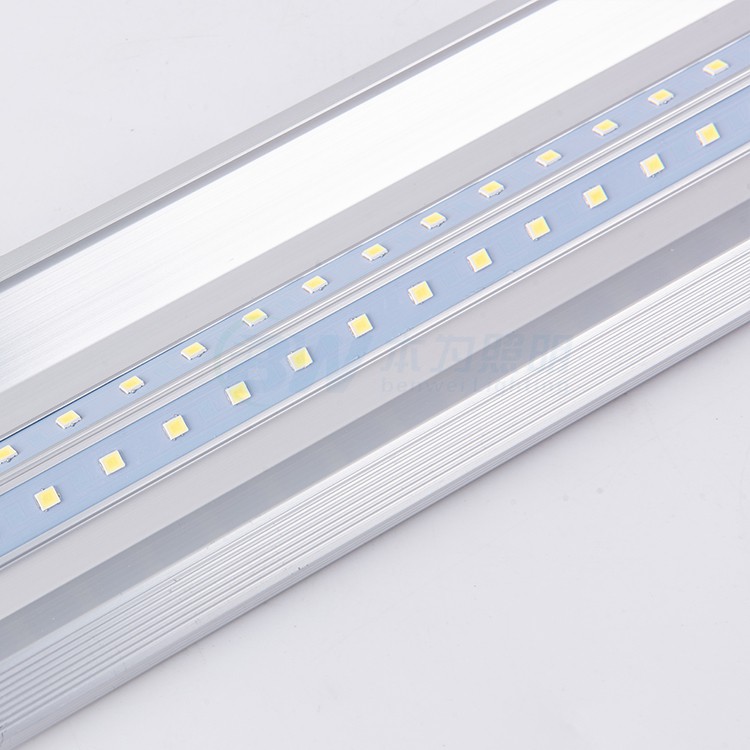
LED conversion
The outdated lighting technology had its day. Numerous benefits come with LED technology, including a long lifespan and greatly reduced energy use. Therefore, switching to LED bulbs from the previous illumination is a sensible move.
I took advantage of a move to convert the entire lighting system to LED. Of course, it is entirely up to you whether you want to convert all of your lights to LED at once or just a few at a time.
Favorable circumstances for switching to LED
Old illuminant defect
A room's new furnishings
Renovation
Moving
Replace the light source or buy a new lamp?
There are two ways to convert to LEDs. One option is to swap out the current lamp's luminants. Alternately, a new light with integrated LEDs can be used in lieu of the existing bulb as a whole. One or the other option may be preferable depending on the circumstance.
Changing the luminants
The simplest solution is to swap out the old lighting with new ones that use LED technology. Many of the home's lights have E26, E11, or GU10 base types. For these bases, a wide variety of LED illuminants are available. If you wish to use the lamp itself for a few more years, changing the illuminants is always a good idea.
Modern LED bulb
Buying a lamp with integrated LEDs might be beneficial if you're going to buy a new bulb anyhow. These are frequently fixed into place and cannot be changed. Although some people believe this to be a drawback, the extended lifespan of LEDs makes this unproblematic. The benefits include whole new design options.
My strategy
I integrated both types while switching to LED lighting. I changed the illuminants in several existing lights to LEDs. I have switched over instantly to LED-integrated bulbs when buying new ones.
What should you consider while retrofitting?
At first look, the conversion appears to be relatively difficult due to the diversity of LED lighting. Compared to earlier light sources, LED technology is also more sophisticated. Simply purchasing any LED light without doing your research might lead to regret in the future. However, if you are excited about the present LED technology if you are interested in the following factors before buying.
Important factors to take into account before refit
Which brightness do you require?
I need to know what color temperature.
Which angle of the beam is ideal?
Does the lamp need to be dimmable?
Which brightness do you require?
LED light brightness is now specified in lumens rather than watts. You must ascertain the brightness of the former bulb if you wish to maintain the lamp's brightness after conversion. You may use the Lumen Watt calculator.
My suggestions
I use LED lights with 330 lm in little hallways, rooms that are only a few square meters, and on staircases. This is roughly equivalent to a 35 W incandescent bulb's brightness.
I utilize illuminants with 600 lm in the entry area, which roughly equates to a typical 50 W light.
I use a 1400 lm LED ceiling light for a 16 sq m room. But because it was mostly too bright, the light switch was changed to a dimmer. Usually, this is changed to 50%.
Which angle of the beam is ideal?
Numerous vintage light sources have significant light dispersion and emitted light in all directions. LEDs emit light in a very specific direction. A single luminant typically has many LEDs placed for wider beam angles. The lamp that needs to be converted determines the needed beam angle of the light source.
My suggestions
The lumen value of the new LED lights can often be lower than with the previous illuminant, particularly with directed spots.
For example, it is possible to reduce the amount of indirect light that is emitted toward the ceiling or the back.
What color temperature do I need?
The light color of an LED bulb is described by its color temperature. There are many color temperatures, ranging from warm white to cold white, depending on where it is utilized. In Kelvin, the precise value is provided.
My suggestions
In the living room, I utilize lights with a 2700 K color temperature. This hue of light is an exact match for the warm white light produced by vintage incandescent bulbs.
I use lights with a 3000 K color temperature in locations like my storage room and laundry room. Though less warm, this light appears brighter.
Does the lamp need to be dimmable?
Not all LED lighting can be muted, unlike halogen and vintage incandescent bulbs. The replacement bulb or luminaire has to be clearly labeled as being able to be dimmed if you wish to convert a dimmable lamp to LED.
Some older lamps' dimmers need a minimum load, which the modern LED lighting may not always meet. In this situation, the new lamps flicker, hum, or won't turn on at all.
My suggestions
One of the trickiest jobs might be converting dimmable bulbs attached to an outdated dimmer. The only solution in this situation is to give it a go.
There is no need for additional action if the new LED bulb works flawlessly and the brightness may be adjusted.
Replace the old dimmer with a new LED dimmer if the new lamp cannot be turned on, flickers, or hums.
What else might be crucial?
Low-voltage lighting conversion
A low-voltage variation must also be used if low-voltage lights are to be converted to LEDs. Low-voltage lights cannot be directly operated by 110V mains power. These are attached to a transformer, which typically produces low voltage of 12V.
Similar issues might arise when connecting to an old dimmer while upgrading LED light sources. Testing will be necessary to see whether the new LED lighting operate without issues. If not, a new LED transformer has to be installed in place of the old one.
Heat loss in tiny lamp glasses
Some luminaires use extremely tiny lamp panes that encapsulate the illuminant completely. LED bulbs must emit some of their energy as heat into the environment even if they have a high level of efficiency.
Heat buildup can happen when using tiny lamp glasses with extremely strong and brilliant lighting. The LED lifespan may suffer as a result of this.
Renovate all the lights?
I've had good luck with LED technology, so I think it would be reasonable to convert all of the lights to LED. However, it must be carefully considered whether a conversion actually makes sense or not in the following situations.
Lighting in spaces that are rarely utilized, such sheds or storage rooms (low lighting duration, therefore hardly any savings with LED)
Integrated lighting in furniture (complicated conversion)
Which brands should I purchase?
When I switched to LED, I couldn't find any useful information online. I first purchased bulbs from several manufacturers for that reason. I was then able to determine the differences and what to watch out for.
The majority of the generic bulbs had a number of drawbacks. The illuminant generated light only briefly after applying pressure to the light switch due to switch-on delays. Additionally, when turned on, a minor flickering or unpleasant buzzing noises may be heard.
At the moment, I mostly utilize Philips LED lights and luminaires. These don't have any of the aforementioned drawbacks and have also much persuaded me of the quality of the light. Additionally, more than three years after the conversion, there was still no flaw, which testifies to the quality.
Conclusion
With the advent of LED technology, buying new lamps has actually grown slightly more challenging. However, if you've read thus far, you already know what matters when switching to LED. Nothing will prevent you from a successful LED conversion if you keep these things in mind while making your buying selection, along with my own experiences.


