

1. Incandescent lamps
The incandescent lamp is an electric light source that energizes and heats the filament to an incandescent state, and emits visible light by using thermal radiation. The light color and light collection performance of the incandescent lamp is very good, but because of the low light efficiency, it has gradually withdrawn from production and sales. Its advantages are simple structure, low cost, convenient use and good brightness. The disadvantages are low luminous efficiency and short service life. 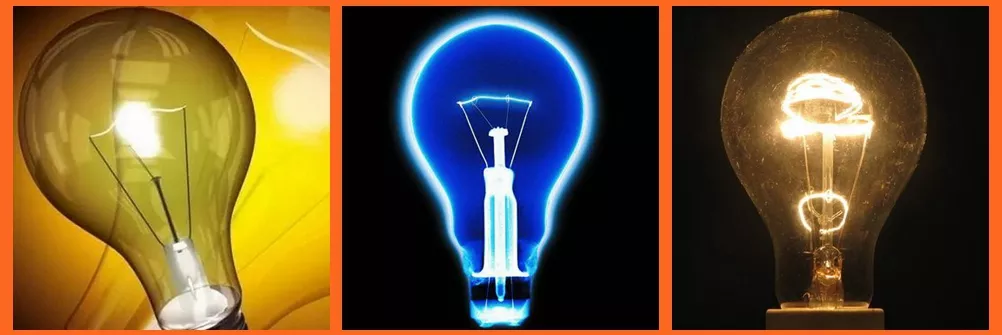
2. Tungsten halogen lamps
The tungsten halogen lamp is a kind of lamp filled with halogenated element gas inside the lamp. Under certain temperature conditions, the tungsten and halogen-like substances evaporated at a suitable temperature will react correspondingly, and then a kind of Volatile halogen tungsten compounds. At this time, the halogen tungsten compounds are in a gaseous state. When this gaseous state is heated, it will volatilize into tungsten and halogen, so that the lamp can be recycled. Disadvantages are poor shock resistance. 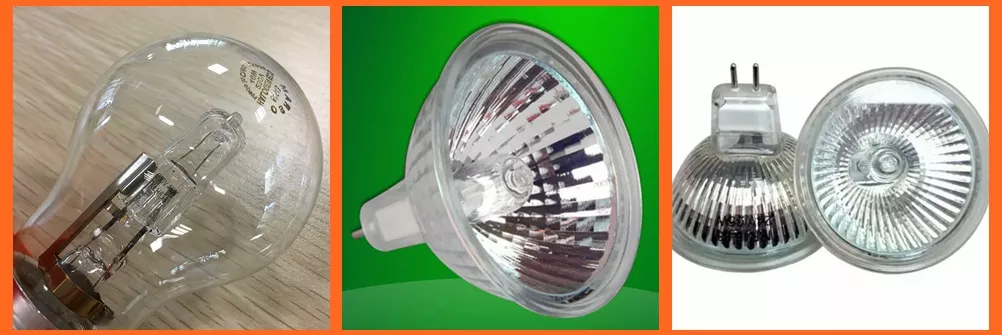
3. Fluorescent lamps
Fluorescent lamps use mercury vapor to generate discharge under the action of an applied voltage, which emits a little visible light and a large amount of ultraviolet rays. The ultraviolet rays stimulate the fluorescent powder coated on the inner wall of the tube to make it emit bright light. The lifetime and brightness of fluorescent lamps are better than incandescent lamps. The disadvantages are long start-up time, stroboscopic flicker will occur, affecting the service life. If the fluorescent lamp is not good quality, the damage to human eyesight will be more serious. 
4. LED plant growth light
The LED is a light-emitting diode. Advantages of high efficiency, pure light color, low energy consumption; long durable life, safety and environmental protection, instant start; vibration resistance, cold light source, long-term lamp body surface with low heat and good heat dissipation. Get close to the object without feeling hot. Based on this feature, the LED can be placed horizontally or vertically above the plant.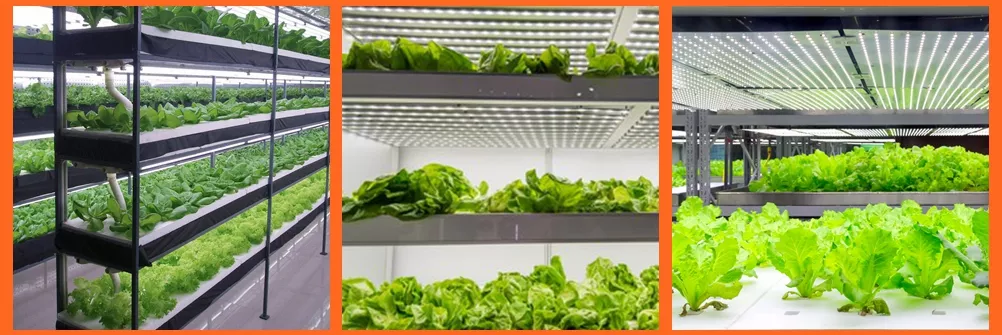
Photosynthesis
The main reason why plant growth lamps use special lamps is that the light required for plant photosynthesis is different from the light we use for daily lighting. Plant growth requires the use of the sun's light energy to assimilate carbon dioxide and water to produce organic matter and release oxygen. This process is called photosynthesis. 
Let’s take a look at the effects of different wavelengths on plants:
280-315nm: The impact on the morphology and physiological processes is minimal.
315-400nm: Less chlorophyll absorption, affects the Photoperiod effect, and prevents stem elongation.
400-520nm(Blue): Chlorophyll and carotenoids absorb the most in proportion and have the greatest impact on photosynthesis.
520-610nm(Green): The absorption rate of the pigment is not high.
610-720nm(Red): The absorption rate of chlorophyll is low, which has a significant influence on photosynthesis and photoperiod effect.
720-1000nm: Low absorption rate, stimulating cell extension, affecting flowering and seed germination.
>1000nm:720-1000nm: Converted into heat.
From the above data, the wavelength of light required for plant photosynthesis is about 400-720nm. The 400-520nm(blue) light and 610-720nm (red) contributed the most to photosynthesis. 520-610nm(green) light had low absorption of plant pigment.
It can be seen that the plant lights are basically made into red and blue combination, full blue and full red to provide the light of two wavelengths of red and blue, covering the wavelength range required for photosynthesis. In the visual effect, the red and blue combination of plant lights appear pink.
When LED plant supplement light provides plant lighting, the general power is less than 50w, for different plants, the height from the main leaf surface of the plant should be 0.2-0.8 meters. The power is higher than 50w, for different plants, the height from the main leaf surface of the plant should be 0.5-1.5 meters. In summary, LED lights are the most suitable lamps for plant lighting.
Difference between plants led grow lights and common lights
May 06, 2022
Send Inquiry
Related Knowledge
-
 Why professional lighting projects focus on uniformity, not just brightness04 Jul, 2026
 -
 LED Lighting Quality Checklist: What International Buyers Should Inspect Before Placing An Order04 Jul, 2026
 -
 Why Flicker-Free LED Lighting Matters: The Impact Of Invisible Light Fluctuations On Comfort And ...03 Jul, 2026
 -
 LED Voltage Explained: Why Choosing The Wrong Voltage Can Damage Your Lighting System03 Jul, 2026