Digital RGB LED Strips: The Versatile Lighting Solution Redefining Illumination
In the world of modern lighting, few innovations have combined flexibility, creativity, and accessibility as seamlessly as digital RGB LED strips. Unlike traditional single-colour LED strips or incandescent lighting, digital RGB LED strips – short for "Red, Green, Blue" light-emitting diode strips – offer dynamic control over colour, brightness, and even animation, turning ordinary spaces into customisable, immersive environments. From home decor and gaming setups to commercial displays and architectural lighting, these strips have become a go-to choice for anyone seeking to elevate their lighting experience. But what exactly are digital RGB LED strips, how do they work, and what makes them stand out from other lighting options? This article explores the technology, applications, benefits, and practical considerations of digital RGB LED strips, shedding light on why they have become a staple in both residential and commercial lighting design.
What Are Digital RGB LED Strips?
At their core, digital RGB LED strips are flexible circuit boards embedded with tiny RGB LED chips, each capable of emitting red, green, and blue light. Unlike "analogue" RGB strips, where all LEDs on the strip change colour simultaneously, digital RGB strips include a built-in controller chip (such as WS2812B, APA102, or SK6812) for each individual LED or group of LEDs. This "addressable" design allows users to control each LED's colour and brightness independently, enabling precise customisation, dynamic effects (like chasing lights, fades, or flashes), and even synchronisation with music, movies, or sensors.
Most digital RGB LED strips are low-voltage (typically 5V, 12V, or 24V), making them safe for DIY installations and reducing the risk of electrical hazards. They come in two main form factors: "flexible" strips (made of a bendable PCB material) that can wrap around curves, corners, or irregular surfaces, and "rigid" strips (mounted on a hard PCB) that are better suited for straight, flat applications like under-cabinet lighting. The strips are also available in different densities, measured by the number of LEDs per metre (e.g., 30 LEDs/m, 60 LEDs/m, 144 LEDs/m). Higher-density strips produce smoother, more uniform light and more detailed animations, while lower-density options are more budget-friendly for large spaces.
A key component of any digital RGB LED strip setup is the controller. Controllers range from simple handheld remotes (for basic colour and brightness adjustments) to advanced Wi-Fi or Bluetooth-enabled controllers that connect to smartphones or smart home systems (like Alexa, Google Home, or Apple HomeKit). Some high-end controllers even support programming via software (such as Arduino or Raspberry Pi), allowing users to create custom animations, sync lighting with audio, or integrate the strips with other smart devices (e.g., motion sensors or thermostats). Power supplies are another essential accessory: since digital RGB strips run on low voltage, they require a compatible power adapter to convert household AC power (110V/220V) to DC power, ensuring safe and stable operation.
How Do Digital RGB LED Strips Work?
The magic of digital RGB LED strips lies in their addressable LED technology and colour- mixing capabilities. Each RGB LED chip contains three separate diodes – one red, one green, and one blue – along with a tiny controller chip. By adjusting the intensity of each diode (from 0 to 255, using an 8-bit colour depth), the LED can produce over 16 million different colours (256 × 256 × 256). For example, turning on the red diode at full intensity and the green and blue diodes at 50% creates a warm orange hue; maxing out all three diodes produces pure white light.
The controller chip in each LED (or LED group) communicates with the main controller via a data line. When the main controller sends a signal (a sequence of electrical pulses), each LED decodes the signal to determine its own colour and brightness, then passes the remaining signal to the next LED in the strip. This "daisy-chain" communication allows the strip to maintain precise control over hundreds of LEDs, even in long lengths (some strips can be extended up to 10 metres or more with additional power supplies).
Different controller chips use different communication protocols, which affect performance and compatibility. The WS2812B chip (one of the most popular) uses a single data line and requires precise timing, making it ideal for small to medium setups like accent lighting or gaming desks. The APA102 chip, by contrast, uses two data lines (clock and data) for faster, more reliable communication, making it better for large installations like commercial displays or stage lighting. Understanding these differences is important when choosing a strip, as it ensures compatibility with your controller and desired effects.
Another key feature of digital RGB LED strips is their dimming capability. Unlike incandescent bulbs, which dim by reducing voltage (often leading to a warm, yellowish tint), RGB strips dim by adjusting the "pulse-width modulation" (PWM) of each diode. PWM works by rapidly turning the diode on and off (thousands of times per second) at varying intervals – longer "on" intervals create brighter light, while shorter intervals create dimmer light. This method maintains consistent colour even at low brightness levels, which is a crucial advantage for creating subtle, ambient lighting.
Applications of Digital RGB LED Strips: From Home to Commercial Use
Digital RGB LED strips' versatility makes them suitable for almost any lighting need, from intimate home accents to large-scale commercial projects. Their flexibility, low cost, and easy installation have expanded their use cases far beyond traditional lighting, turning them into a tool for creativity and functionality.
Residential Applications
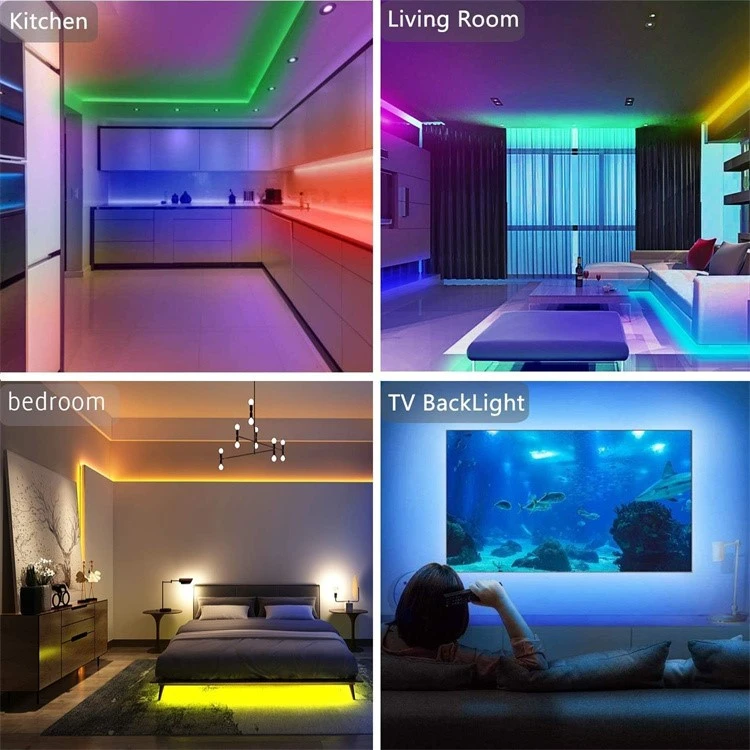
In homes, digital RGB LED strips are a favourite for adding ambiance and personality to living spaces. One of the most popular uses is under-cabinet lighting in kitchens: strips mounted under upper cabinets cast soft, colourful light on countertops, making food preparation easier while adding a modern touch. In living rooms, strips can be placed behind TVs or sofas to create "bias lighting" – a soft glow that reduces eye strain from screen time and enhances the viewing experience. Many users sync this lighting with their TV or streaming device, so the strip changes colour to match the content (e.g., blue for ocean scenes, red for action movies), creating a mini home theatre effect.
Gaming setups are another common use case. RGB strips mounted behind monitors, under desks, or around PC cases can be synced with gaming software (like Razer Chroma or Corsair iCUE) to match in-game events – flashing red when the player takes damage or cycling through colours during a victory screen. This immersive lighting adds a new layer of engagement to gaming, making it a must-have for enthusiasts.
Bedrooms benefit from RGB strips too: soft, warm colours (like pale pink or amber) can be used as nightlights, while brighter colours (like cool blue) can mimic natural daylight to help you wake up in the morning. Strips mounted along headboards or around mirrors add a cosy, hotel-like feel, and smart controllers allow users to adjust settings via voice commands (e.g., "Alexa, set bedroom lights to 50% brightness, purple").
Commercial and Public Spaces
In commercial settings, digital RGB LED strips are used to attract customers, enhance brand identity, and create memorable experiences. Retail stores often use strips to highlight products: for example, a clothing store might use warm red or orange strips to draw attention to a new collection, while a tech store could use cool blue strips to emphasise sleek, modern devices. Window displays with animated RGB strips (like chasing lights or colour fades) stand out to passersby, increasing foot traffic.
Restaurants and bars also rely on RGB strips to set the mood. A casual café might use bright, cheerful colours during the day and soft, dim hues at night, while a high-end restaurant could use deep blues or purples to create an intimate, upscale atmosphere. Some establishments sync their lighting with music or events – for example, a sports bar might flash green and gold when the local team scores, or a nightclub could cycle through vibrant colours to match the DJ's set.
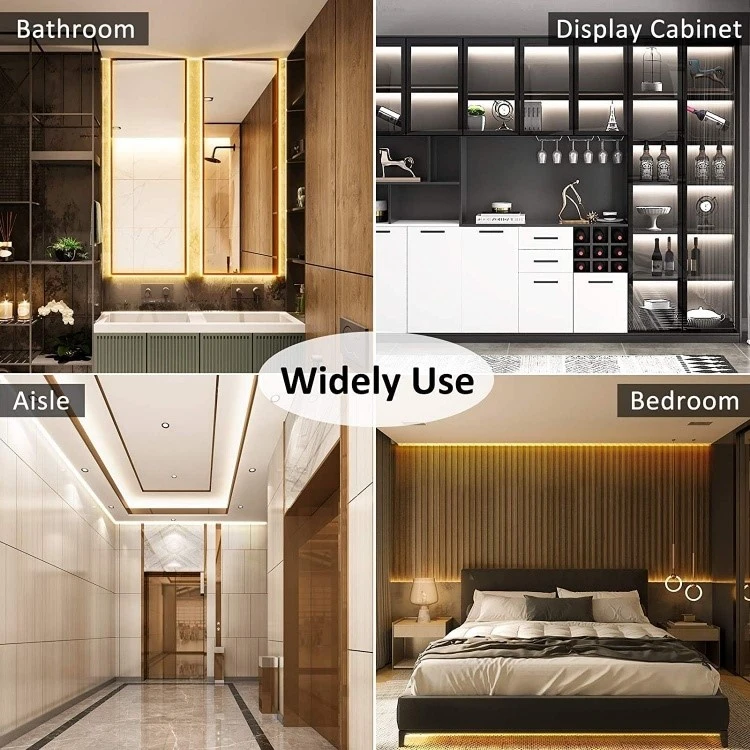
Architectural lighting is another major commercial application. RGB strips can be embedded in building facades, staircases, or ceilings to highlight architectural features and create visual interest. For example, a hotel might use strips to illuminate its lobby ceiling with a slow colour fade, or a museum could use them to light exhibit cases with colours that complement the artwork (e.g., warm tones for classical paintings, cool tones for modern sculptures). Cities also use RGB strips for public art installations or holiday decorations – think of a downtown square with a tree wrapped in animated RGB strips or a bridge lit up in the city's team colours during a championship.
Specialized Uses
Beyond home and commercial use, digital RGB LED strips have found niche applications in industries like automotive, horticulture, and healthcare. In automotive settings, strips are used to add custom lighting to car interiors (under seats, along dashboards) or exteriors (around headlights, under bumpers), allowing owners to personalise their vehicles. In horticulture, some RGB strips are designed to emit specific light spectrums (e.g., red and blue for plant growth) and can be programmed to mimic natural daylight cycles, helping indoor plants thrive. In healthcare, strips are used in hospitals to create calming environments for patients – soft, cool colours in waiting rooms to reduce anxiety or warm colours in recovery rooms to promote relaxation.
Benefits of Digital RGB LED Strips: Why They Outperform Traditional Lighting

Digital RGB LED strips offer a host of advantages over traditional lighting options like incandescent bulbs, fluorescent tubes, or even single-colour LED strips. These benefits make them a practical and cost-effective choice for both short-term projects and long-term installations.
Unmatched Customization
The biggest advantage of digital RGB LED strips is their ability to customise colour, brightness, and effects. Unlike single-colour LEDs (which emit only one hue) or incandescent bulbs (which produce a fixed warm light), RGB strips let users choose from millions of colours and adjust brightness to suit any mood or task. Whether you want a bright white light for reading, a soft pink for a romantic dinner, or a dynamic rainbow fade for a party, RGB strips can deliver. Advanced controllers even allow for custom animations – you can program a strip to "chase" colours along a wall, pulse to the beat of music, or mimic the flicker of a candle. This level of customisation is impossible with traditional lighting, making RGB strips ideal for anyone who values personalisation.
Energy Efficiency and Long Lifespan
Like all LEDs, digital RGB strips are highly energy-efficient. They use up to 80% less energy than incandescent bulbs and 50% less than fluorescent tubes, which translates to lower electricity bills over time. For example, a 5-metre RGB strip (60 LEDs/m) uses about 12 watts of power – compared to a 60-watt incandescent bulb – while producing more light. This efficiency is especially important for large installations (like commercial displays or building facades), where energy costs can add up quickly.
RGB strips also have a long lifespan: most high-quality strips last 50,000 to 100,000 hours, compared to 1,000 hours for incandescent bulbs and 10,000 hours for fluorescent tubes. This means you won't have to replace them as often, reducing maintenance costs and waste. For homeowners, this could mean years of hassle-free lighting; for businesses, it could mean lower overhead and less downtime for repairs.
Safety and Ease of Installation
Digital RGB LED strips are low-voltage, which makes them much safer than traditional high-voltage lighting. There's no risk of electric shock when handling the strips (even when powered on), and they produce very little heat – so you can mount them near flammable materials (like curtains or wood) without worry. This safety factor makes them ideal for DIY projects, especially for beginners or families with children and pets.
Installation is also simple: most RGB strips come with adhesive backing, so you can peel and stick them to almost any clean, flat surface (wood, metal, plastic, or glass). No special tools or electrical expertise is needed – just cut the strip to the desired length (most strips have cut marks every few LEDs), connect it to the controller and power supply, and turn it on. For more permanent installations, you can use screws or clips to secure the strip, but the adhesive option is more than enough for most home uses. This ease of installation means you can transform a space in minutes, without hiring an electrician.
Durability and Versatility
Digital RGB LED strips are built to last. The flexible strips are made of a durable, water-resistant material (many are IP65 or IP67 rated, meaning they're dustproof and waterproof), so they can be used indoors or outdoors – even in wet areas like bathrooms, kitchens, or gardens. Rigid strips are even more robust, with a hard PCB that protects the LEDs from impact and damage. This durability makes them suitable for high-traffic areas (like hallways or staircases) or outdoor spaces (like patios or decks) where traditional lighting might break or corrode.
Their versatility is another key benefit. RGB strips can be cut to length, extended with additional strips (using connectors), or bent around curves, making them suitable for irregular spaces. Whether you need to light a narrow bookshelf, a large ceiling, or a curved TV stand, there's an RGB strip that can fit. They also work with a wide range of controllers, from simple remotes to smart home systems, so you can choose the level of control that fits your needs and budget.
Practical Considerations: Choosing and Installing Digital RGB LED Strips
While digital RGB LED strips are easy to use, there are a few key factors to consider before buying and installing them to ensure you get the best results.
Choosing the Right Strip
First, consider the voltage: 5V strips are ideal for small projects (like PC case lighting or under-cabinet lighting) because they're low-power and can be powered by a USB port, but they have a shorter maximum length (usually 2-3 metres) before voltage drop occurs. 12V or 24V strips are better for larger installations (like room lighting or outdoor displays) because they can be extended to 10 metres or more without losing brightness. Make sure to match the strip's voltage to the power supply – using a 12V power supply with a 5V strip will damage the LEDs, and vice versa.
Next, consider the LED density: 30 LEDs/m strips are budget-friendly and work well for large spaces (like patios), but they may have visible gaps between LEDs. 60 LEDs/m strips are the most popular – they produce smooth, uniform light and work for most home and commercial uses. 144 LEDs/m strips are high-density and ideal for detailed animations or small spaces (like behind a TV), but they're more expensive and use more power.
Water resistance is another important factor: if you're using the strip outdoors or in a wet area (like a bathroom), choose a strip with an IP65 or higher rating. IP65 strips are dustproof and protected against low-pressure water jets (like rain), while IP67 strips can be submerged in water for short periods (like a poolside installation). Indoor strips (IP20 rated) are not water-resistant and should only be used in dry areas.
Finally, check the controller compatibility: not all strips work with all controllers. For example, WS2812B strips require a controller that supports the WS2812 protocol, while APA102 strips need a controller that supports SPI (the protocol used by APA102). If you want to use a smart controller (like a Wi-Fi controller), make sure it's compatible with your strip's voltage and protocol.
Installation Tips
When installing your RGB strip, start by measuring the area to determine the length of strip you need. Most strips have cut marks every 3-6 LEDs. Only cut at these marks, as cutting elsewhere will damage the circuit. If you need a longer strip, use connectors (available at most electronics stores) to link multiple strips together, but be aware of voltage drop: for 12V strips, avoid extending beyond 10 metres without adding a secondary power supply.
Clean the surface before applying the adhesive: dust, dirt, or oil will prevent the adhesive from sticking, so wipe the area with a clean, dry cloth (or rubbing alcohol for greasy surfaces). For curved surfaces, use a flexible strip and apply it slowly, pressing firmly to ensure it adheres. If the strip is too long, you can fold it (but avoid folding too tightly, as this can damage the LEDs) or use clips to secure loose ends.
Test the strip before permanent installation: connect it to the controller and power supply to ensure all LEDs work and the colours are correct. This will save you time and hassle if there's a problem with the strip or controller. Once you're satisfied, secure the controller and power supply in a hidden location (like a cabinet or behind a TV) to keep the setup neat.
Maintenance
Digital RGB LED strips require very little maintenance, but there are a few things you can do to extend their lifespan. Keep the strips clean: dust and dirt can block the light and cause overheating, so wipe them with a soft, dry cloth every few months. Avoid exposing non-waterproof strips to moisture, and if a strip gets wet, turn off the power immediately and let it dry completely before using it again. If an LED stops working, check the connection first – loose wires or a faulty connector are often the cause. If the LED itself is broken, you can replace the individual LED (if you have soldering skills) or cut the strip at the nearest cut mark and replace that section.
The Future of Digital RGB LED Strips
As technology advances, digital RGB LED strips are only getting better. Future innovations are likely to focus on three key areas: smarter control, improved efficiency, and new form factors.
Smarter control will make RGB strips even more integrated with smart home systems. We can expect to see more controllers that support voice commands, AI-powered lighting (which adjusts based on your habits or mood), and integration with other smart devices (like security cameras – turning the strip red if motion is detected – or thermostats – dimming the strip if the room is too warm). Some companies are already developing "self-learning" controllers that remember your favourite settings and automatically adjust the lighting for different times of day.
Improved efficiency will reduce energy use even further. Researchers are working on new LED chips that produce more light with less power, as well as better heat management systems that prevent overheating and extend lifespan. We may also see strips with built-in solar panels for outdoor use, eliminating the need for a power supply and making them even more eco-friendly.
Together, we make it better.
Shenzhen Benwei Lighting Technology Co.,Ltd
Mobile/WhatsApp: (+86)18673599565
Email:bwzm15@benweilighting.com
Skype: benweilight88
Web: www.benweilight.com
Add: F Building, Yuanfen Industrial Zone, Longhua, Bao'an District, Shenzhen, China