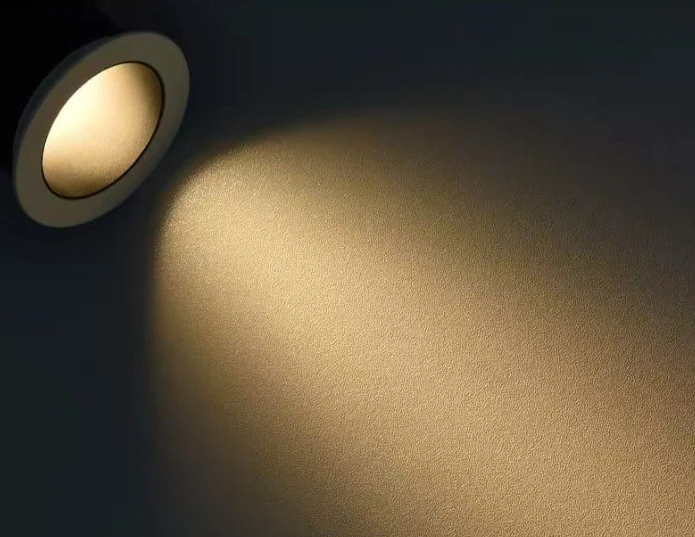
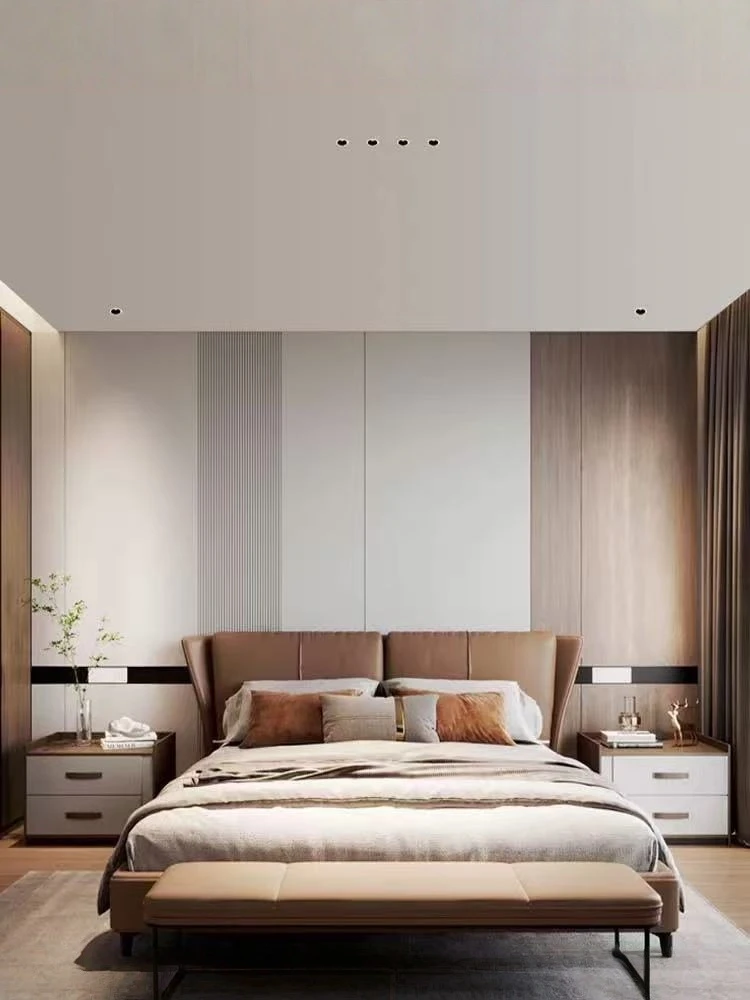
Walk into a well-designed living room, a high-end wine cabinet display, or a boutique retail shelf, and you will often notice something subtle but powerful: the objects on display look alive. The colors are richer, the textures have depth, and the space feels intentional rather than merely illuminated. In many cases, the fixture responsible for that effect is a mini 3W recessed LED spotlight-a light source so small it nearly disappears into the surface, yet capable of reshaping how a space is perceived. The question worth asking is not whether a 3W spotlight is bright enough (it usually is, for accent purposes), but whether the one you choose is actually delivering the right kind of light rather than simply consuming 3 watts of electricity.
The Number That Separates "Accent Lighting" from "Just a Small Lamp"
A 3W LED spotlight typically produces 220 to 350 lumens, depending on the chip efficiency and optical design. That output is more than sufficient for precise accent lighting-highlighting a painting, washing a countertop edge, or picking out the texture of a stone backsplash. But lumen count alone tells you almost nothing about whether the light will make a space feel premium or clinical.
The decisive metric is color rendering index (CRI) . A standard commercial LED often sits at CRI 80, which is acceptable for general ambient lighting but has a measurable deficiency in the red spectrum. Under a CRI 80 source, deep reds and warm woods can look slightly muted or "flat." A CRI 90+ spotlight fills in that missing red content, producing colors that appear richer, more natural, and closer to how they would look under daylight. For spaces where the appearance of objects is the point-wine labels, artwork, wood grain, fabric textures-that difference is not cosmetic. It is the difference between a display that feels curated and one that feels simply lit.
Table 1: What Changes When You Move from CRI 80 to CRI 90+ in a Mini Spotlight
| Dimension | Typical CRI 80 Mini LED | CRI 90+ Mini Recessed Spotlight | Practical Consequence |
|---|---|---|---|
| Red spectrum completeness | Partial; reds appear slightly dull | Substantially fuller; reds and woods look richer | Wine, meat, wood, and artwork render with greater depth |
| Perceived "quality" of light | Functional; adequate for circulation | Visually comfortable; objects look intentional | A display shelf reads as designed rather than merely illuminated |
| Suitability for retail / gallery / cabinet | Acceptable for budget installations | Preferred for high-end display and presentation | The fixture becomes part of the merchandising strategy |
| Luminous output trade-off | Slightly higher lumens for the same wattage | Minimal efficiency loss; modern CRI 90 chips close the gap | You do not sacrifice meaningful brightness for better color |
Data reflects published comparisons of CRI 80 and CRI 90 LED sources in indoor lighting applications.
The Real Energy Story: It Is Not About the 3 Watts
The appeal of a 3W fixture is often framed as "low power consumption," but that framing misses the more important economic point. The meaningful comparison is not 3W versus some other LED wattage. It is 3W LED versus the legacy halogen or incandescent source it displaces.
A 3W LED spotlight is routinely positioned as a direct replacement for a 20W to 40W halogen spotlight. At the higher end of that range, the energy reduction is dramatic: a fixture drawing 3W instead of 35W consumes roughly 91% less electricity for comparable accent-lighting output. Even against a more conservative 25W halogen equivalent, the reduction remains above 85%. Multiply that difference across a cabinet run with six or eight spotlights, and the operational case becomes difficult to ignore-especially in hospitality, retail, or residential settings where accent lighting may run for eight to twelve hours per day.
Table 2: Mini 3W LED vs. Legacy Halogen and Standard-Efficiency LED Alternatives
| Metric | 3W Mini LED Recessed Spotlight | Halogen Equivalent (20–40W) | Standard CRI 80 LED Mini Spot |
|---|---|---|---|
| Power draw per fixture | 3W | 20–40W | 3W |
| Typical halogen replacement ratio | 1 fixture replaces 1 halogen unit | Baseline | Same wattage as CRI 90+ alternative |
| Relative energy consumption | Lowest | 7–13× higher than 3W LED | Comparable to 3W LED |
| Rated lifespan | Commonly up to 50,000 hours | Often 2,000–4,000 hours | Similar to 3W LED |
| Color rendering capability | CRI ≥90 (Benwei specification) | CRI ~100 but with high heat and UV output | Typically CRI 80 |
| Heat at the fixture surface | Low; aluminum housing manages dissipation | High; heat is a primary failure mode | Low |
Comparison framework based on published halogen-replacement data and LED lifecycle specifications.
The Installation Reality: Small Fixtures Still Have Physical Requirements
A mini spotlight's visual invisibility depends on the recess depth and cutout diameter, and those dimensions are not universal. Published installation guidance for mini recessed fixtures places cutout diameters in the 25 mm to 55 mm range and recess depths in the 15 mm to 40 mm range, with some ultra-slim models reaching approximately 12 mm of depth. A 3W fixture with a 30 mm cutout is a common compact configuration, but specifying "3W" alone does not guarantee that it will fit a thin cabinet panel or a shallow ceiling void. The physical envelope must be verified against the substrate before installation, not after the hole has been drilled.
This is where the conversation moves from a generic product search to a specification decision. A fixture that is CRI 90+, has a genuinely narrow bezel for a clean ceiling line, and fits the intended cutout depth is a different product from a "3W mini spotlight" that meets only the wattage criterion. For cabinet and display applications specifically, the combination of anti-glare optics, a high CRI chip, and a physical depth compatible with the cabinet panel is what determines whether the installation looks seamless or improvised.
If you are evaluating mini recessed spotlights for a residential project, a wine cabinet display, or a retail fixture plan, the productive next step is not another round of wattage comparison. It is a fit-and-render check against your actual substrate and display requirements. Benwei Lighting's mini 3W recessed LED spotlight is built around the CRI ≥90 and 30 mm cutout configuration that defines this category, with anti-glare optics and a narrow-bezel aluminum housing designed for clean integration into cabinets and ceilings. Share your cutout dimensions, display depth, and color-temperature preference, and our team can confirm whether this fixture-or a different power/cutout variant in the same family-is the correct specification for your space.