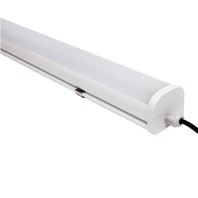
The failure of LED purification lamps is due to the failure of the power supply and drive, and the second is the failure of the LED device itself. Usually the damage to the LED power supply and driver comes from the over-electric shock (EOS) of the input power supply and the open circuit fault at the load end. The over-electric shock of the input power supply often causes damage to the driver chip in the driver circuit, as well as breakdown damage to passive components such as capacitors. A short-circuit fault at the load end may cause overcurrent driving of the drive circuit, and the drive circuit may be damaged by short-circuit or overheating caused by a short-circuit fault. The failure of the LED device itself mainly includes the following situations.
1. Transient overcurrent events
A transient overcurrent event means that the current flowing through the LED exceeds the maximum rated current in the LED technical data sheet, which may be caused by high current directly or indirectly by high voltage, such as transient lightning strikes, switching power supply transients. Overcurrent caused by overvoltage events such as state switching noise, grid fluctuations, etc. These events are transient and very short in duration, and are often referred to as spikes, such as "current spikes", "voltage spikes". The situations that cause transient overcurrent events also include the transient overcurrent when the LED purification lamp is powered on, or when the power is plugged in and unplugged.
For LED purification lamp lighting in automobiles, the transient load dump surge shock of ISO7637-2 is an important threat to its normal operation.
The failure mode of LEDs after being subjected to electrical shock is not fixed, but it usually leads to damage to the welding wire, as shown in Figure 1. This damage is usually caused by extremely large transient overcurrents. In addition to causing the wire to burn, it can also cause damage to other parts close to the wire, such as the sealing material.
2. Electrostatic discharge events
Electrostatic discharge (ESD) damage is the most common transient overvoltage hazard in the manufacture, transportation and application of highly integrated semiconductor devices, and LED purification lamp lighting systems must meet the IEC61000-4-2 standard "Human Electrostatic Discharge". Mode" 8kV contact discharge to prevent the system from failure due to over-electric shock that may be caused by electrostatic discharge.
The performance of the LED PN junction array will be degraded or damaged, as shown in Figure 2. The internal failure of the LED purification lamp chip caused by the discharge path of the ESD event may only be partially functionally damaged, and in severe cases, the LED will be permanently damaged.
Benwei Lighting is an LED Tube, LED flood light, LED Panel Light, LED High Bay, LED manufacturer with 12 years of experience. If you want to purchase a high-quality LED flood light or have a more in-depth understanding of the application of LED flood lights, please contact send us inquiry, our web: https://www.benweilight.com/.