From Human-Centric to Hen-Centric: Why Poultry Farmers Are Switching to LED Lighting Designed for Birds
In commercial poultry production, lighting is no longer a mere utility-it has evolved into one of the most precise and cost-effective management tools available. From stimulating feed intake in newly hatched broilers to triggering ovulation in laying hens, light directly influences growth rates, feed conversion efficiency, egg production, and flock behavior. With the widespread adoption of LED technology, poultry producers now have the ability to control not only light duration and intensity, but also spectrum and dimming transitions. However, understanding how to leverage these parameters is the difference between a lighting system that drives productivity and one that merely illuminates.
This article provides a science‑based framework for selecting and implementing LED poultry lighting, focusing on four critical dimensions: wavelength (color), photoperiod, intensity, and flicker control.We will examine how professional lighting design can improve weight gain, reduce stress, lower mortality, and increase egg output-backed by peer‑reviewed research.
1. Wavelength (Color): Matching the Spectrum to the Bird's Biology
Chickens possess a visual system far more complex than that of humans. They are tetrachromatic, with four types of cone cells that allow them to perceive not only red, green and blue wavelengths, but also ultraviolet light. This enhanced sensitivity means that different spectra trigger distinct physiological and behavioral responses. The key practical finding for poultry producers is that there is no single "best" spectrum-rather, the optimal color changes with the bird's age and production phase.

For Broilers (Meat Birds)
Early‑stage growth is one of the most critical windows for lighting intervention. A randomized controlled study using LED light treatments on "Meihuang" broilers found that birds reared under yellow light (580 nm) and green light (514 nm) from 30 to 72 days of age were significantly heavier than those under standard fluorescent light (p < 0.05). Importantly, yellow light also significantly improved feeding efficiency compared to green and blue light at 45 and 60 days of age (p < 0.05). The same study revealed a quantitative relationship between wavelength (455–620 nm) and broiler body weight that changed with age: at an early stage, longer wavelengths were negatively correlated with weight gain, while in older birds the correlation reversed, becoming positive (R² = 0.925). This provides strong evidence that light spectrum should be adjusted as birds mature.
A separate study on Cobb strain broilers compared white LED lighting with blue‑green LED lighting. The findings reinforced that blue and green light positively affect body weight, with green light being more effective in promoting growth at younger ages, while blue light plays a greater role in stimulating growth in older birds.
Field observations from major livestock exhibitions have further corroborated these findings. Yellow LED light was found to yield the best cumulative weight gain and feed conversion ratio in broilers, with the least litter production. Blue light provides comfort, psychological balance, and reduces pecking, while green light stimulates muscle development and improves egg quality.
For the finishing phase, full‑spectrum illumination (including UV‑A, blue, green, and red) has been shown to improve broiler growth performance, carcass production, meat quality, and blood components. Full‑spectrum light also reduces oxidative stress and promotes gut health, compared to LED infrared lighting alone.
For Layers (Egg Production)
The lighting strategy for laying hens is fundamentally different from that for broilers. While broilers need growth‑promoting light, layers require light that stimulates the reproductive system.
Research on artificial lighting in laying hen management indicates that red‑spectrum LED light enhances ovarian activity, whereas blue and green wavelengths may influence growth and eggshell quality. Higher light wavelengths have been shown to stimulate extra‑retinal photoreceptors more efficiently than lower wavelengths, promoting reproduction in poultry. A direct comparison found that changes in estradiol concentrations were more pronounced in hens maintained under LED red light than in those exposed to incandescent or fluorescent light, confirming that a higher amount of red light leads to stronger ovarian activity.
In practical terms, layer operations should provide cooler light (5000K) with blue‑green wavelengths during the pullet development phase to stimulate feed intake and growth. As birds approach laying age, the spectrum should shift to warmer light (2700–3000K) with sufficient red spectrum to optimize egg production.
Recommended Light Spectra by Poultry Type and Age
| Poultry Type / Stage | Recommended Spectrum | Mechanism | Expected Outcome |
|---|---|---|---|
| Broilers (early growth) | Blue / Green | Stimulates feed intake, muscle development | Higher body weight, reduced stress |
| Broilers (later growth) | Blue / Yellow | Improves feeding efficiency, weight gain | Better FCR, increased live weight |
| Broilers (finishing) | Full‑spectrum (including UV‑A) | Reduces oxidative stress, promotes gut health | Improved meat quality, lower mortality |
| Pullets (rearing) | Cool white (5000K), blue‑green | Stimulates appetite, supports growth | Proper frame development |
| Layers (production) | Warm white (2700-3000K), high red | Enhances ovarian activity, feed efficiency | Increased egg production, better shell quality |
One important caution: while the human eye is most sensitive to green‑yellow light, many poultry light studies focus on narrow‑band blue, green, and red LEDs. For worker safety, pure blue light can be visually fatiguing for human staff; yellow light offers a more human‑friendly alternative that still delivers strong growth benefits for broilers.
2. Photoperiod: Managing Day Length for Maximum Productivity
Photoperiod-the number of hours of light per day-is the most powerful lever for controlling reproductive cycles in poultry and also plays a major role in growth optimization.
For Layers
Laying hens are photosensitive. Light entering the eye stimulates the hypothalamus, triggering the release of gonadotropin‑releasing hormone (GnRH), which in turn activates the reproductive axis. Without sufficient light duration, egg production remains suppressed.
The established protocol for mature laying hens is to gradually increase day length to 15–16 hours of continuous light per day. Producers typically begin increasing light duration by 30 minutes per week when pullets reach target body weight (approximately 3 pounds for brown birds, 2.7–2.9 pounds for leghorns), continuing until 15–16 hours is reached.
The dark period is equally important. Research indicates that a 16L:8D (16 hours light, 8 hours dark) photoperiod improves poultry welfare, reduces psychological stress, enhances immune response, and increases vitality. Intermittent lighting (alternating light and dark periods) can not only reduce electricity costs but also maintain or even improve laying performance.
Cage‑free systems require special attention: sunrise and sunset simulation protocols are critical. These gradual transitions train birds to use nests properly and return to perches at night. Without proper dusk simulation, birds may remain on the floor, increasing the risk of floor eggs, injury, and predation.
For Broilers
The relationship between photoperiod and broiler growth is more nuanced. For newly hatched chicks, initial high‑intensity illumination (30–50 lux) helps them locate water and feed. As birds mature, strategic dimming and reduced day length help control development and calm the flock.
One study examining multiple lighting programs concluded that an 8 hours dark / 16 hours light cycle (L8:D16) is the most recommended option, depending on housing conditions and seasonal factors. Intermittent lighting has been shown to reduce disease incidence and mortality compared to continuous lighting, while also cutting energy costs.
Importantly, lighting programs are not static. Producers should:
- Start dimming at four weeks of age
- Adjust light intensity based on bird type (broilers vs. layers)
- Reduce light duration from 18–20 hours down to 10–12 hours by eight weeks of age for pullets
- Use dimming to calm birds before handling, vaccination, or transport
Photoperiod Recommendations by Production Phase
| Production Phase | Light Duration | Dark Duration | Notes |
|---|---|---|---|
| Broilers (day 0–14) | 20–24 hours | 0–4 hours | High intensity to encourage feeding |
| Broilers (growing) | 16 hours | 8 hours | Gradual reduction to control growth |
| Broilers (finishing) | 16–18 hours | 6–8 hours | Extended light to maximize feed intake |
| Pullets (rearing) | 8–10 hours | 14–16 hours | Short days delay sexual maturity |
| Layers (production) | 15–16 hours | 8–9 hours | Gradual increase at target body weight |
| Breeders | 16 hours | 8 hours | Consistent schedule for optimal fertility |

3. Light Intensity: Balancing Growth and Welfare
Light intensity, measured in lux, directly affects feeding behavior, activity levels, and stress responses in poultry. The optimal intensity varies by age, species, and production goal.
For broilers, research has examined intensities ranging from 5 to 50 lux. A study on Ross 708 and Cobb 700 broilers found that production and welfare outcomes responded differently to intensity, and responses also varied between strains. For Ross broilers, 50 lux was associated with reduced body weight at day 42 (p = 0.03), though no difference remained by day 56. For Cobb broilers, birds under 5 lux showed approximately 2.6% lower feed conversion ratio on day 28 (p = 0.04) and 7.8% lower on day 42 (p = 0.01).
In practical terms:
- Chicks (0–2 weeks): 30–50 lux to help locate feed and water
- Growing broilers: 10–20 lux to reduce energy expenditure and stress
- Layers: 10–20 lux at bird eye level; intensities above 50 lux may induce stress and reduce productivity
- During handling or vaccination: Pure blue light at low intensity can calm birds
Excessively high light levels induce stress, leading to feather pecking, cannibalism, and reduced productivity. Inadequate lighting may impair feed intake and reduce growth rates. Achieving uniform intensity across the entire house is equally important-dark spots cause birds to avoid certain areas, while bright spots cause stress.
Recommended Light Intensity by Poultry Type and Age
| Poultry Type / Stage | Target Intensity (lux) | Purpose |
|---|---|---|
| Broiler chicks (0–14 days) | 30–50 | Encourage feeding and water intake |
| Broilers (growing) | 10–20 | Reduce stress, optimize FCR |
| Broilers (finishing) | 20–40 | Maintain feed intake |
| Pullets | 5–20 | Gradual dimming to control development |
| Layers (production) | 10–20 | Balance egg production and welfare |
| Breeders | 30–50 | Support mating behavior |
4. Flicker: The Hidden Stressor Most Producers Overlook
One of the most underappreciated aspects of poultry lighting is flicker. Humans perceive flicker up to approximately 50–60 Hz. Chickens, however, have a much higher flicker fusion frequency. Research dating back to 1992 established that hens can perceive flicker up to at least 105 Hz, and that fluorescent lamps driven by 50 Hz alternating current are seen by chickens as flickering.
More recent research has refined these numbers. Using the Avian Flicker Visibility Measure, scientists have determined that:
- Conscious perception (birds can see the flicker): Hens perceive up to 105 Hz
- Unconscious perception (brain detects but bird cannot consciously see): Up to 119 Hz
- Humans consciously perceive flicker only up to 50 Hz.
This means a lighting system that appears perfectly steady to a human worker may be causing constant low‑level stress in the flock. The consequences include reduced feed intake, increased aggression, nervous pacing, and elevated corticosterone (stress hormone) levels.
The solution is flicker‑free drivers. High‑quality LED poultry lighting should use driver circuitry that delivers truly stable light output with minimal temporal light modulation. When dimming is required, high‑frequency PWM (pulse width modulation) above 1.2 kHz ensures that flicker remains imperceptible to both birds and cameras.
5. The Poultry House Environment: Why Standard IP Ratings Fail
Beyond light quality parameters, the physical durability of lighting fixtures in poultry houses cannot be overlooked. Poultry environments are among the harshest for any electrical device:
- Ammonia from decomposing litter aggressively corrodes electronics
- Humidity regularly exceeds 80%, promoting moisture ingress
- Dust and feather particles accumulate on surfaces and inside fixtures
- High‑pressure washdowns with chemical disinfectants occur daily
Standard indoor lighting fixtures (IP20) fail within weeks under these conditions. Professional poultry lighting requires at least IP65 (dust‑tight, protected against water jets). For facilities that use high‑pressure washers or where standing water may occur, IP67 (protected against temporary immersion) or IP66 is strongly recommended. Corrosion‑resistant housings-such as aluminum with anti‑corrosion coating-are essential to withstand ammonia and cleaning chemicals.
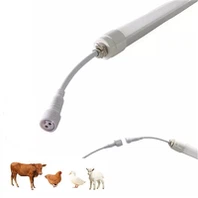
The Benwei T6 LED Chicken Growth Light Tube is rated IP67, providing complete dust‑tight protection and resistance to temporary immersion. Its aluminum body and polycarbonate cover construction is designed specifically to survive daily high‑pressure washdowns without degradation.
6. Dimming and Dawn/Dusk Simulation: Reducing Stress Through Gradual Transition
In nature, sunrise and sunset are gradual processes. Poultry have evolved to expect these gradual transitions, and research has demonstrated that smooth switching of lights on and off significantly improves flock productivity and viability compared to abrupt on/off transitions.
The key benefits of proper dimming include:
- Reduced panic and stress when lights turn on or off
- Improved feed conversion as birds feed more calmly
- Better nest use in layer houses (sunset simulation trains birds to return to perches)
- Lower mortality from piling or night‑time injuries
A professional poultry lighting system should support:
- Sunrise simulation: Gradually increasing light intensity over 15–30 minutes
- Sunset simulation: Gradually decreasing intensity before dark period
- 0-10V or Triac dimming: Continuous adjustability from 0% to 100%
- Deep dimming: Capability down to 1% for night observation without disturbing the flock
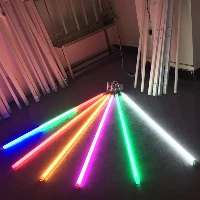
The Benwei T6 tube supports 0-10V dimmable control, allowing precise adjustment of light intensity to mimic natural daylight cycles, thereby supporting healthy poultry growth and reducing stress. Additionally, its multi‑color & tunable CCT support for white, blue, red, green light and adjustable 2500–6500K CCT allows producers to fine‑tune spectrum for feeding, resting, and breeding cycles as birds mature.
7. Energy Efficiency and Lifetime: The Financial Case for LED
The shift from fluorescent to LED poultry lighting is justified not only by biological performance but also by simple economics.
The Benwei T6 LED Chicken Growth Light Tube achieves 140 lm/W luminous efficacy with a power factor of 0.9, delivering bright, uniform light across entire cage systems while reducing energy consumption. Compared to traditional fluorescent tubes (approximately 60–80 lm/W), this represents a 40–50% reduction in electricity consumption. For a 1,000 m² poultry house with 100 fixtures running 16 hours daily, annual electricity savings can reach thousands of dollars.
Lifespan is equally important. With a 50,000‑hour rated lifespan and 5‑year warranty, the Benwei T6 tube reduces maintenance frequency dramatically compared to fluorescent tubes (8,000–10,000 hours). For facilities with high ceilings or densely populated cage systems, fewer lamp replacements translate directly into lower labor costs and minimal production disruption.
ROI Comparison: LED vs. Fluorescent Poultry Lighting
| Parameter | Fluorescent Tube | LED Tube (Benwei T6) |
|---|---|---|
| Luminous efficacy (lm/W) | 60–80 | 140 |
| Power consumption (per 1200mm tube) | 18–25W | 12W |
| Lifespan (hours) | 8,000–10,000 | 50,000+ |
| Replacement frequency (16h/day) | 1.5–2 years | 8+ years |
| Mercury content | Yes | None |
| Flicker | High (100–120 Hz) | Flicker‑free |
| Dimming capability | Limited | 0-10V, smooth 0–100% |
| IP rating | Typically IP20 | IP67 |
8. Conclusion: Lighting as a Precision Tool for Poultry Production
Modern LED poultry lighting has moved far beyond the simple question of "how bright" to encompass a multi‑dimensional optimization problem involving wavelength, photoperiod, intensity, flicker control, environmental durability, and dimming transitions. When correctly specified and implemented, a professional lighting system delivers measurable improvements across key performance indicators: higher body weight, lower feed conversion ratio, increased egg production, reduced mortality, and lower energy costs.
The Benwei T6 LED Chicken Growth Light Tube embodies these design priorities: an IP67‑rated, 140 lm/W tube with flicker‑free operation, multi‑color / tunable CCT options for different production phases, and 0-10V dimming for precise dawn/dusk simulation. Whether you are raising broilers for market, managing a layer flock for maximum egg production, or operating a breeder farm, the T6 provides the flexibility and durability to support your lighting program for years of maintenance‑free service.

✨Contact✨
🙋♀️Harriet
📫Email: bwzm88@benweilighting.com
📞Whatsapp: +8613007285242