G13, GU10, G4… Master All LED Light Bases in One Article – Never Buy the Wrong Bulb Again
Have you ever had this experience: a bulb burns out at home, you take the old one to the hardware store, and the clerk asks, "E27 or GU10?" – and you have no idea. Or you try to buy an LED tube online, see G5, G13, single‑end, double‑end… and your head starts spinning.
Don't worry. This article will help you finally understand all those weird codes on LED lights. From now on, just take a look at your old bulb – you'll know exactly what to buy, no help needed.
1. The basic rule: letter + number – it's actually simple
All base codes follow the same pattern: one letter + a few numbers.
Letter → tells you how to connect (screw it in? push it? twist and lock?)
Number → tells you the size (diameter of a screw base, distance between two pins)
First letter | What it means | What it looks like |
|---|---|---|
E | Edison screw – twist it in like a screw | A regular household bulb |
B | Bayonet – push and turn half a twist | Old British standard, rare in most places |
G | Pin base – just push it in | Two little metal pins |
GU / GX / GY | Pin variants with a twist/lock or alignment feature | GU10 needs a quarter‑turn to lock |
The numbers are also easy:
E27 → screw base diameter 27 mm
G13 → distance between the two pins = 13 mm
G4 → pin spacing = 4 mm (very tiny pins)
Starting to make sense, right?
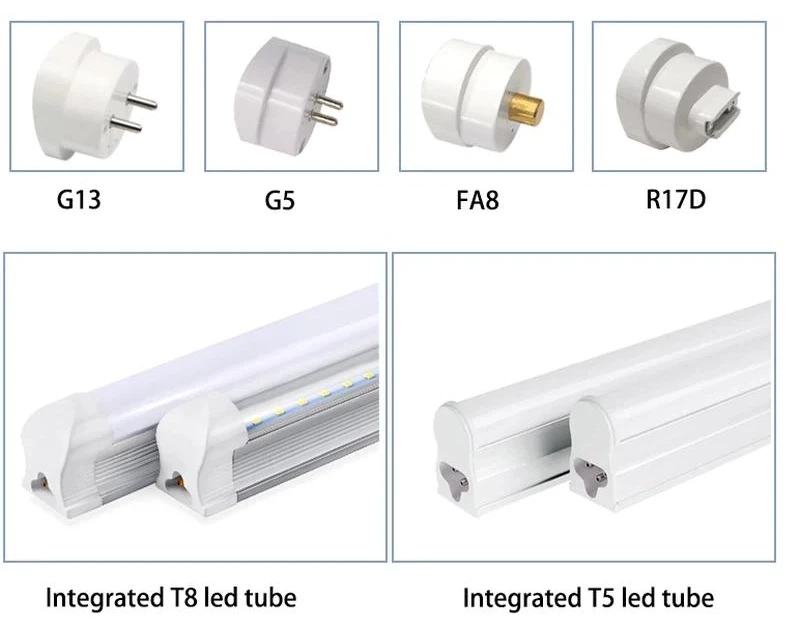
2. Linear tube bases (common in offices, garages, supermarkets)
If you have long, straight fluorescent‑style lights (now mostly LEDs), the base is almost certainly one of these:
Base type | Pin spacing | Tube thickness | Where you'll see it |
|---|---|---|---|
G5 | 5 mm | Thin tube (T5) | Under‑cabinet lights, display cases |
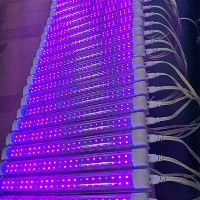
G13 | 13 mm | Thick tube (T8) | Workshops, garages, older light panels |
G23 | – | 2‑pin compact | Mirror lights, emergency lights |
G24 / G24Q | – | 4‑pin compact (PL type) | Commercial downlights, troffers |
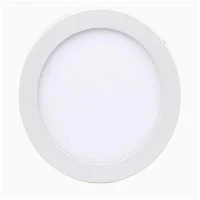
GX53 | – | Round, ultra‑thin | Recessed ceiling lights, furniture lighting |
3. Spotlights, downlights, and tiny decorative bulbs (the ones you change most often at home)
This part matters most for regular households. Those spotlights, downlights, or little bulbs in your crystal chandelier – they're probably one of these:
Base type | Pin / shape features | Voltage | Common use |
|---|---|---|---|
GU10 | Two round pins + two little bumps (twist‑lock), 10 mm spacing | 220V | Spotlights, track lights, downlights |
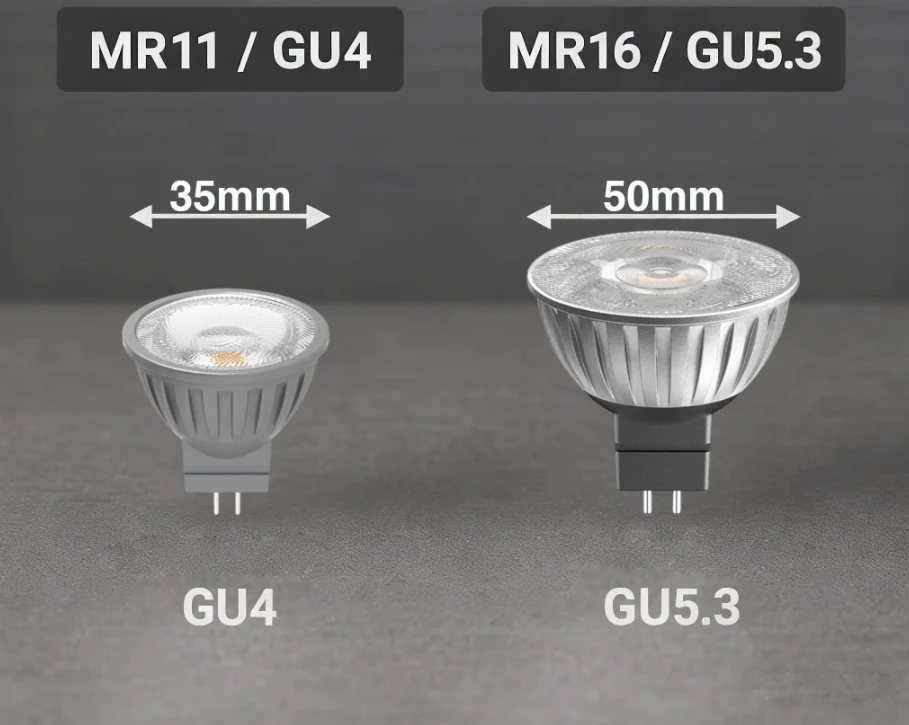
GU5.3 (also called MR16) | Two thin round pins, no bumps, 5.33 mm spacing | 12V low‑voltage (needs a transformer) | Older spotlights, display lights |
G4 | Two extremely thin pins, 4 mm spacing | 12V | Crystal lights, tiny decorative bulbs |
G9 | Pin spacing 9 mm (some are flat pins) | 220V | Crystal lights, mirror lights |
E27 | Screw base, 27 mm diameter | 220V | The most common household bulb |
E14 | Screw base, 14 mm diameter | 220V | Candle‑shaped bulbs, small pendants |
E40 | Big screw base, 40 mm diameter | 220V | Factory lights, street lights |
Quick field guide:
Take a spotlight out: pins with little bumps → GU10
Smooth pins → GU5.3 (low voltage)
Super thin like two wires → G4 or G9
Regular bulb shape → check screw size: E27 or E14
4. ⚠️ The biggest trap: "single‑end" vs "double‑end" for tubes – get it wrong and you can fry the fixture
This is where many people get burned when buying LED tubes. Even with the same G13 pins, the electrical wiring can be different – and they are NOT interchangeable.
Double‑end feed: Live and neutral go to opposite ends of the tube. That's how old fluorescent tubes worked.
Single‑end feed: Live and neutral both go into the same end of the tube. The other end is completely dead. Safer – this is the modern standard for LED tubes.
What's the danger?
If you put a "single‑end" LED tube into an old fixture that's wired for "double‑end" (without rewiring it), at best it won't light up. At worst, you'll get a short circuit, a tripped breaker, or even a burnt socket.
The right way to do it:
When converting to LED tubes, remove the old ballast and starter. Wire the mains directly to one end of the fixture (single‑end feed). Then buy LED tubes marked single‑end feed. If you're not comfortable doing it yourself, paying an electrician a few bucks is cheaper than replacing a burned fixture.
Remember: Look on the tube's packaging for "single‑end" or "double‑end". It must match your fixture's wiring.
5. Three steps to avoid 99% of buying mistakes
Just do this – you'll almost never buy the wrong bulb:
Read the old bulb
Good bulbs always have the code printed on them: "G13", "GU10", "E27", etc. Take a photo, buy the same.No code? Measure the distance
Use a ruler to measure between the two pins (in mm), then check the tables above.Guess by shape
Spotlight with bumps → GU10
Spotlight without bumps → GU5.3
Super thin wire pins → G4 or G9
Long tube, thin → G5, thick → G13
Regular pear‑shaped bulb → E27
6. One last "cheat sheet" – Keep it safe
What you have in your hand | Most likely base |
|---|---|
Regular household bulb | E27 |
Small candle‑shape bulb | E14 |
Spotlight (with bumps) | GU10 |
Spotlight (no bumps, thin pins) | GU5.3 |
Tiny rice‑grain bulb from a chandelier | G4 |
Slightly bigger flat‑pin chandelier bulb | G9 |
Thin long tube (about pencil thick) | G5 |
Thick long tube (about thumb thick) | G13 |
Round ultra‑thin ceiling light | GX53 |
Big factory bulb (fist‑sized) | E40 |
Next time you buy an LED bulb, don't just stare at the shelf.
Take a look at the code on your old bulb, or measure the pin distance. You'll be half an expert yourself.
If you found this useful, bookmark it – or share it with that friend who always buys the wrong bulb. 🙌
✨Contact✨
🙋♀️Harriet
📫Email: bwzm88@benweilighting.com
📞Whatsapp: +8613007285242