How is the lighting environment of classrooms in my country?
Today, in the field of cultivating "flowers of the motherland", a healthy classroom lighting environment has not yet been fully popularized. So how should the classroom use the correct eye protection lighting? In order to reduce the burden on the eyes of students, prevention of myopia is an unavoidable problem in education lighting.
The current situation of myopia in our country:
According to the survey of China’s first white paper "National Visual Health" that systematically studies visual health:
Among people over 5 years old, the proportion of myopia is 35.16% to 39.21%, that is, 1 out of 3 people is myopia, and the total number of myopia is between 437 million and 487 million.
According to the latest survey conducted by the Ministry of Education of 14,532 people in 9 provinces, compared with the end of 2019, the myopia rate of students has increased by 11.7% since the first half of 2020. Among them, the myopia rate of primary school students has increased by 15.2%, and the myopia rate of junior high school students has increased by 8.2%. The myopia rate of high school students increased by 3.8%.
What is the current status of the lighting environment in classrooms? The light sources used in classrooms across the country and the lighting environment vary from good to bad.
First, the illuminance and uniformity of illuminance of blackboards and desks are generally lower than national standards.
Second, most classroom blackboards are directly installed with exposed fluorescent tubes. While watching the blackboard, students are affected by the direct glare of the tubes, making it difficult to concentrate, reducing learning efficiency, and prone to visual fatigue, which can easily lead to myopia in the long term.
Third, fluorescent lamps are generally equipped with inductive ballasts, which have serious stroboscopic effects, and excessive frequent adjustment of the student's visual system is bound to cause visual fatigue.
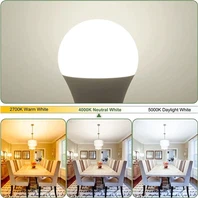
Fourth, most classrooms generally use high color temperature (6500K) fluorescent tubes. Because the light color is too white and the blue light component is too high, it is easy to cause students to become excited, fatigue, and even cause insomnia.
The top priority is to promote the construction and implementation of classroom lighting standards. Only those who meet national standards can enter the classroom, so as to create a truly eye-friendly classroom lighting environment for teachers and students.