The Benefits of LED Batteries for Garages
While everyone talks about having a nice garage, few people discuss lighting it well.
It's challenging to see what you're doing in poor lighting, which includes dim lamps, uneven coverage, or severe glare. Whether you use your garage for storage, parking, do-it-yourself tasks, or as a workshop, poor illumination can make it dangerous and unsuitable.
Although single overhead bulbs and conventional fluorescent tubes are still widely used, they have obvious drawbacks, such as sluggish warm-up times, flickering and buzzing, and uneven lighting that leaves darkened parts and dark corners. Did we also mention how expensive energy is? Here they are: LED batten lights.
LED battens offer broad, uniform illumination across vast areas and are bright, energy-efficient, and simple to install. Stated differently, they are perfect for garages. This tutorial will walk you through the process of selecting the ideal one for your garage.
To maximize your garage lights, we'll also go over important features to look for, wise upgrades to think about, and useful installation advice. Let's get started as your garage won't fix its own illumination.

Important Considerations when Selecting LED Batten Lights
Performance, comfort, and longevity are all greatly impacted by a few key characteristics when choosing LED battens for your garage. Let's take a closer look at each.
Illumination and Lumen Production
Watts are not a good indicator of how bright your light is. It serves as a gauge for how much electricity your lights consume. Instead, you should consider lumens. It shows the amount of light that the fixture emits.
You should provide enough light in garages to see well without producing harsh reflections or glare. The size of your garage and how you utilize it determine the appropriate lumen level.
This is a brief guide:
Aim for between 13,000 and 14,000 lumens overall in a single-car garage.
For a double garage, budget about 20,000 lumens.
Pro Tip: Installing several lights instead of just one is the best way to obtain the overall goal lumens. This guarantees that shadows are removed. Purchase two to four fixtures for a single-car garage and four to six fixtures for a double-car garage.
Temperature, Color, and CRI
Your lighting's appearance and feel are influenced by color temperature, which is expressed in Kelvin (K):
Cozy and welcoming, warm white (2700K–3500K) is ideal for living areas but may be a bit too yellow for garages.
Natural white (4000K): Clear and clean, ideal for task areas, garages, and workshops.
Daylight or cool white (5000K–6500K): Bright and crisp, perfect for intricate work or situations requiring the highest level of clarity.
The sweet spot for most garages is between 4000K and 5000K. Without the sterile blue tone of daylight bulbs, it provides exceptional visibility.
The Colour Rendering Index (CRI), which gauges how well a light captures colours in comparison to daylight, is another aspect to take into account. Better color fidelity is indicated by a higher CRI (80+), which is what you desire.
This is essential when working with colored materials, sorting tools, or inspecting automotive paint finishes. For "true-to-life" color clarity, choose CRI 90+ battens if your garage is also used for hobbies or detailing.
IP Rating and Sturdiness
Durability is important because garages may be moist, dirty, or even partially exposed to the weather. Ingress Protection (IP) ratings are useful in this situation. The resistance of a lamp to water and dust is indicated by this two-digit code. Water protection (maximum of 8) is indicated by the second digit, whereas dust protection (maximum of 6) is shown by the first.
These are a few typical IP ratings:
IP20: Fit for dry, clean interior spaces.
IP44: Suitable for the majority of enclosed garages, it offers protection from dust and splashes.
IP65: Perfect for semi-open or damp garages, this material is completely dust-tight and water-resistant (able to withstand water jets).
Completely waterproof and dust-proof, IP67 and IP68 are perfect for lighting outside your garage.
Always choose IP65-rated LED battens if there is moisture, dampness, or temperature fluctuations in your garage. Additionally, pick battens with impact-resistant (IK-rated) aluminum or polycarbonate casings. These are more resilient, shield against unintentional blows, and hold up over time.
Dimensions, Form, and Mounting Choices
Because LED battens are available in a range of shapes and lengths, you may customize illumination to fit the design of your garage.
Typical lengths consist of:
600mm: Compact, making it appropriate for narrow or compact garages.
For the majority of single garages, 1200mm is a balanced choice.
1500mm: Offers extensive coverage for lengthy workshops or double garages.
Look for slimline batten designs if your ceiling is low. These prevent your garage from feeling claustrophobic by providing the same amount of light output while using less vertical space.
The versatility of mounting LED batten lights is another benefit. For general lighting, the majority of LED battens can be put on the ceiling; however, certain versions can also be mounted on the wall or beneath shelves, which makes them ideal for lighting workbenches, tool racks, or storage spaces.
Energy Efficiency and Durability
The remarkable energy efficiency of LED batteries is one of their main benefits. With up to 120 lumens per watt, Simple Lighting LED batteries offer more light for less energy. For instance, an 80W fluorescent fixture can be readily replaced with a 40W LED batten, halving energy expenses without compromising brightness.
Another advantage is longevity. Typically, high-quality LED battens last between 30,000 and 50,000 hours, which translates to years of dependable operation before needing to be replaced. Alright, excellent. What does it mean to you, though?
Reduced upkeep (no more regular bulb changes)
Decreased waste (helpful to the environment)
Significant long-term electricity and replacement cost savings
Smart Choices & Advanced Features
Not every LED battery is created equal. There are some that are made better than others. Basic LED battens provide great lighting, but more sophisticated models can further improve the efficiency, convenience, and security of your garage. Here's how:
Sensors of Motion
Hands-free operation is achieved by combining motion sensors with LED batteries. Heavy groceries filling your hands? Are you about to park your automobile inside after returning from work? You can move freely around the room without having to look for the light switch because the lights turn on automatically when movement is detected.
Also, the lights automatically go off after a certain amount of idleness, saving energy without requiring any work on your part.
Dimmable Choices
Dimmable LED battens allow you to change the brightness of your garage to fit the needs of various tasks, such as parking cars, doing do-it-yourself projects, and unwinding. Not everything you do in your garage need your lights to be as bright as possible. When working on tasks, you can enjoy maximum brightness; when entertaining or working out, you can turn it down for ambient lighting.
Compatibility with Smart Controls
Smart home systems may be used with a lot of contemporary batteries. When connected via Bluetooth or Wi-Fi, you can:
Use a voice assistant or a smartphone app to control the lighting.
Automated schedules or timers
Connect battens to door sensors or security systems.
Garage lighting is made simpler and more convenient with smart controls. As you pull into the driveway, how awesome is it to say, "Alexa, turn on the garage lights"?
Installation Advice for LED Battens in Garages
Although LED batten installation is usually simple, careful planning guarantees optimum performance and durability. Knowing that you're getting the most out of your lighting will also make you thank yourself later.
Location for Even Lighting
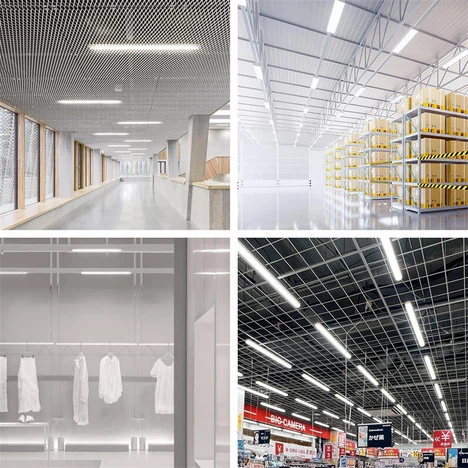
Arrange the battens so that the light is distributed evenly across your garage.
Install them in line with your workbench or parallel to your car bays.
Avoid putting a single light in the middle of the space, since this frequently results in dim walls and corners.
Use several battens that are evenly placed (about 1 to 1.5 meters apart) for large garages with ceilings up to three meters.
Preventing Glare
Position or angle your fixtures to reduce glare on glossy surfaces like metal tools or automobile bonnets. Mount battens with a little offset from locations that are directly in line of sight if at all practicable.
Safety and Wiring
Multiple battens can be connected to a single switch circuit, or even better, separate circuits for distinct zones (e.g., parking area, workout area, and workbench).
Here are some safety tips:
Always turn off the electricity before putting in batten lights.
Make use of the appropriate IP-rated fittings for your setting.
Pay close attention to the manufacturer's directions.
If in doubt, seek the advice of a licensed electrician, particularly for intricate wiring or clever integrations.
Typical Errors to Avoid
If installed or chosen improperly, even the greatest LED batteries will not function as intended. The following are the most typical dangers to be aware of:
Lumens that are too small
Compared to other rooms, garages require more light. Therefore, one of the biggest mistakes when it comes to garage lighting is selecting a light that is too dim. Lean toward somewhat brighter rather than dimmer and always calculate lumens based on size and purpose. Because a little bit more lighting is preferable to a little bit less.
Disregarding Shadows
Dark areas can be produced by uneven lighting placement, particularly behind cars or shelves. Wherever you work or move most frequently, arrange the lighting such that there are no shadows.
Selecting the Incorrect IP Rating
Garages are frequently exposed to dust, moisture, and humidity. This implies that unless you wish to run the risk of damaging and shortening the lifespan of your fixtures, utilizing IP20-rated lights in these situations is strictly prohibited. If you want greater protection (and piece of mind), always get IP44 or IP65 batteries.
Ignoring Sensor or Smart Features
It may save a few pounds up front to forego motion sensors or smart controls, but in the long run, energy and convenience costs may increase. Avoid being a homeowner like that. Automation increases your energy savings while preserving efficiency. Aside from improving your everyday experience, that is.
Ignoring Color and CRI
Overly warm lighting can make it difficult to discern details or distinguish colors. Natural white (4000K–5000K) with a high CRI (90+) is always the better option for garages and workshops.
It is a (bright) wrap
Your garage may be transformed from a dark, unused area into a light-filled, useful, and inviting room with the correct illumination. It is possible to transform your garage into a place where you genuinely enjoy spending time.
Just keep in mind to prioritize the following when selecting LED batten lights:
Brightness and lumen output: guarantee complete, uniform coverage.
CRI and color temperature-for precise, unobstructed vision.
durability and IP rating-to resist moisture and dust.
Fixtures should be sized and mounted according to your scheme.
Smart features and energy efficiency for convenience and long-term savings.