Incandescent lamps are shut down before 2018, thousands of companies are facing transformation
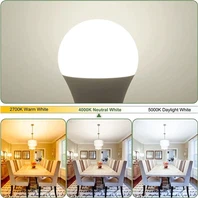
Hu Jiefang, the owner of "Monkey King Lighting", a special light bulb factory in Wuyi County, Zhejiang Province, realized early on that incandescent lamps would be eliminated in the industry upgrade. He decided to reproduce them for a while before the policy was issued. But "after the Spring Festival, we no longer produce incandescent lamps." Yesterday, in an interview, Hu Jiefang said that he had figured out a way out, "In the future, he will mainly produce LED energy-saving lamps."
Wang Jinsui, chairman of the China Illuminating Society, revealed to this newspaper that the National Development and Reform Commission is currently formulating a "Roadmap for the Elimination of Incandescent Lamps". The current preliminary plan is that incandescent lamps above 100 watts will no longer be produced after 2015 and will basically no longer be used in China from 2018. Incandescent lamp.
Elimination plan
Foreign media previously reported that China is expected to introduce a timetable for the elimination of incandescent lamps, impose a consumption tax on incandescent lamp products to accelerate the pace of elimination, and provide policy support for the energy-saving lamp industry.
Wang Jinsui said that the "Roadmap for the Elimination of Incandescent Lamps" will be announced after the "Two Sessions" this year, and comments are still being sought.
Before China implemented the incandescent lamp phase-out plan, the European Union, the United States and others had already proposed a timetable for the phase-out of incandescent lamps. On March 9, 2007, many EU countries reached an agreement to gradually replace high-energy-consuming incandescent bulbs with energy-saving lamps within two years; the British government announced plans to completely abolish traditional tungsten filament bulbs by 2011.
After these countries successively announced plans to phase out incandescent lamps, China also put this matter on the agenda. In December 2007, China implemented a financial subsidy system for the promotion of high-efficiency lighting products. In July 2009, China, the United Nations Development Program and the Global Environment Facility jointly initiated the launch of "China's phasing out incandescent lamps and accelerating the promotion of energy-saving lamps."
"From the perspective of energy consumption, 70% of the electric energy of the incandescent lamp is consumed in heat during the use process, and only 30% of the electric energy is turned into light, so it is energy consuming." Wang Jinsui said.
After many countries put forward a timetable for elimination, foreign incandescent lamp manufacturers have ceased production one after another, providing an opportunity for Chinese incandescent lamp exporters. According to data from the China Lighting Association, the output of incandescent lamps for general lighting in the country in 2009 was 3.79 billion. Despite the impact of the financial crisis, the sales of China's lighting industry in 2009 were still as high as 260 billion yuan, an increase of 13.04% year-on-year.
Thousands of companies are facing transformation
As the country may introduce a policy to eliminate incandescent lamps, it has already spread in the industry, and many manufacturers have embarked on the transformation a few years ago.
As a small light bulb factory, Houwang Lighting’s previous goal was to "be the most professional incandescent bulb supplier" with a monthly output of 500,000 and also a small number of LED lights. However, after the decision was made to transform its products into energy-saving lamps. .
There are many companies like Monkey King Lighting in the country. According to statistics from the China Lighting Association, there are currently more than 10,000 lighting appliance manufacturers in the country, mainly in Guangdong, Fujian, Zhejiang and other places along the southeast coast.
Wang Jinsui believes that there are too many domestic incandescent lamp manufacturers. If they are eliminated all at once, they will have a lot of negative effects, so they will be phased out. At the same time, the country is also studying the issue of corporate transformation.
"Our incandescent lamp production line stopped expanding production 10 years ago. At present, the monthly output remains above 20 million, which is close to 100 production lines." Foshan Lighting [0.00 0.00%] (000541.SZ) National Civil Lighting OEM Supporting Channel A person in charge of the sales department told this newspaper.
Foshan Lighting is the largest export-oriented enterprise in the national electric light source industry. The person in charge believes that incandescent lamps above 100 watts only account for about 10% of the company's total incandescent lamps, so the elimination of incandescent lamps above 100 watts after 2015 will have little impact on the company. "This policy is positive for large companies." In his view, there is still a 7-year buffer period before the complete elimination in 2018. In addition, European and American countries have introduced policies to eliminate incandescent lamps very early, prompting a large number of foreign small and medium incandescent lamp manufacturers. Discontinued production, "the current demand for incandescent lamps in foreign markets is still very large, and orders are also sufficient."
However, energy-saving lamps are not perfect compared to incandescent lamps. Wang Jinsui said that fluorescent lamps in energy-saving lamps are facing mercury pollution problems. How to recycle them after they break down is a big challenge. Although LED energy-saving lamps are not polluted, they are expensive.