When people first get into indoor gardening, they often ask the same question: "Can I just use this PAR30 grow bulb I have on hand?" While it might seem like a convenient, space-saving solution for a few pots of herbs on a windowsill or a row of succulents on a bookshelf, that confidence often wavers once the setup shifts to an enclosed mini grow tent.
The answer isn't a simple "yes" or "no." PAR30 bulbs are compact with a focused beam, each carrying distinct advantages and limitations. This article examines factors like light coverage, power, spectrum, and heat dissipation to help you determine what a PAR30 bulb can-and cannot-achieve in three common growing scenarios.
Basic Characteristics of PAR30 Grow Bulbs
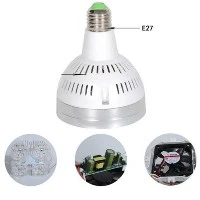
A PAR30 bulb has a face diameter of approximately 3.75 inches (about 95 mm) and features an internal reflector that directs light into a concentrated beam-typically with a beam angle between 25° and 40°. They use a standard E26/E27 base, allowing them to fit into conventional light sockets.
This design leads to two primary outcomes:
High light-use efficiency: Because light isn't scattered in all directions, more photons reach the plant's foliage, making these bulbs more effective than standard omnidirectional grow bulbs of the same wattage.
Limited coverage area: A focused beam results in a smaller "spot" of light. A single bulb can generally only cover an area about 30 to 60 centimeters in diameter; the closer the bulb is to the plants, the smaller that illuminated area becomes.
Ultimately, determining whether a PAR30 bulb is sufficient comes down to two key questions: How far is the plant from the light, and how large an area needs to be illuminated?
The Windowsill Scenario: Supplemental Lighting or Primary Light Source?
Windowsills are the most common setting for misjudgment. While a south-facing windowsill may receive good light during the day, the intensity drops significantly during winter-due to shorter daylight hours-or on overcast days.
Best use case: Supplemental lighting. During months with insufficient sunlight, providing an additional 4 to 6 hours of light daily using a PAR30 bulb is highly beneficial for herbs, lettuce, small leafy greens, and foliage plants. Simply mount the bulb in a clamp-on fixture with an adjustable arm, positioning it to shine onto the plants from an angle above.
Note that this is not a suitable solution for completely replacing natural light. If your windowsill faces north or is obstructed, a single bulb will generally not provide enough light for plants that flower or bear fruit, such as tomatoes or peppers.
Another practical challenge on a windowsill is space: since pots are often lined up in a row, a single bulb can typically only cover one or two of them. If you have many pots, it is better to use two bulbs in tandem rather than hanging one bulb very high up in an attempt to "force" coverage over a larger area.
Shelving Units: Distance and Coverage
Shelving units are where PAR30 bulbs truly excel. Because the height of each shelf is fixed, the bulb can be mounted against the underside of the shelf above, ensuring a consistent distance-a setup where the bulb's concentrated beam becomes a distinct advantage.
Keep three key points in mind:
Hanging distance: For a 10–15 watt PAR30 bulb, a distance of 20–30 cm from the leaf surface is ideal. For higher-wattage models, increase the distance to 30–45 cm to prevent leaf scorch.
Number of bulbs per shelf: For standard shelving units 60–90 cm wide, use at least two bulbs per shelf, spaced evenly; otherwise, plants at the ends may become leggy or turn yellow.
Plant selection: This setup is well-suited for succulents, seedlings, microgreens, and small foliage plants. However, plants taller than 30 cm may struggle, as vertical space on the shelves will be quite limited.
Because PAR30 bulbs generate more concentrated heat than LED panel lights, ensure there is adequate ventilation if you are using them inside an enclosed shelving unit or cabinet.
Mini Grow Tent Scenario: The Highest-Risk Setup
Mini grow tents typically measure 60×60 cm or 80×80 cm, with heights ranging from 120 to 160 cm. This is where the drawbacks of PAR30 bulbs become most apparent:
Uneven light distribution. The light from a single bulb is very intense at the center of the beam but dims rapidly toward the edges, often leaving plants in the corners of the tent with insufficient light.
Power requirements. For a 60×60 cm space, you generally need 60 to 100 watts of actual LED power during the vegetative stage-and even more during the flowering stage. A single 10–15 watt PAR30 bulb is far from adequate; using multiple bulbs creates complications regarding wiring and mounting.
Heat accumulation. Since a grow tent is an enclosed environment, the combined heat from multiple bulbs necessitates the use of an exhaust fan to regulate the temperature.
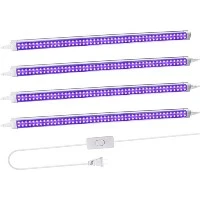
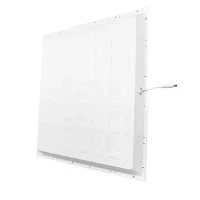
In conclusion, while PAR30 bulbs can be used for supplemental lighting in a seedling area or for small leafy greens, they are not recommended as the primary light source for an entire grow tent. For a complete growth cycle-from flowering to fruiting-dedicated LED grow panels or bar-style lights are a much better choice.
Key Specifications to Consider When Buying PAR30 Grow Bulbs
When evaluating whether a PAR30 bulb is worth purchasing, do not rely solely on the stated wattage. Instead, focus on the following critical parameters:
Actual power consumption and PPF. PPF (Photosynthetic Photon Flux) measures the number of photosynthetically active photons emitted per second; it is a far more reliable metric than "equivalent wattage" claims.
Spectrum type. Full-spectrum white light is suitable for most home-growing applications. Red-blue (blurple) spectrums, while effective for plants, give off a purple hue that makes it difficult to observe the true condition of your plants.
Beam angle. A beam angle of around 25° is ideal for intense, focused light on individual plants at close range, while an angle of 40° or greater provides broader coverage but results in lower light intensity at the center.
Heat dissipation design. Bulbs with aluminum heat sinks are more durable than those with all-plastic housings, which significantly impacts their lifespan during prolonged use.
Base type and voltage. Verify the base type (E26 or E27) and local voltage to ensure compatibility.
Summary
The PAR30 grow bulb is a compact, high-performance solution. Its suitability depends on the specific environment:
Windowsills: Ideal for supplemental lighting during winter, but not sufficient as a sole light source.
Shelving units: The most suitable application; with proper hanging distance and an appropriate number of bulbs, it provides consistent results.
Mini grow tents: Suitable only for localized supplemental lighting; for a full growth cycle, dedicated grow lights are recommended.
Before making a choice, consider three key factors: what you are growing, the size of the growing area, and the intended light source placement. Clarifying these points will make it easier to select the right bulb specifications.
Need a customized solution for your project?
If you are sourcing PAR30 grow bulbs for retail channels, horticultural brands, or cultivation kits, we offer a variety of options with different wattages, spectra, and beam angles. We provide OEM/ODM customization, sample testing, and bulk supply. Please share your application scenario, target market, and estimated quantities with us; our team will respond within one business day with recommended specifications and a price quote.
https://www.benweilight.com/lighting-tube-bulb/18w-grow-lights-for-houseplants.html