Is Your Indoor Lighting Slowly "Burning" Your Family's Eyesight? Here's Why RG0 Is the Only Safety Standard That Matters
Every evening, millions of families around the world gather under artificial light - children doing homework, parents working remotely, elderly relatives reading. It feels safe, warm, and ordinary. But what if the light above your head is quietly, invisibly, doing damage to the most precious and irreplaceable part of your body?
The Science of Blue Light: Not All Light Is Created Equal
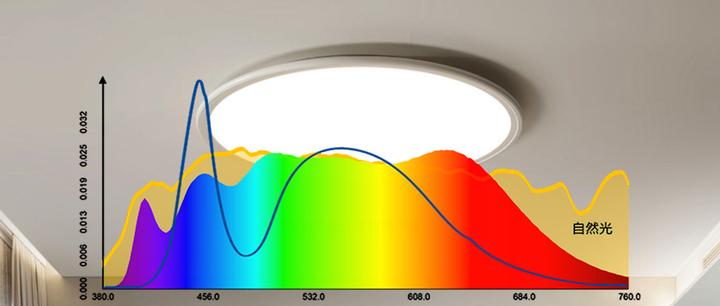
Blue light refers to high-energy, short-wavelength visible light in the 400–500 nanometer range of the spectrum. Because of its high energy, blue light penetrates the cornea and lens to reach the retina - the delicate tissue at the back of the eye that captures images and sends them to the brain. Unlike a scratched lens or a tired muscle, retinal damage is permanent and irreversible.
The mechanism is well understood by ophthalmologists and photobiologists: blue light exposure triggers photochemical injury to the retina. Specifically, the blue portion of the spectrum (particularly around 445 nm) generates reactive oxygen species - unstable molecules that attack retinal pigment epithelial cells. When these cells die, the photoreceptors they support lose their nutrient supply and eventually perish as well.
This isn't theoretical. A 2025 study published in Antioxidants demonstrated that even low-intensity blue light exposure (465 nm, just 37.7 lux) caused significant photoreceptor loss and oxidative DNA damage in retinal tissue. Another 2024 review confirmed that prolonged blue light exposure causes photochemical damage and morphological alterations in the retina, with damage intricately linked to both light intensity and exposure frequency.
Children Are Especially Vulnerable
The World Health Organization and leading eye research institutions have long warned that children's retinal maculae absorb blue light more readily than adult eyes. Their ocular lenses are clearer and more transparent, allowing a higher percentage of blue light to reach the retina. Add to this the fact that modern children spend hours daily under LED lights, staring at screens, and you have a recipe for cumulative, life-long damage.
RG0: The Global Safety Benchmark You Need to Know
So how do we know if a light source is safe? Enter the IEC (International Electrotechnical Commission) standards - the global gold standard for electrical and electronic safety.
Under IEC/TR 62778 and IEC 62471, light sources are classified into four risk groups based on their retinal blue light hazard:
| Risk Group | Classification | Description | Maximum Safe Exposure Time |
|---|---|---|---|
| RG0 | Exempt Group | No photobiological hazard even under extreme conditions | >10,000 seconds (~2.8 hours) |
| RG1 | Low Risk | No hazard under normal operating conditions | 100 – 10,000 seconds |
| RG2 | Moderate Risk | Potential retinal damage from prolonged viewing | 0.25 – 100 seconds |
| RG3 | High Risk | Immediate retinal damage from brief exposure | <0.25 seconds |
RG0 is the only classification that guarantees safety even under continuous, unrestricted use. Products classified as RG0 (Exempt Group) are lamps and luminaires that "do not pose any photobiological hazard". The requirement is met by any lamp that does not cause retinal blue-light hazard within 10,000 seconds (about 2.8 hours) of exposure.
A source with RG0 classification is safe - not "safer," not "reduced risk," but fundamentally non-hazardous.
RG0 vs. "Blue Light Blocking" - Know the Difference
This is where many products mislead consumers. "Blue light blocking" or "low blue light" features often mean the manufacturer has reduced some blue light emissions - but by how much? To what standard? And does it still meet safety thresholds?
RG0 is not a marketing claim - it is a certified, testable, third-party-verified standard. It requires rigorous photobiological testing under defined conditions (typically at a 200 mm test distance). Products must undergo laboratory evaluation to demonstrate that their blue light radiance falls below the threshold that could cause retinal injury.
In other words:
- "Blue light blocking" is a promise - often unverified and unstandardized.
- RG0 is proof - backed by international standards and independent testing.
Dual International Certification: The Gold Standard
For the most demanding applications - schools, hospitals, nurseries, and homes with children - dual certification under both IEC/TR 62778 (blue light hazard) and IEC 62471 (photobiological safety) provides the highest level of assurance. Products that pass both standards at RG0 level have been evaluated under the most stringent criteria available internationally.
This dual certification means:
- IEC 62471: The lamp system poses no photobiological hazard across the full spectrum of optical radiation.
- IEC/TR 62778: The blue light component specifically is below the threshold for retinal damage, even under extended viewing.
The Market Is Moving - Are You?
Consumer awareness of blue light hazards is rising rapidly. A 2025 study found that 92% of consumers now recognize blue light as a health concern, driven by widespread use of "eye comfort" modes on smartphones and growing health literacy.
The numbers tell the story: the global blue light protection market was valued at $0.96 billion in 2025 and is projected to reach $1.72 billion by 2032, growing at a CAGR of 8.6%. The LED eye protection lamp market is expanding in tandem, as consumers, schools, and businesses demand safer lighting solutions.
Regulatory bodies are also catching up. Since 2017, China's mandatory national standard GB7000.1-2015 has required that luminaires undergo retinal blue light hazard assessment under IEC/TR 62778. Similar requirements are emerging across Europe and North America. RG0 is no longer a "premium feature" - it is becoming the safety baseline.
What This Means for You - And Your Customers
If you are a distributor, retailer, facility manager, or procurement professional, the choice is clear:
✅ RG0 is the only risk group that guarantees safety for continuous indoor use - especially in environments with children, elderly individuals, or anyone spending hours under artificial light.
✅ Dual IEC certification (IEC/TR 62778 + IEC 62471) provides third-party verification that your lighting products meet the world's most rigorous safety standards.
✅ The market is demanding safer lighting - and products that fail to meet RG0 standards are increasingly seen as outdated or even negligent.
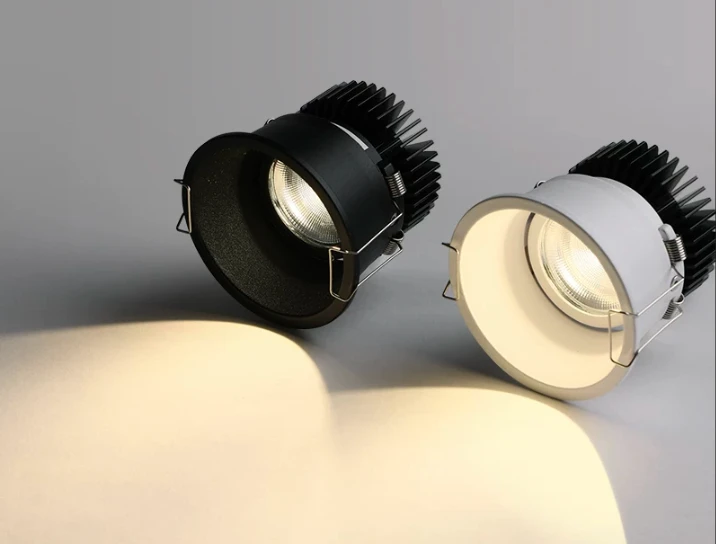
Our Optical Eye-Protection Downlights: Engineered for Safety, Backed by Standards
Our optical eye-protection downlights have been rigorously tested and certified under both IEC/TR 62778 (blue light hazard) and IEC 62471 (photobiological safety) - achieving RG0 Exempt Group classification in both.
This means:
- No retinal blue-light hazard - even with continuous, unrestricted use.
- Safe for children, students, office workers, and seniors - everyone in your household or facility.
- Internationally recognized certification - not a marketing gimmick, but proof of safety.
Don't let "invisible" light become an irreversible problem. The retina cannot be replaced. The eyes you protect today are the eyes that will serve you - and your customers - for a lifetime.
📩 Want to learn more about RG0-certified optical eye-protection lighting?
✨Contact✨
🙋♀️Harriet
📫Email: bwzm88@benweilighting.com
📞Whatsapp: +8613007285242