Kitchen Lighting Mistakes to Avoid: A Practical Guide
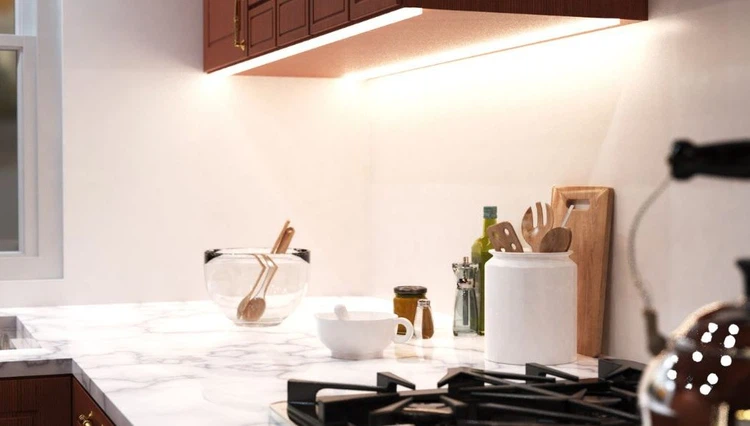
We've all seen it-or maybe lived it. A beautiful kitchen with sleek cabinets and pristine countertops that somehow still feels uninspiring. Often, the culprit is the lighting.
Lighting can define your kitchen's functionality and atmosphere. It's not just about visibility; it's about creating a space that feels both welcoming and efficient. Yet, it's frequently an afterthought.
Many homeowners invest heavily in surfaces and appliances, only to settle for a basic, single overhead light. The result? A room that feels flat, shadowy, and never quite "right."
To help you avoid these pitfalls, we've compiled the most common kitchen lighting mistakes-and how to fix them.
Mistake #1: Relying on Only One Overhead Light
A single ceiling light might seem practical, but it rarely is. It leaves corners dark, casts shadows over workspaces, and fails to adapt to different needs.
The Solution: Layer Your Lighting
A well-lit kitchen combines three types of lighting:
Ambient: General, overall illumination (e.g., recessed downlights).
Task: Focused light where you need it most (e.g., under-cabinet strips).
Accent: Decorative lighting that adds depth and mood (e.g., plinth or shelf lights).
Plan your layers early-during renovation-to avoid costly retrofits later.
Mistake #2: Ignoring Task Lighting
If you've ever had to lean into the light to chop vegetables safely, you've experienced poor task lighting. Shadows on countertops aren't just annoying-they're unsafe.
The Solution: Light Your Workspaces Directly
Install LED strips or puck lights under wall cabinets to brighten countertops. No wall cabinets? Use adjustable pendants or spotlights over key prep zones.
Pro Tip: Choose LEDs with a high Colour Rendering Index (CRI ≥ 90) so food looks vibrant and true to colour.
Mistake #3: Mixing Colour Temperatures
Nothing disrupts a kitchen's vibe like clashing light colours-warm yellow next to cool white feels messy and unplanned.
The Solution: Stick to One Colour Temperature
Colour temperature is measured in Kelvin (K):
Warm White (2700K–3000K): cozy and inviting
Natural White (3500K–4000K): clean and balanced
Cool White (5000K+): crisp and energizing
For most kitchens, 3000K–4000K works best. Consistency is key-check packaging to ensure all bulbs match.

Mistake #4: Skipping Dimmers and Smart Controls
Your kitchen serves multiple purposes: cooking, dining, homework, relaxing. Fixed lighting can't keep up.
The Solution: Install Dimmable Lights & Zoning
Dimmers let you adjust brightness for any activity. For better control, set up zones-one switch for ceiling lights, another for under-cabinet strips.
Smart systems take it further, allowing app or voice control for custom scenes like "Dinner" or "Clean-up."
Pro Tip: Always use dimmers and controllers compatible with your LEDs to prevent flickering.
Mistake #5: Poor Fixture Placement
Even the most beautiful light is useless if it's poorly placed. Downlights too close to cabinets or pendants hung too low can create glare and shadows.
The Solution: Plan Before Installing
Downlights: Space them evenly to avoid dark spots.
Pendants: Hang them 75–90 cm above an island to avoid blocking sightlines.
Test First: Use a torch to simulate light spread and shadow placement before finalizing positions.
Mistake #6: Neglecting Ambient & Accent Lighting
A kitchen with only task lighting can feel sterile, like a laboratory. Ambient and accent lights add warmth and personality.
The Solution: Add Depth with Soft & Decorative Lighting
Use warmer ambient lighting to make the space inviting. Add LED strips along kickboards, inside glass cabinets, or above shelving to highlight textures and objects.
Pro Tip: Install LED strips inside aluminium profiles for a smooth, professional glow without visible dots.
Mistake #7: Overlooking Natural Light
Artificial light shouldn't fight natural light-it should complement it.
The Solution: Balance Natural & Artificial Light
Use reflective surfaces (e.g., glossy tiles, light-coloured counters) to bounce daylight deeper into the room.
Choose high-CRI LEDs to keep colours consistent from day to night.
Consider daylight-sensing bulbs or smart controls that auto-adjust as the sun sets.

Mistake #8: Forgetting Maintenance & Access
LEDs last long, but they don't last forever. Fixtures in hard-to-reach spots or greasy areas can become a hassle to clean or replace.
The Solution: Choose Practical Fixtures
Pick LEDs rated for 25,000+ hours.
Use IP-rated fixtures near sinks or cooktops.
Ensure lights are accessible for cleaning and bulb changes-avoid cramming them above fixed appliances.
Mistake #9: Overdoing Decorative Lighting
It's easy to go overboard with stylish pendants, vintage bulbs, and coloured LEDs. But too much decorative lighting can make a kitchen feel cluttered.
The Solution: Enhance, Don't Overwhelm
If you have bold features (e.g., a colourful island or dramatic backsplash), keep lighting simple. If your kitchen is minimalist, one statement fixture can stand out.
Less is often more. Start with function, then add decorative touches with restraint.
Lighting Checklist: Plan Like a Pro
✅ Layer ambient, task, and accent lighting
✅ Stick to one colour temperature
✅ Use dimmers and zone your controls
✅ Test fixture placement before installing
✅ Prioritize easy maintenance and high-CRI LEDs
✅ Balance natural and artificial light
A great kitchen isn't just well-designed-it's well-lit. By avoiding these common mistakes, you can create a space that's both beautiful and brilliantly functional.