Choosing the right size and beam angle for your LED downlights is crucial for achieving the perfect lighting effect. This guide covers standard dimensions, beam angles, and how to select the best option for different spaces.
1. LED Downlight Sizes (Diameter & Cutout Dimensions)
Downlights are categorized by their housing diameter (total fixture size) and cutout size (hole needed for installation).
Common Sizes (Inches & Millimeters)
| Size (Inches) | Cutout Diameter (Inches) | Equivalent (mm) | Best For |
|---|---|---|---|
| 2-inch | 2.5" – 3" | 50 – 75 mm | Small accent lighting (display shelves, closets) |
| 3-inch | 3.5" – 4" | 90 – 100 mm | Task lighting (kitchen counters, bathroom vanity) |
| 4-inch | 4.5" – 5" | 110 – 125 mm | General residential lighting (living rooms, bedrooms) |
| 5-inch | 5.5" – 6" | 140 – 150 mm | Larger rooms (dining areas, hallways) |
| 6-inch | 6.5" – 7" | 165 – 175 mm | Commercial spaces (offices, retail stores) |
| 8-inch+ | 8" – 10" | 200 – 250 mm | High-ceiling areas (lobbies, warehouses) |
Notes:
Smaller downlights (2"–4") → Focused, decorative lighting.
Medium (5"–6") → Balanced ambient & task lighting.
Large (6"–8"+) → Wide, bright illumination for big spaces.
2. Understanding Beam Angles
The beam angle determines how light spreads from the downlight:
| Beam Angle | Light Spread | Best Applications |
|---|---|---|
| Narrow (10°–30°) | Tight spotlight | Artwork, display shelves, retail accent lighting |
| Medium (30°–60°) | Directional but wider | Kitchen islands, bathroom mirrors, task areas |
| Wide (60°–120°) | Broad, diffused glow | Living rooms, bedrooms, general ambient lighting |
| Very Wide (120°+) | Almost 360° coverage | Hallways, offices, commercial spaces |
How to Choose the Right Beam Angle?
Task Lighting (e.g., kitchen counter) → 30°–45° (focused light).
Ambient Lighting (e.g., living room) → 60°–90° (even coverage).
High Ceilings (e.g., lobbies) → Narrow (15°–30°) to prevent light loss.
3. How Many Downlights Do You Need?
Use this spacing formula for even illumination:
Standard Ceiling (8–10 ft high):
4-inch downlights → Space 4–5 ft apart.
6-inch downlights → Space 5–6 ft apart.
Higher Ceilings (10+ ft):
Narrower beam angles + closer spacing for better coverage.
Example Calculation:
For a 12 ft × 15 ft living room (180 sq ft) with 6-inch, 60° downlights:
Recommended spacing: ~5 ft apart → 6 downlights (2 rows of 3).
4. Color Temperature (CCT) & Brightness (Lumens)
2700K–3000K → Warm white (cozy, residential).
3500K–4000K → Neutral white (offices, kitchens).
5000K–6500K → Cool white (garages, retail).
Brightness Guide:
Task areas (kitchen, bathroom) → 500–800 lumens per downlight.
General ambient lighting → 300–500 lumens per downlight.
5. Recessed vs. Surface-Mounted: Size Considerations
Recessed Downlights → Require ceiling cavity (check cutout size).
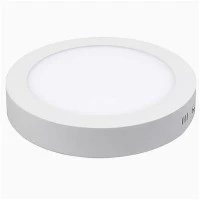
Surface-Mounted Downlights → No cavity needed, but protrude slightly.
6. Pro Tips for Perfect Downlighting
✔ Layer Lighting – Combine narrow & wide beams for depth.
✔ Dimmable LEDs – Adjust brightness for mood lighting.
✔ Avoid Glare – Use baffle-trim or deep-recessed fixtures.
✔ IC-Rated (Insulation Contact) – Safe for insulated ceilings.
Final Recommendation
Home Living Rooms: 4"–5" downlights, 60°–90° beam, 2700K–3000K.
Kitchen Task Lighting: 3"–4" downlights, 30°–45° beam, 3000K–4000K.
Commercial Spaces: 6"–8" downlights, 90°–120° beam, 4000K–5000K.