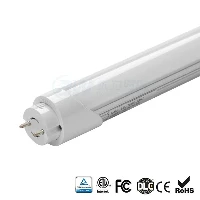
When evaluating LED lighting quality, most buyers focus on parameters,rameters including brightness, CRItemperature,perature and LED chip brands. They easily overlook one tiny but indispensable built-in part: the LED driver. Often called the heart of an LED fixture, the LED driver is a dedicated power supply that regulates electric current and voltage for LED chips. Unlike traditional bulbs that can connect to mains power directly, semiconductor LED chips require stable, constant current to work properly. Countless cases prove that over 45% of premature LED light failures are caused by poor-quality drivers, rather than damaged LED chips. This article fully explains the core functions of LED drivers, compares two mainstream driver types, and illustrates how this small component dominates the overall performance, stability, and service life of your LED lights.

What an LED Driver Does for LED Lighting
LED chips are sensitive to fluctuating voltage and current. Even minor power surges or unstable current will lead to flicker, rapid light decay, or permanent chip burnout. The LED driver undertakes three core tasks to keep lights running steadily. Firstly, it converts high-voltage alternating household mains power into low-voltage direct current suitable for LED chips. Secondly, it maintains constant current output to avoid brightness fluctuation caused by grid voltage changes. Thirdly, qualified drivers add built-in protection modules against overcurrent, overvoltage, overheating, and lightning surges, shielding the whole lamp from sudden power damage.
Without a matched high-performance driver, even top-grade LED chips cannot exert their original advantages. Good chips paired with cheap drivers still result in flickering lights, short lifespans, and frequent breakdowns in commercial and industrial lighting projects.
LED Lighting Failure Distribution: Driver vs Other Components
The pie chart below shows the real failure data of LED fixtures collected from long-term project maintenance, clearly highlighting that defective drivers are the top cause of early lamp damage:
The data is straightforward: nearly half of all early LED failures stem from inferior drivers. The LED chip only accounts for 8% of total failures, meaning buyers who only pursue premium chips but ignore driver quality are missing the biggest reliability risk of LED lighting systems.
Isolated Driver vs Non-Isolated Driver: Core Comparison Table
There are two mainstream LED drivers widely used in commercial lighting: isolated drivers and non-isolated drivers. Their cost, safety, stability, and service life vary greatly, directly fitting different application scenarios. The detailed comparison table helps purchasers make fast and accurate selections:
|
Comparison Item |
Non-Isolated LED Driver |
Isolated LED Driver |
|---|---|---|
|
Product Cost |
Low, simple internal circuit |
High, independent isolation circuit design |
|
Safety Performance |
General safety risk: electric leakage risk under damaged lamp housing |
Ultra-high safety; complete electrical isolation, no electric leakage risk |
|
Anti-surge Ability |
Weak, vulnerable to grid voltage fluctuation and lightning strike |
Strong, withstands unstable power supply and transient voltage surge |
|
Service Lifespan |
30,000 hours, easy aging under long-time operation |
50,000+ hours, stable performance for long-term continuous lighting |
|
Best Application Scenarios |
Low-budget indoor dry areas, short-time use lighting |
Outdoor lighting, industrial workshops, 24/7 working lamps, wet environments |
Common Lighting Problems Caused by Bad LED Drivers
Many abnormal lighting phenomena encountered in daily projects are directly triggered by unqualified drivers. The most common issue is visible light flicker, which cannot be solved by replacing LED chips. Poor drivers also cause slow startup, inconsistent brightness after long-hour operation, and sudden lamp burnout without warning. For outdoor lighting with unstable grid power, non-isolated drivers are easily broken by lightning surges, bringing large-scale maintenance troubles for project contractors. In addition, low-quality drivers generate extra electromagnetic interference, affecting surrounding electronic equipment in office and industrial spaces.
Key Procurement Tips for LED Drivers
For commindustrial,dustrial and outdoor LED projects that require long-term stable operation, always choose isolated LED drivers with complete protection circuits. Do not cut costs by matching non-isolated drivers for high-value lighting fixtures. Besides driver type, check the built-in surge protection level and high-temperature-resistant capacitors inside the driver. Also, confirm whether the driver supports smooth flicker-free dimming if the project needs dimmable lighting functions. Most importantly, when checking warranty terms, ensure the LED driver is covered by a full-unit warranty instead of being excluded from after-sales service.
Conclusion
The LED driver is the invisible core that determines how long and how well your LED lights work. Although small in size, it dominates power stability, safety performance, anti-interference ability, and overall lamp lifespan. High-end LED chips cannot compensate for defects of cheap drivers. When selecting LED lights, purchasers should pay equal attention to driver quality as well as chip parameters. Choosing a reliable isolated LED driver is the most cost-effective way to reduce failure rates, cut long-term maintenance costs, and maximize the service life of your entire LED lighting system.
Shenzhen Benwei Lighting Technology Co., Ltd.
Telephone: +86 0755 27186329
Mobile(+86)18681294064
Whatsapp : 18681294064
Email: bwzm32@benweilighting.com
Web: www.benweilight.com