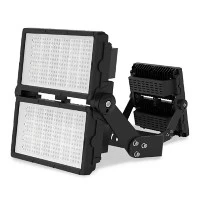
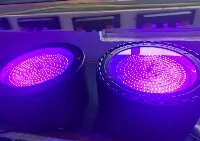
Most users and purchasers casually refer to LED lighting products as "LED bulbs". This common naming habit easily misleads people into treating LEDs as simple upgraded versions of traditional incandescent or halogen bulbs. In fact, LEDs are not conventional light bulbs - they are semiconductor diodes. This essential difference fundamentally distinguishes their working principles, performance characteristics, failure modes and usage requirements from traditional lighting.
Traditional Bulbs: Thermal Light Sources
Incandescent and halogen bulbs rely on thermal radiation to produce light. They generate brightness by heating the tungsten filament to a high-temperature glowing state. These bulbs are simple resistive loads, compatible with most conventional power supplies. Their failures are mostly caused by filament burnout, and their service life is mainly limited by thermal loss. Simply put, traditional bulbs are pure lighting devices based on thermal energy conversion.
LEDs: Semiconductor Optoelectronic Devices
LED stands for Light Emitting Diode. As a typical semiconductor component, it relies on electroluminescence instead of heat to emit light. When current passes through the semiconductor chip, electrons and holes recombine and release energy in the form of visible light. Nearly no excessive thermal loss occurs during the luminescence process, which is why LEDs feature high efficiency and low heat generation.
Unlike universal bulbs, LEDs are unidirectional current devices with strict requirements on current, voltage and heat dissipation. They cannot work stably without a matched driving power supply. Overcurrent, voltage fluctuation or poor heat dissipation will directly damage the semiconductor chip, causing light decay, flicker or permanent failure.
Why This Essential Difference Matters
Confusing LEDs with traditional bulbs leads to many improper usage and selection mistakes. Traditional bulbs can tolerate unstable voltage and simple circuit design, while semiconductors LEDs are sensitive to power fluctuations. This explains why inferior drivers cause frequent LED lamp flicker and short service life.
In addition, thermal management is unique to LED products. Since semiconductor chips are sensitive to high temperatures, poor heat dissipation will accelerate light decay and reduce overall lifespan. Traditional bulbs, by contrast, are designed to work under high heat and have no such restrictions.
Conclusion
LEDs are fundamentally sophisticated semiconductor diodes, not simple light bulbs. They follow semiconductor operating logic rather than traditional thermal lighting rules. Understanding this core difference helps purchasers and installers focus on matched drivers, stable power systems and reliable heat dissipation structures, instead of only judging lighting quality by brightness and appearance. This is the key to selecting truly durable, high-performance LED lighting products.