Lighting properly is crucial in poultry houses.
Many poultry farmers understand how crucial light is to maximizing output. When the illumination is optimal, all poultry—chickens, turkeys, laying hens, commercial producers, or parent stock—perform better.
The day when LED is the sole kind of illumination is quickly coming. Given that many manufacturers have already implemented LED lighting systems, now is a great opportunity to comprehend the advantages and take use of what this technology has to offer.
When compared to traditional technologies, such incandescent, fluorescent CFL, or halogen lighting, LED lighting is recognized to use less energy. In fact, LEDs are so effective that the EU predicts that converting Europe to LED would save enough power to replace Portugal's annual electricity use while reducing carbon emissions by 15.2 million tons annually!
What further advantages does LED provide then? The wellbeing of these is the most important. It has been shown that a well-designed lighting scheme improves performance by reducing stress, and LED gives enormous versatility in terms of both color spectrum and dimmability to obtain the best outcome.
It is helpful to return to biological "basic principles" in order to comprehend how lighting might affect the performance of chickens. Large, very sensitive eyes give poultry a distinct sense of light than humans do. Birds, for instance, are sensitive to ultraviolet light, unlike humans. Therefore, using lighting designed for humans instead of poultry may have downsides.
In addition to the retina in the eye, the skull is another way that birds receive light. The hypothalamus, which controls metabolism and reproduction, as well as the pineal gland, which controls daily behavioral cycles, are directly stimulated by light entering the brain via the skull. The hypothalamus and pineal gland are also affected by light perception via the eye, although this effect is indirect. Light does not enter the skull at low light intensities; instead, the retina perceives light, which controls the bird's circadian cycle (see Diagram 1).

It's also crucial to have dimmable lights. As previously mentioned, chickens have a circadian cycle that reacts to variations in light intensity, and they perform better in settings with more natural lighting. To make the transition from sleep to wakefulness and vice versa easier for birds, dimmer illumination that mimics dawn and sunset is used. Modern LED goods can smoothly fade from 0 to 100% of their maximum light output, and the sunrise/sunset effect may be readily accomplished by combining LED lights with a programmed dimmer.
Additionally, it has been shown that startling birds when lights are turned on and off stresses them out, which in turn lowers their performance. A dimmable LED lighting system, once again, prevents this.
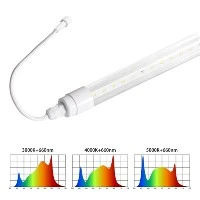
The colour temperature of lighting has been proven to have a considerable effect on several phases of chicken production in addition to light intensity (dim/non-dim). According to research, cold white light with a color temperature of 5000K promotes chickens to be more active, which helps to boost eating. This color temperature is thus perfect for maximizing development rates.
On the other hand, it has been shown that a color temperature of 2700K (warm white, comparable to a conventional 60W incandescent light) would increase egg production. Both of these requirements may be satisfied by LED lighting.
Flicker is another problem that may affect the wellbeing of chickens. In the wild, chickens are always on the watch for raptors. Since these predators could be present, they are taught to recognize changes in the light overhead. Chickens see lighting system flicker, which may be invisible to human eyes, as a danger from predators. Feathers need a secure, pleasant place to live, and minimizing or even eliminating flicker may greatly lessen stress.
High-quality LEDs are flicker-free, in contrast to fluorescent lighting, which has a very bad flicker profile. By switching from fluorescent lighting to flicker-free LED, the poultry population should experience a noticeable decrease in stress, which will improve performance, decrease undesirable behaviors like pecking, and increase disease resistance, all of which can help significantly lower mortality rates.
Therefore, the ideal lighting setup would imitate the color spectrum of daylight, give smooth dimming control to imitate dawn and sunset, provide a color temperature appropriate for the birds' growth stage, and prevent flicker. But how about the price?