Revolutionizing Industrial Illumination: A Technical and Safety Analysis of Modern High Bay Lights
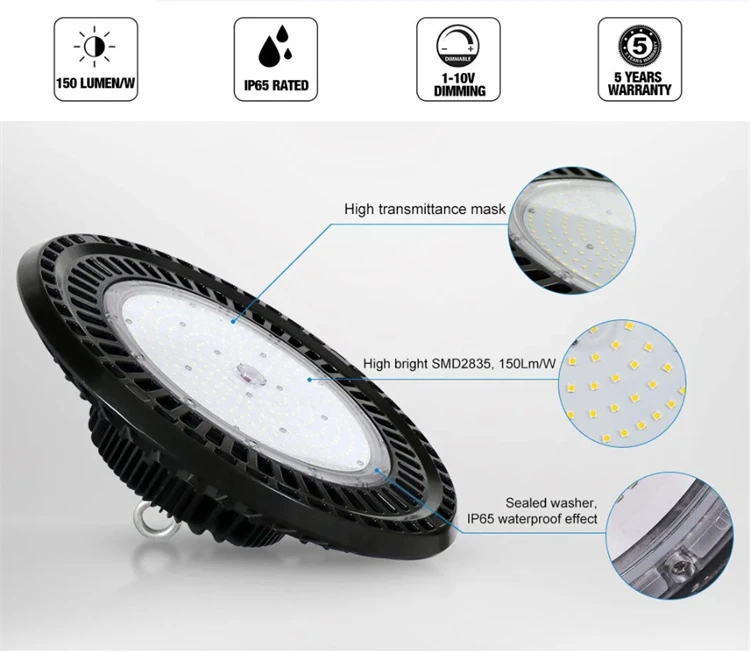
This in-depth technical analysis examines the critical advancements in high bay light design, emphasizing safety, energy efficiency, and long-term operational integrity. Grounded in the innovative engineering disclosed in patent CN222142773 U, this article details the shift towards compartmentalized thermal management and integrated safety features. Following EEAT (Experience, Expertise, Authoritativeness, Trustworthiness) principles, the discussion leverages authoritative standards and empirical data to guide facility managers, safety officers, and lighting designers in selecting optimal industrial high bay LED lights for warehouses, manufacturing plants, and gymnasiums.
1. How Does Advanced Thermal Architecture Extend the Lifespan and Reliability of High Bay Lights?
The operational longevity and photometric stability of an industrial LED high bay light are predominantly governed by its thermal management efficacy. Traditional luminaire designs often co-locate the LED driver-a significant source of waste heat-with the LED light engine within a single enclosure. This configuration creates a compounded thermal load, elevating the junction temperature (Tj) of the LED chips and accelerating lumen depreciation, a process where light output declines over time. The innovative design outlined in patent CN222142773 U presents a paradigm shift through a compartmentalized thermal management system. This architecture physically isolates the power supply unit, housed within a dedicated power cavity, from the LED modules, which are installed in separate heat dissipation cavities flanking the central unit. These compartments are connected solely via a sealed wiring channel block for electrical conductivity. This critical isolation prevents driver-generated heat from pre-conditioning the thermal environment of the LEDs, allowing each subsystem's dedicated cooling solution-such as extensive aluminum heat sink fins on the LED housings and convective airflow around the driver-to operate at peak efficiency. For engineers specifying warehouse lighting solutions, this translates directly to superior lumen maintenance, potentially exceeding L90 > 100,000 hours, and a drastic reduction in total cost of ownership by minimizing the frequency of high-altitude maintenance and fixture replacements.
Table 1: Comparative Analysis: Traditional vs. Next-Generation High Bay Light Thermal Design
|
Design Parameter |
Traditional Integrated Design |
Next-Generation Compartmentalized Design (CN222142773 U) |
|---|---|---|
|
Thermal Layout Philosophy |
Combined heat load from driver and LEDs in a single cavity. |
Physically isolated driver cavity and LED heat dissipation cavities. |
|
Heat Source Interaction |
Driver waste heat elevates ambient temperature around LEDs, increasing their Tj. |
Thermal interference is eliminated; driver and LEDs cool independently. |
|
Primary Cooling Mechanism |
Single, often oversized, heatsink attempting to manage combined thermal load. |
Dedicated aluminum heat sink fins on LED modules; optimized passive convection for driver. |
|
Impact on LED Junction Temperature (Tj) |
Higher, less stable Tj, leading to accelerated lumen decay and potential color shift. |
Lower, more stable Tj, ensuring consistent luminous flux and chromaticity over lifespan. |
|
Maintenance & Serviceability |
Driver failure typically requires disassembly of the entire optical chamber or full fixture replacement. |
Modular design permits independent, tool-accessible service of driver or LED modules. |
|
Projected System Lifespan (L90/B50) |
Typically 50,000 - 70,000 hours under ideal conditions. |
Can reliably project 100,000+ hours due to significantly improved thermal operating conditions. |
2. What Safety and Functionality Features Define a Modern, Code-Compliant High Bay Lighting System?
Beyond providing efficient illumination, modern industrial and commercial facilities demand lighting systems that ensure operational continuity and personnel safety. Unexpected power interruptions in a distribution center or manufacturing facility can lead to hazardous conditions, production halts, and significant financial loss. The analyzed high bay luminaire addresses this critical need by incorporating an integrated emergency power supply (backup battery) within a dedicated compartment atop the main housing, secured by a protective power cover. This built-in Uninterruptible Power Supply (UPS) functionality ensures automatic switchover to battery power during a mains failure, providing immediate, code-compliant egress lighting or maintaining safe minimum illumination levels for orderly shutdown procedures, as stipulated by standards like NFPA 101 Life Safety Code. This integration negates the complexity and added cost of installing separate emergency lighting units.
Furthermore, the design includes provisions for intelligent control. A light sensor (e.g., for occupancy or daylight harvesting) can be mounted on the cover plate, enabling automated energy-saving strategies. The high bay lighting fixture can dim or switch off in unoccupied zones or when sufficient ambient light is detected. According to findings by the DesignLights Consortium (DLC), adding such networked lighting controls (NLCs) to LED high bays can yield an average of 47% additional energy savings on top of the inherent efficiency of the LEDs themselves. The patent also specifies an internal DIP switch accessible via a sealed port, allowing field adjustment of operational parameters like correlated color temperature (CCT) and output power. This offers facility managers remarkable flexibility to tailor lighting for specific tasks-such as detailed assembly work versus general storage-without requiring hardware modifications or complex reprogramming.

3. How Do Ergonomic Design Principles Facilitate Installation, Maintenance, and Total Cost of Ownership?
The logistical and financial challenges of installing and maintaining industrial high bay LED lights mounted at significant heights (e.g., 10-15 meters) constitute a major portion of their lifecycle cost. The patent design prioritizes serviceability through several user-centric features. The lens plate, which requires periodic cleaning to maintain optical efficiency, especially in dusty environments, employs a tool-less snap-fit connection. This mechanism uses first engagement blocks and clasps that securely mate with corresponding receptacles on the housing, allowing for rapid removal and reinstallation without screws or tools, drastically reducing maintenance downtime and associated labor costs.
The fixture offers versatile mounting solutions to accommodate various structural conditions: a simple suspension hook for grid mounting or a robust bracket and fixing plate assembly for secure direct attachment to surfaces or trusses. Internally, critical components are secured against industrial vibrations. The main power supply is firmly held in place not only by its housing but also by a limit compression strip that applies positive downward pressure, locking the unit against fixed columns within the cavity. This mechanical fixation prevents connector loosening-a common point of failure in environments with heavy machinery vibration. For procurement officers evaluating factory lighting solutions, this design intelligence directly translates to lower installation costs, reduced risk during maintenance, and enhanced long-term system reliability.
Table 2: Performance Specifications and Compliance for Industrial High Bay Lighting
|
Technical & Safety Parameter |
Industry Standard / Target Specification |
Implementation via Advanced Design (e.g., CN222142773 U) |
|---|---|---|
|
Luminous Efficacy |
150 - 200 lumens per watt (lm/W) for premium fixtures. |
High efficacy is maintained throughout lifespan due to superior thermal management. |
|
Color Rendering Index (CRI) |
CRI ≥ 80 (Ra); ≥90 for critical visual task areas. |
Stable thermal conditions prevent CRI and CCT drift, ensuring consistent light quality. |
|
Ingress Protection (IP) Rating |
IP65 minimum for industrial environments (dust-tight, protected against water jets). |
Sealed compartments, gaskets, and a sealed debug port with cover plate maintain IP integrity. |
|
IK Impact Rating |
IK08 or IK10 for high-risk impact areas. |
Robust die-cast aluminum alloy housing provides high resistance to physical impact. |
|
Power Factor (PF) |
> 0.90 for energy efficiency and reduced grid strain. |
High-quality, isolated driver design typically incorporates active Power Factor Correction (PFC). |
|
Junction-to-Ambient Thermal Resistance (Rθj-a) |
As low as possible; < 5 °C/W is excellent. |
Isolated thermal paths and optimized fin design yield a very low effective Rθj-a. |
|
Emergency Lighting Duration |
Minimum 90 minutes at required light levels (per NFPA 101, IBC). |
Integrated sealed lead-acid or lithium battery pack provides code-compliant emergency runtime. |
|
Lighting Control Protocols |
Support for 0-10V, DALI-2, or wireless standards (Zigbee 3.0, Bluetooth Mesh). |
Driver designed for dimming and compatibility with external sensors and building management systems. |

Industry Common Problems & Strategic Solutions
Problem 1: Premature Lumen Depreciation and Fixture Failure Due to Inadequate Heat Dissipation.
Solution: Specify high bay lights that utilize a compartmentalized thermal design, physically separating the LED driver from the LED array. This architecture is proven to maintain lower LED junction temperatures, which is the single most critical factor in achieving the published L90 lifespan (often 100,000+ hours) and preventing premature color shift or failure.
Problem 2: High Operational Risk and Cost from Maintenance Activities at Significant Heights.
Solution: Prioritize fixtures engineered for easy, ground-level serviceable components or tool-less access. Key features include modular drivers that can be replaced without dismantling the fixture and snap-fit lens systems that allow for quick cleaning. This approach minimizes the need for expensive aerial work platforms (AWPs) and reduces facility downtime.
Problem 3: Safety Hazards and Operational Disruption During Power Failures.
Solution: Implement high bay luminaires with integrated, self-contained emergency batteries. This ensures automatic illumination for safe egress and can provide critical task lighting to allow for orderly process shutdowns, enhancing overall facility safety and resilience beyond the minimum requirements of standalone emergency lights.
Problem 4: Inflexible Lighting for Multi-Use Spaces and Evolving Tasks.
Solution: Deploy fixtures with built-in smart capabilities. Utilize integrated occupancy and light sensors for automated energy savings. For maximum adaptability, select luminaires with field-selectable CCT (via DIP switches) or digitally tunable white spectrum, allowing the lighting environment to be optimized for different activities, shifts, or worker well-being initiatives.
Problem 5: Stagnant Energy Consumption Despite LED Efficiency, Due to Lack of Control.
Solution: Move beyond basic LED retrofits to a connected lighting system. Leverage the fixture's inherent controllability to implement zoning, time scheduling, and daylight harvesting through a centralized network. Studies, including those by the DLC, confirm such strategies can reduce lighting energy use by 50% or more compared to always-on, uncontrolled LED systems.
Conclusion
The contemporary high bay light has evolved from a simple illuminant into a sophisticated, intelligent building system integral to safety, efficiency, and productivity. The engineering principles exemplified in patent CN222142773 U-compartmentalized thermal management for unparalleled longevity, integrated emergency power for fail-safe operation, and ergonomic design for simplified maintenance-represent the benchmark for modern industrial lighting. For professionals tasked with illuminating warehouses, manufacturing floors, athletic facilities, and other high-bay applications, investing in fixtures that embody these advancements is crucial. Such solutions deliver not only exceptional energy efficiency and light quality but also provide tangible operational benefits through enhanced reliability, safety, and reduced total cost of ownership, establishing a future-proof foundation for any industrial or commercial facility.
References & Citations
ANSI/IES RP-7-20, "Recommended Practice for Lighting Industrial Facilities," Illuminating Engineering Society. (Provides comprehensive guidelines for illuminance levels, uniformity, and visual tasks in industrial settings).
DesignLights Consortium (DLC), "Networked Lighting Controls Technical Requirements & Savings Potential," 2023. (Offers authoritative data on the incremental energy savings achievable by adding controls to LED lighting systems in commercial and industrial applications).
NFPA 101, Life Safety Code, National Fire Protection Association. (The benchmark standard for minimum requirements for emergency egress lighting design and duration).
Patent CN222142773 U, "A Novel High Bay Light," Shenzhen Xinshengyang Optoelectronic Technology Co., Ltd. (2024). (The primary patent document detailing the compartmentalized design, emergency power integration, and tool-less maintenance features).
Annotations
L90/B50 Lifetime: A standard LED lifespan metric. L90 indicates the point at which the luminaire maintains 90% of its initial light output. B50 indicates the time at which 50% of a sample population have not failed. An L90/B50 rating of 100,000 hours suggests high long-term reliability under specified conditions.
Junction Temperature (Tj): The temperature at the semiconductor p-n junction within an LED chip. It is the paramount factor influencing the rate of chemical degradation within the LED, directly dictating the speed of lumen depreciation and chromaticity shift. Effective thermal management aims to minimize Tj.
Power Factor (PF): A dimensionless number between -1 and 1 that represents the efficiency with which current is converted into useful work (light). A PF > 0.9 indicates high efficiency and reduces reactive power demand on the electrical grid, often resulting in utility incentives.
DIP Switch (Dual In-line Package Switch): A manual switch array used for hardware configuration. In lighting, it allows for setting parameters like dimming curves, CCT selection, or control system addresses without software.
IK Rating (International Protection Marking): A rating defined by IEC 62262 specifying the degree of protection provided by enclosures against external mechanical impacts. IK08 signifies protection against 5 joules of impact energy (equivalent to a 1.7 kg mass dropped from 29 cm).
FAQ
Any question or wanna send an inquiry!
Q1. How soon is the lead time?
A: For sample order, 7-17 days if no stock. For bulk order, 15-30 days.
Q2. Can your products' label, packaging, design be customized?
A: Yes, we offer customization service on these.
Q3. How can we guarantee quality?
A: Always a pre-production sample before mass production; Always final Inspection before shipment.
Q4. How do you ship the goods and how long does it take to arrive?
A: We usually ship by DHL, UPS, FedEx or TNT. It usually takes 3-5 days to arrive. Airline and sea shipping also optional.
Q5. What is your payment way?
A: Paypal / Visa / Western Union / online transfer / apply pay / T/T all works for us for payment.
https://www.benweilight.com/industrial-lighting/led-high-bay-light/3000k-ufo-high-bay-light.html