Small Size, Big Impact: A Comprehensive Analysis of the Home Mini Recessed LED Spotlight Industry
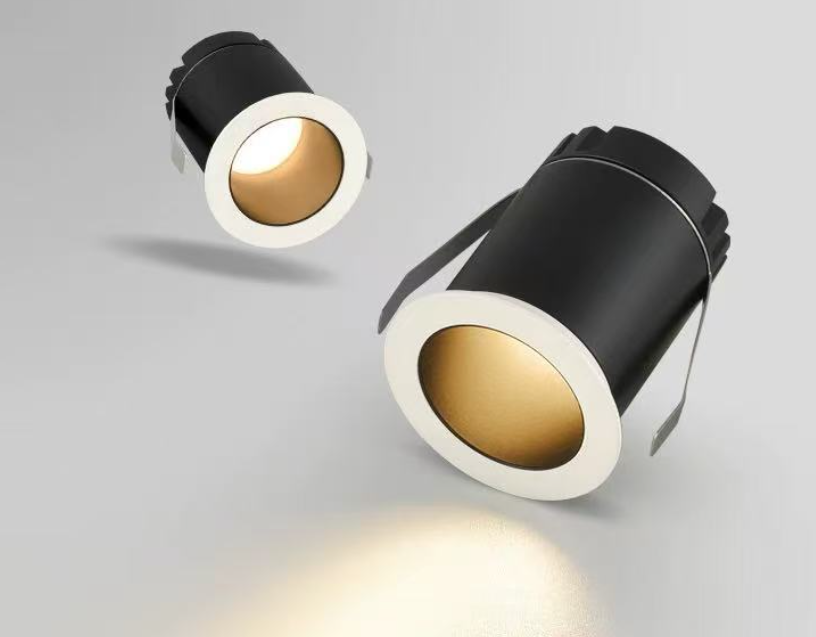
As residential spaces become increasingly diverse, the demand for lighting has moved far beyond simply "being bright." Minimalism, main-light-free designs, and precise accent lighting have all driven the rise of a new category of lighting products: low‑power mini recessed LED spotlights (3W–10W). Whether you want a cozy atmosphere in your living room, elegant illumination for a wine cabinet, or task lighting under kitchen cabinets, these small, high‑CRI, anti‑glare LED spotlights are rapidly finding their way into millions of homes. So what exactly are these products? What core technologies and features do they offer? Is 3W bright enough? And which key parameters should you look for when buying one? Using a representative product as a reference, this article provides a detailed analysis of this new trend in residential lighting.
1. Is 3W really bright enough? Rethinking the application logic of low‑power spotlights
Many people still believe that the higher the wattage, the brighter the light. This is a misconception reinforced by years of traditional marketing. For LED lighting, wattage only indicates power consumption, not perceived brightness. With typical LED efficacy of 85–100 lumens per watt or higher, a 3W lamp usually delivers 220–350 lumens – more than enough for precise accent lighting. Take a decorative painting in the living room: a single 3W mini spotlight with a well‑defined beam can highlight the artwork perfectly without spilling distracting light into the viewer's eyes. Other classic applications include wine cabinets, glass display cases, under‑cabinet kitchen lighting, hallway end walls, and even jewelry cases. In one real‑world example, the owner of a light‑luxury accessories store in Zhongshan replaced old lighting with mini 3W recessed spotlights (only 4cm cut‑out). The previously dim glass display cases immediately gained depth and texture, and the jewelry sparkled under the precise beam, even attracting passers‑by to stop and take photos.
Today, mini recessed spotlights are typically available in 3W, 5W, 7W, and 10W versions, with corresponding cut‑out diameters of 30mm, 40mm, 50mm, and 60mm. This product matrix reflects a key market insight: lighting designers and regular homeowners not only need sufficient brightness but also the flexibility to choose the right wattage for different spaces and functions, while maintaining a visually consistent ceiling pattern. Thus, "small" doesn't mean compromised performance – it represents an evolution toward precise illumination.
2. Two core technological pillars: anti‑glare and high color rendering
In the past, people chose spotlights simply based on brightness. Today, the real benchmarks for a high‑quality spotlight are two inseparable metrics: anti‑glare capability and color rendering index.
(1) Anti‑glare optical design: protects eyes, ensures comfort
Anti‑glare means preventing the harsh sensation when light shines directly into the eyes. Ordinary spotlights lack optical optimization – light spreads directly from the surface. If the fixture is mounted at or below eye level, direct glare occurs. Prolonged exposure causes eye fatigue, headaches, and difficulty concentrating.
High‑quality mini recessed spotlights use professional anti‑glare optics – deep‑recessed light sources, optimized reflector curvature, and anti‑glare grids – to restrict visible light strictly within the shielding angle. From any angle other than directly below, the light source itself is invisible. This "seeing the light, not the lamp" effect is widely regarded as the finishing touch for main‑light‑free designs. While anti‑glare designs are common in larger luminaires, achieving the same effect in a miniaturized body (cut‑out just 30–60mm) demands exceptional optical precision and manufacturing quality.
(2) High CRI ≥ 90: true color reproduction
Color Rendering Index (CRI) measures how accurately a light source reveals the true colors of objects, with natural sunlight as Ra = 100. Conventional energy‑saving bulbs or low‑end LEDs often have a CRI of 70–80. The difference is obvious: under a low‑CRI source, reds look dull and grayish, oranges appear muddy, skin tones look pale and unnatural, and the texture of objects is lost.
For residential spotlights, China's national standard recommends Ra ≥ 80, while higher‑end "eye‑care" products typically push Ra to 90 or above. In the 3W mini spotlight segment, leading manufacturers now commonly offer Ra ≥ 90. Many such products also provide a choice of color temperatures: 3000K (warm white), 3500K (neutral white), and 4000K (cool white), catering to different interior styles and personal preferences.
3. Thermal management: the unsung hero of LED lifespan
The compact size of mini recessed LED spotlights raises a natural concern: heat dissipation. LED chips generate significant heat while emitting light. Poor thermal design leads to rising junction temperatures, accelerating lumen depreciation and even causing premature failure. Because the heat‑sinking space is severely limited by the physical dimensions, the quality of the thermal solution becomes a critical differentiator.
High‑end luminaires now commonly use an aluminum housing combined with thermally conductive structures and natural convection, creating a low‑thermal‑resistance path from chip to aluminum surface. In many quality mini recessed spotlights, the manufacturer explicitly states that the housing is made of aluminum alloy to ensure effective heat dissipation. Aluminum – lightweight, thermally conductive, cost‑effective, and easy to machine – quickly lowers the chip junction temperature, ensuring long‑term reliability. With the future adoption of new materials like gallium nitride and silicon carbide substrates, the efficacy of low‑power LEDs will improve further, offering even better solutions to the size‑vs‑heat challenge.
4. Why your home needs mini LED spotlights – unlocking real‑world applications
After reading the technical details, you might still wonder: where exactly can mini recessed spotlights be put to good use in a home? Let's walk through typical scenarios.
Living rooms and hallways: In main‑light‑free designs, the central ceiling light is removed, and multiple 3W spotlights are evenly spaced. The ceiling looks clean and uncluttered, while providing soft, even ambient light without harshness. Their slim rims (available in white or black) match modern minimalist styles perfectly.
Wine cabinets and display cabinets: Wine cabinet lighting is a classic use for low‑power spotlights. A 3W precise beam makes wine labels and bottle contours clearly visible, while the focused light avoids wasting illumination on surrounding walls.
Under‑cabinet kitchen lighting: When you chop vegetables or cook, your body often blocks the overhead light, leaving the countertop in shadow. Adding a few 3W mini spotlights under the cabinets directly lights up the work area. Users report that under high‑CRI light, ingredients look more vivid – even the orange of carrots appears fresher.
Hallways and mirror fronts: Bathroom mirrors, entrance hallways, and bedside night lights don't need wide, bright wash lighting. The low power and soft beam of 3W spotlights provide functional illumination without disturbing the overall mood of the space.

5. Future trends for 3W mini spotlights
According to a recent report from TrendForce, the global LED lighting market is expected to reach USD 105 billion by 2026, with a compound annual growth rate of 5–6% – stable growth in a mature market.
"Smaller fixtures, stronger optical performance, and smarter control" have become the dominant trends in lighting design. Low‑power mini recessed spotlights are a perfect embodiment of these trends. On the technology side, COB (Chip‑on‑Board) packaging integrates multiple LED chips densely on one substrate, producing a continuous, uniform light surface with no visible spots – delivering higher luminous density and performance in a mini size. Meanwhile, industry analysis for 2026 and beyond shows that manufacturers are increasingly shifting toward home‑oriented, experience‑driven niche product segments.
Driven by both policy and consumer preferences, the EU's New Green Deal mandates the highest energy efficiency levels for new construction projects from 2026 onward. More energy‑efficient, environmentally friendly LED lighting will continue to squeeze traditional lighting markets. At the same time, under China's green consumption trends, consumers are becoming increasingly aware of "eye‑care" and "healthy lighting environments." Owning a high‑CRI, anti‑glare recessed spotlight is no longer just a designer's choice – it is becoming a mainstream aspiration.
6. The golden checklist for buying mini recessed LED spotlights
Based on the technical logic and industry trends above, here is a six‑point "golden checklist" for consumers buying 3W–10W mini recessed LED spotlights for new homes or renovations:
- Confirm the cut‑out size – Common sizes range from 30mm to 60mm. Always verify that the hole left by your carpenter matches the product's specifications.
- CRI ≥ 90 – This directly affects the visual quality of your living space, especially in living rooms, dining rooms, and studies. Do not compromise.
- Ensure anti‑glare design – Prioritize products with a deep‑recessed light source or explicit anti‑glare construction in the description.
- Choose the right color temperature – For bedrooms or late‑night use, 3000K warm white is recommended. For open living areas, 4000K neutral white works well. For dining rooms or kitchens, decide between neutral and cool white based on your interior style.
- Look for an aluminum body – An aluminum alloy housing ensures basic thermal performance and durability. Plastic housings dissipate heat poorly and may deform under long‑term high temperatures.
- Integrate into a complete lighting plan – Mini spotlights are only one part of your lighting system. They should work together with main lights, LED strips, and linear systems to form a holistic solution. Do not judge the entire home lighting effect by a single spotlight.
7.Final Thoughts
Technological progress is not about dramatic leaps in wattage – it is about countless small improvements that quietly enhance our daily quality of life. The 3W mini recessed LED spotlight is exactly such a "light artist," quietly transforming the corners of our homes. With its compact yet powerful design, it proves that accent lighting is no longer exclusive to commercial spaces. Every detail in your home – the texture of a painting, the grain of furniture, the treasures in a wine cabinet – deserves to be rediscovered and illuminated. As the lighting industry continues to evolve with smart controls and healthy lighting concepts, low‑power spotlights will achieve even greater breakthroughs in energy efficiency and specialized spectral solutions. The next time you find a dark corner at home, try reshaping its atmosphere with a humble mini spotlight – you may rediscover the quiet warmth and power of light.