SMD LED lamp beads welding method
There are many welding methods for SMD LED lamp beads. The following is one of the commonly used methods for reference. First, use an electric soldering iron to scald some solder on the positive and negative pads of the lamp bead (the solder must not be too much, otherwise, the positive and negative pads will be connected together when heated with a hot air gun), and then use a hot air gun. Heat the positive and negative pads at the same time. After the tin is melted, use tweezers to place the positive and negative poles of the lamp bead on the corresponding pads.
The operation must be fast and accurate, otherwise, the heat gun will melt and damage the plastic package of the LED.
In the absence of a heat gun, different welding methods can also be used according to the structure of the LED lamp bead and the substrate used. The pins of the SMD LED lamp bead are semi-plastic encapsulated, that is, a small part of the pins are exposed on both sides of the lamp bead, such as the commonly used 5730, 7020, 4014, etc.; there are also fully plastic encapsulated, that is, the positive and negative electrodes of the lamp bead are all on the chip. the bottom, such as 3030 and so on. It is also easier to weld semi-plastic lamp beads such as 7020. Also, before soldering, you should heat a little tin on the pad (the pins of the lamp bead should not be tinned), and use tweezers on both sides to place the positive and negative poles of the lamp bead correspondingly. On the pad, press the lamp bead with your finger or a small screwdriver, and finally use the electric soldering iron to quickly heat the exposed electrode, and at the same time press down with the appropriate force of the finger (when heating, the soldering iron cannot be rubbed back and forth, and the pressure of the finger should not be too large, otherwise the lamp beads will be damaged).
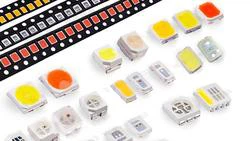
For fully plastic-encapsulated lamp beads (such as 3030), if the light strip substrate is an ordinary circuit board, first use a blade to scrape the paint around the lamp bead pads to expose the copper wires, and then burn a little tin on the pads. Solder the electrode with the large pad, and then put the electric soldering iron on the newly scraped copper wire to heat (can not be placed on the pad). After the tin on the pad is melted, use tweezers to place the corresponding pole of the lamp bead on the solder. Slight pressure on the plate can be done, and finally solder the electrodes with small pads. The electrode with a large pad must be soldered first because the required heating time is long. If the electrode is soldered later, the lamp bead is easily overheated and damaged.
If the light bar substrate is an aluminum substrate, the above method cannot be used, because the circuits using the aluminum substrate are designed to be very thin. When welding the lamp beads of this type of light bar, heat conduction can be used to weld the lamp beads, and the aluminum plate on the back of the positive and negative electrode pads of the lamp beads can be heated at the same time. After the tin on the pad is melted, the lamp beads are placed on the pad. Just pressurize a little. The heater can be purchased from Taobao, or it can be replaced by a high-power electric soldering iron (not less than 100W).
When soldering the lamp beads with an electric soldering iron, the shell of the electric iron must be well grounded, and it is best to wear an anti-static wristband to prevent induced electricity and static electricity from damaging the LED lamp beads. In addition, the tip of the soldering iron should be ground into a horseshoe shape to increase the contact area and shorten the welding time.
Benwei Lighting is an LED Tube, LED flood light, LED Panel Light, LED High Bay, LED manufacturer with 12 years of experience. If you want to purchase a high-quality LED flood light or have a more in-depth understanding of the application of LED flood lights, please contact send us inquiry, our web:  https://www.benweilight.com/.