Solving Heat Dissipation in High-Power Floodlights (>300W)
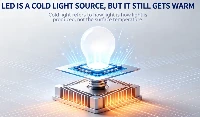
High-power floodlights exceeding 300W generate substantial heat during operation, which can degrade performance, shorten lifespan, and even pose safety risks. Effectively managing this thermal challenge requires a systematic approach combining advanced materials, intelligent design, and innovative cooling technologies.
Material selection forms the foundation of efficient heat dissipation. Aluminum alloys, particularly 6063 and 6061, remain industry standards for heat sinks due to their excellent thermal conductivity (160–200 W/m·K) and cost-effectiveness. For extreme cases, manufacturers are increasingly integrating copper components (401 W/m·K) into critical heat transfer paths, though this adds weight and expense. Thermal interface materials (TIMs) like phase-change compounds and graphite pads further optimize heat flow between LED modules and heat sinks, reducing contact resistance by up to 50% compared to traditional thermal greases.
Structural design innovations significantly enhance passive cooling efficiency. Fin geometry plays a crucial role-optimized fin spacing (typically 2–5mm) prevents airflow stagnation, while increased surface area through 3D-printed lattice structures can improve heat dissipation by 30–40%. Heat pipe technology offers another breakthrough: these vacuum-sealed copper tubes transfer heat via phase change, moving thermal energy away from LED chips at rates 10–100 times faster than solid conduction. When integrated into heat sinks, heat pipes enable more uniform temperature distribution, preventing hotspots that accelerate component degradation.
Active cooling systems become necessary for the highest power units. Brushless DC fans, rated for 50,000+ hours of operation, can reduce operating temperatures by 15–25°C compared to passive systems. Modern designs incorporate fan speed controllers that adjust airflow based on real-time temperature readings, balancing cooling efficiency with noise levels. For specialized applications, liquid cooling loops-using water or dielectric fluids-provide superior thermal transfer, though they add complexity and require maintenance. These active systems often work in tandem with thermal sensors and smart drivers that reduce power output when temperatures exceed safe thresholds, preventing catastrophic failure.
Environmental integration also impacts thermal performance. Mounting orientation should maximize natural convection, with vertical installations generally outperforming horizontal ones. Protective enclosures must balance weather resistance with airflow-perforated designs or integrated vents maintain cooling while preventing water ingress. In dusty environments, self-cleaning mechanisms or easily replaceable filters prevent debris buildup on heat sinks, which can reduce efficiency by 20% or more over time.
By combining these strategies-advanced materials, optimized passive designs, intelligent active cooling, and environmental adaptation-manufacturers can ensure 300W+ floodlights operate within safe temperature ranges (typically below 85°C at the LED junction). This comprehensive approach not only maintains lumen output and color stability but also extends operational lifespans from 50,000 to over 100,000 hours, delivering better long-term value and reliability for industrial, sports, and infrastructure lighting applications.