Dark warehouses, flickering storefronts, and dark nooks are becoming a thing of the past thanks to bay lighting. Americans have shifted away from conventional lighting sources towards energy-efficient bulbs like LEDs, which are now used in bay lights to brighten business spaces and reestablish adequate lighting conditions. Specific forms of bay lighting are used in warehouses, factories, hospitals, schools, and parking garages, which raises the questions of whether to use high bay or low bay lighting and what the distinctions are between the two.
For spaces with 40-foot ceilings, high bay lights are the preferred choice, but low bay lights, which need less lumen output and brightness, may be appropriate for schools. This manual was created to address all of your lighting-related queries and establish you as an authority. Learn more about the distinctions between high and low bay lighting in the next paragraphs to choose which is best for you.
How Does Bay Lighting Work?
The normal ceiling height in a home is nine feet, however bay lighting is frequently employed in rooms with higher ceilings. High or low-bay LED lights can be advantageous in commercial settings such as warehouses, indoor sports stadiums, gymnasiums, grocery shops, and storage facilities. Bay lights are more maintenance-free than conventional lighting sources and may save energy usage by up to 85%. They also have a lifespan of over 100,000 hours.
Bay lighting is available in a range of designs, forms, and mounting choices. They provide even lighting and glare-free illumination. It is crucial to use high or low bay lighting to illuminate every nook and corner when working with hazardous equipment such as chemicals, heavy machinery, and other gear.
Lighting: High Bay vs. Low Bay
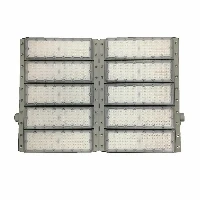
For ceiling heights between 10 and 25 feet in length, high bay lighting is typically employed. Since high bay lights are positioned higher from the ground, it takes them more time to brighten the space and eliminate shadows. They need more brightness output, usually between 10,000 and 50,000 lumens. High bay lights can be fixed directly in the ceiling or suspended from it using hook, pendant, and chain attachments.
Low bay lights, on the other hand, are put in place in spaces with ceilings that are between 10 and 25 feet in length. Because of its reduced lumen output and inability to adequately light up bigger rooms, low bay lights are suited for lower ceilings than high bay lights. Chains, hooks, or pendant mounts are used to suspend low bay lights from the ceiling. They also come in more contemporary UFO designs for a refined appearance. For dining establishments and break rooms, low-bay LED lights may be the best option.
Process of Making Industrial Bay Lights
For their various objectives, high bay and low bay lights are built in distinct ways. For instance, certain types of reflectors are used by high bay lights to guide light. While prismatic reflectors disperse light outward to cover a wide area, aluminium reflectors focus light downward. This improves safety while handling hazardous equipment and sheds light on warehouse crates.
In order to appropriately illuminate interiors, low bay lighting may need for additional light fixtures spread farther apart in addition to lower ceiling depths. Low bay lights have more shallow reflectors, which lessen glare while distributing light evenly for coverage. You may easily evaluate documents and finish other office activities thanks to this.
Where Do High-bay Lights Get Their Name?
Auto dealerships, retail stores, art galleries, conference rooms, event venues, office buildings, and other locations with higher ceiling heights can all benefit from high bay lighting. Taller things that are farther away from the ground are appropriately illuminated by high bay lights.
Where Do Low-bay Lights Get Their Name?
In places with ceilings no higher than 20 feet, such as schools, garages, hotel lobbies, home offices, and museums, low bay lighting is employed.
Height of Installation:
Ceilings between 10 and 25 feet in height are needed for high bay lights. While low bay lights may be put at heights between 10 and 25 feet, certain high bay lights can be mounted at above 30 feet. Specialty reflectors enable light to be distributed uniformly throughout the whole area.
Mounting:
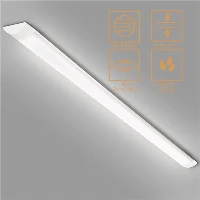
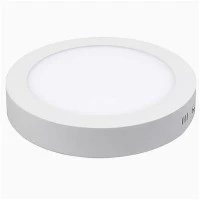
Low bay lights are available in UFO, square, linear, and round forms and may be hung from chains, hooks, or pendant mounts. High bay lights are more adaptable and may be put directly in the ceiling like recessed lighting or mounted using hook, pendant, v-hook, and chain mounts.
Application:
High bay lighting can be utilised in locations like colleges, gyms, factories, warehouses, theatres, and industrial buildings, depending on the size of the space. The ideal lighting option for garages, offices, nursery facilities and public libraries is low bay lighting.
bevel angle
The inclination at which light is emitted from a lamp is known as the beam angle. To guarantee that light is directed straight in one direction (such as a patient's mouth), the light at a dentist's office, for example, may have a low beam angle. The beam angle of high bay lighting ranges from 60 to 120 degrees. More coverage is given the higher the angle. For lights with low beam angles to adequately illuminate a big space, multiple fixtures can be needed. With a beam angle of 120 degrees, low bay lighting evenly distributes light over a room.
The Best Bay Lighting Options
Lighting affects employees' productivity and their ability to safely perform their task, even if it may not always be top of mind. The size of the building and the lighting conditions within will determine whether your area needs low-bay or high-bay lighting. Additionally, keep in mind the building's intended use. Will a warehouse require a lot of lighting? Are lights being installed in a garage with 15-foot ceilings? To find out which kind of lighting is best for you, view the checklists we've provided below.
1. Fluorescent vs. LED Bulbs
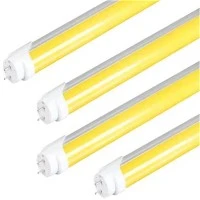
Compared to fluorescent lights, LED bulbs are more effective, durable, and popular. Before replacing your light fixtures, keep in mind that LED lights often have a higher brightness.
2. LED Lighting: Low Bay vs. High Bay
The ceiling height is the main decision factor when choosing between high bay and low bay led lights. Remain with low-bay for spaces with lower ceiling heights. For rooms with higher ceilings, choose high bay LED lighting.
3. Beam Width and Angle
The number of lights needed in an area and how far apart they should be placed depend on the beam angle of each light. To cover greater area, choose lights with a 120-degree angle.
4. Options for Mounting and Distributing
There are several ways to attach lights, including mounting arms, slide filters that may be adjusted, and brackets. The pattern that the light source leaves behind on the ground (also known as light dispersion) is known as the lighting footprint. For equal distribution on both sides, choose type V and type II for hallways.
5. Adaptation
With the help of our LED recessed light kits, you can modernise outdated fixtures. Everything you need to improve your home and business lighting is included in kits.
6. Power
Choose a light that will adequately illuminate your area and eliminate shadows. Aim for the ideal balance between strong light that isn't too harsh but yet bright enough to light up a place, avoiding poor lumen output.
7.Intensity of colour
Find the colour temperature that works best in your room. Select lighting that is neutral white or blue-white for enhanced contrast and the ability to perceive tiny details.
8. Fixture Design
Round-shaped lights seem more basic and contemporary and are ideal for use in offices. Perhaps more appropriate for production lines or bigger gymnasiums are linear, rectangular lighting.
9. Use of Energy
Both high bay and low bay lighting are economical choices. Additionally, dimmable lights reduce power consumption, which can result in decreased energy costs and use.