Ultraviolet (UV) Radiation
"Light" in the ultraviolet (UV) spectrum is technically a form of electromagnetic radiation. In comparison to visible light, the wavelength of UV light is much shorter. Since the wavelengths of purple and violet light are shorter than the wavelengths of other colours of light, ultraviolet light is sometimes referred to as "purpler-than-purple" light or "beyond violet" light. Other colours of light have longer wavelengths.
Along the electromagnetic spectrum, the wavelengths of ultraviolet radiation can be found between those of visible light and X-rays. The range of wavelengths that make up UV "light" is somewhere in the neighbourhood of 10 to 400 nanometers. Violet light has a wavelength of about 400 nanometers, which is equal to 4,000 microns. Radiation in the ultraviolet spectrum has a frequency range of around 800 to 30,000 terahertz (THz, also written as 1012 hertz).
When discussing visible light, we refer to the many wavelengths of light that span the visible spectrum by the names of the colours that correspond to those wavelengths. The wavelength of red light is close to 650 nanometers, whereas the wavelength of blue light is close to 440 nanometers. The ultraviolet (UV) portion of the electromagnetic spectrum is divided into a number of distinct regions, each of which corresponds to a particular wavelength of UV radiation. These areas are analogous to the various colours that can be seen in visible light.
parts of the ultraviolet spectrum
In the ultraviolet spectrum, scientists have identified three distinct zones that they call near UV, far UV, and extreme UV. These divisions are analogous to the partitions that exist between the various colours of visible light, and consequently the various wavelengths of that light. The near ultraviolet area is the one that is nearest to the visible light spectrum, and its wavelengths range from 200 to 400 nm.
The far ultraviolet area, which has higher energy but shorter wavelengths, covers the range of wavelengths from 91 to 200 nm. The part of the ultraviolet spectrum that is on the boundary between UV and X-ray radiation is known as extreme ultraviolet radiation. This region of the spectrum is characterised by the lowest wavelength range and the highest energies among the regions of the ultraviolet spectrum. The wavelength range of extreme ultraviolet light is between 10 and 30 nanometers. The majority of ultraviolet light with wavelengths less than 200 nanometers cannot pass through normal air because oxygen absorbs "light" in that portion of the ultraviolet spectrum. This is excellent news for us inhabitants of Earth due to the fact that our atmosphere protects us from the most harmful and high-energy portions of the ultraviolet spectrum that are directed towards our planet from the Sun and other sources in space.
When analysing the effects of UV radiation on the health of humans and the environment, experts use a different method to partition the ultraviolet spectrum. In reference to the ultraviolet (UV) spectrum, they refer to the UV-A, UV-B, and UV-C sections. On the labels of your sunglasses or sunscreen, you have most likely seen the terms UV-A and UV-B mentioned. Between 320 and 400 nm is the range of wavelengths that fall within the category of UV-A, which is also referred to as "blacklight" or "Long Wave" UV. This type of ultraviolet radiation is the one that is most similar to visible light. UV-A is virtually the only kind of ultraviolet light that is able to penetrate our atmosphere and reach the surface of the earth. UV-B waves, which have wavelengths ranging from 280 to 320 nm, are capable of carrying a greater amount of energy than UV-A waves. The sunburn that most people get is caused by ultraviolet B radiation; the sun protection factor (SPF) that is indicated on sunscreens refers to their capacity to lessen the harmful effects of UV-B. Radiation having wavelengths ranging from 100 to 280 nanometers is classified as belonging to the UV-C portion of the ultraviolet spectrum. These ultraviolet photons with short wavelengths have tremendous energy and are particularly harmful to living things because of this. UV-C is often referred to as "Short Wave" UV or "germicidal" UV. It is given the latter name due to the fact that it is occasionally used to sterilise laboratory equipment or to purify water by killing microorganisms. Short Wave UV is another name for UV-C.
UV Radiation in the Atmosphere of the Earth
The vast majority of the ultraviolet light that originates in space is stopped by the atmosphere of Earth before it can reach the surface. At an altitude of around 35 kilometres, the ozone layer in the stratosphere completely blocks UV-C radiation. The majority of UV-A does get through to the surface, but UV-A delivers relatively little genetic damage to the tissues it encounters. Even though the majority of UV-B is absorbed by ozone before it reaches the surface, it is the primary factor in sunburn and the development of skin cancer. The amount of ozone present in the stratosphere has a significant impact on the amount of ultraviolet B radiation that reaches the surface.
Features:
● UV special charateristic ,stage use 395nm-400nm
● Application:Office, Refrigerator, Icebox etc
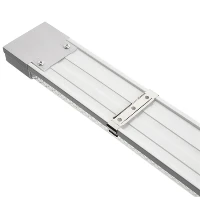
● Led tube light fixture uv sterilizer UV light
Specification:
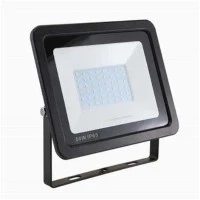
| Product Name | 365nm Purple UV Lamp |
| Color Temperature | 395-400nm |
| Shade Material | Aluminum Alloy |
| LED Type | SMD 2835 |
| Lifespan | ≥50000H |
| Certification | CE, RoHS, EMC, LVD |
| Power Factor | >0.95 |
| Beam Angle | 120 Degree |
| Input Voltage | 85-265V |
| Lumens | 100-110 Lm/W |