Because of its consistent illumination, energy economy, and stylish appearance, LED panel lights have gained popularity as a lighting option for both residential and commercial environments. However, to guarantee optimum performance, lifespan, and safety, correct installation is essential. A thorough guide to the installation procedure, covering planning, technical procedures, and practical issues, may be found below.
Planning and Evaluation Prior to Installation
Assess the Needs for Lighting
Determine the space's illumination requirements prior to installation:
Goal: Identify the room's main use, such as office work, culinary duties, or shop displays.
Brightness (Lumens): Determine the necessary lumen output by taking the size of the room into account. For instance, restaurants may need 500–750 lux, yet offices usually need 300–500 lux.
Select cool white (4000K–5000K) for commercial areas and warm white (2700K–3000K) for residential spaces.
Take a Measurement
Ceiling Type: Determine if the ceiling is made of plasterboard, concrete, or suspended elements like T-bar grids. Mounting techniques are impacted by this.
Panel Size: To accommodate typical grid ceilings, the majority of LED panels are 2x2 or 2x4 feet in size. To prevent gaps or misalignment, double-check the measurements.
Examine the electrical system
Verify that the voltage and wattage of LED panels can be supported by the current wiring.
Check the circuit capacity to prevent overloading, particularly in multi-panel commercial settings.
Choose the Proper LED Panel
Type: Select back-lit (more brightness, better for big areas) or edge-lit (slimmer, perfect for shallow ceilings).
Dimmability: If movable illumination is required, use dimmable panels (needs suitable drivers/dimmers).
Certifications: Look for UL, CE, or ENERGY STAR certifications for safety and efficiency.
Tools Required:
A stud finder (for plasterboard ceilings), screwdrivers, wire strippers, a ladder, a voltage tester and measuring tape.
Detailed Installation Procedure
First, turn off the power.
To avoid electrical dangers, turn off the electricity at the circuit breaker. To make sure the power is off, use a voltage tester.
Step 2: If applicable, remove the existing fixtures.
Remove outdated fluorescent troffers or recessed lights with caution in order to retrofit. Make sure to properly dispose of dangerous products, such as fluorescent bulbs.
Step 3: Get the mounting frame ready.
Ceilings that are suspended:
Insert the LED panel onto the grid of T-bars. The majority of panels are "drop-in" and don't need screws.
If the grid is unsteady or the panel is heavy, fasten it using mounting clips.
Concrete or plasterboard ceilings:
Make use of the mounting frame that comes with the panel.
Draw the outline of the frame on the ceiling, use a plasterboard saw to cut the hole, and fasten the frame with screws.
Step 4: Connecting and Wiring
Wire nuts are used to connect the power supply (driver) of the panel to the main electrical line. Refer to the wiring schematic provided by the manufacturer.
Connect the output of one panel to the input of the next in order to daisy-chain many panels, which is a typical practice in workplaces.
Secure the LED panel in step five.
The panel may be screwed or snapped into the mounting frame. To prevent light leaks, make sure it is flat with the ceiling.
Step 6: Check the Installation
Test the panel after resuming power. Look for flickering, erratic brightness, or problems with connection.
Important Things to Keep in Mind for Various Spaces
a. Installations in Homes
Aesthetics: To keep a contemporary appearance, give preference to thin, edge-lit panels for living rooms or bedrooms.
Dimmable Options: To regulate the mood in dining rooms or home theatres, use dimmers.
Moisture Resistance: Fit kitchens and bathrooms with IP-rated panels (such as IP44).
b. Installing Commercial Systems
Scalability: In big workplaces or retail establishments, arrange layouts to provide consistent lighting. Map the location of panels using CAD software.
Emergency Lighting: To comply with safety regulations, install LED panels that run on batteries in hallways or exits.
High Traffic Areas: For hospitals or warehouses, use sturdy panels with metal frames.
Typical Problems and Their Fixes
a. Inconsistent Lighting
Cause: Inadequate panel spacing.
Fix: Use the "1.5x rule" to place panels 1.5 times as far apart as the height of the ceiling (e.g., 9 ft spacing for a 6 foot ceiling).
a. Dimming or flickering problems
Cause: Overloaded circuits or incompatible drivers.
Fix: Check the circuit's overall wattage and use dimmers that are suitable with LEDs.
b. The accumulation of heat
Cause: Recessed ceilings with inadequate ventilation.
Fix: Use thermally managed drivers or leave a 2-3 inch space around the panel to allow ventilation.
Security and Adherence
Electrical Codes: Comply with local grounding and wiring requirements or the National Electrical Code (NEC).
Fire Ratings: In plenum areas, which are frequently found in commercial buildings, use panels that are fire-rated.
Disposal: Recycle LED parts (such as drivers) in accordance with e-waste regulations.
Expense and Upkeep
Initially, LED panels cost between $20 and $100 per unit, although they use 50–70% less energy than fluorescents.
Upkeep:
To keep panels bright, dust them every six months.
Instead of replacing complete panels, replace the drivers (if defective).
Case Study: Example of Residential vs. Commercial
Home Office: Two 2x4-foot panels with a 4000K colour temperature may be required for a 120 square foot space, totalling 4,000 lumens.
Retail Store: For bright product displays, a 1,000 square foot space may require 25x 2x2 foot panels (12,500 lumens) with 5000K.
Intelligent Features and Future-Proofing
Smart Integration: For voice control, pair Wi-Fi-enabled panels with applications like Alexa or Philips Hue.
Modular Designs: To increase longevity, use panels with interchangeable parts.
From choosing the appropriate fittings to making sure safety regulations are followed, installing LED panel lights involves meticulous preparation. Both companies and homes may obtain effective, long-lasting lighting solutions by taking into account variables including wiring, ceiling type, and space-specific requirements. For complicated installations or where local rules call for professional certification, always get advice from a certified electrician.
When installed correctly, LED panels improve appearance, lower energy costs, and offer dependable lighting for many years to come.
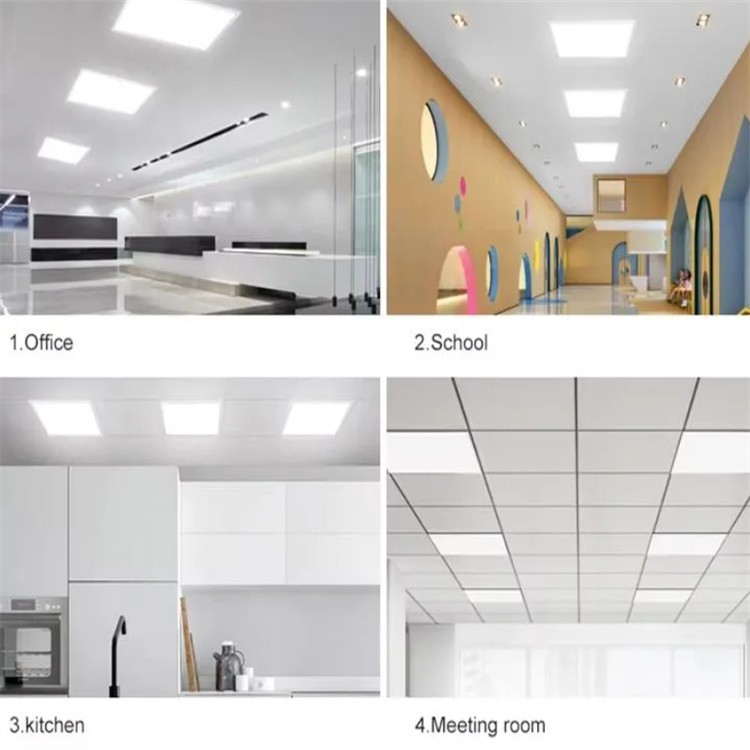
https://www.benweilight.com/ceiling-lighting/flat-led-panel/flat-panel-receesed-led-lights.html