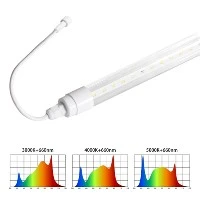
Chickens do not have one universal preferred color temperature; it depends on the type of bird (broilers vs. layers) and life stage. Color temperature is measured in Kelvin (K): lower values (≈2700–3500K) are warmer/yellower (more red spectrum), while higher values (≈4000–6000K+) are cooler/bluer (more blue spectrum).

1) Broilers (meat chickens)
Research often favors cooler light around 5000K (or higher, e.g., ~6000K in some preference trials). One study found birds preferred 6065K over 4100K and performed better (heavier weight, better feed conversion) under cooler conditions.
Cooler light (e.g., 5000K vs. 2700K) has been linked to lower stress markers, reduced fear responses, better growth, and improved feed conversion.
Practical recommendations sometimes adjust by stage: higher/cooler (≈4000–5000K) early for activity and feeding, then warmer (≈2700–3000K) later to reduce movement and support fattening. Overall industry guidance for broilers frequently points to ~5000K.
2) Laying hens (and breeders)
Warmer light around 2700–3500K is generally preferred or recommended, especially during the laying period. It calms birds, reduces aggression and feather pecking, and supports egg production via more red spectrum (which better penetrates to stimulate reproductive hormones).
Cooler light (≈4000–5000K) is often better for chicks and rearing to promote activity, growth, and feeding. Many producers switch toward warmer light as birds mature into lay.
A single setting of ~3000K warm white is commonly cited as a good overall choice for layers when only one option is available.
3) Key takeaways
Cooler/bluer light tends to increase activity; warmer/redder light tends to calm birds.
Spectrum matters more than human perception of "white" light-chickens see a wider range (including UV) and respond strongly to red and blue wavelengths.
Other factors (intensity in lux, photoperiod/hours of light, uniformity, and flicker-free ,dimmable LEDs), high CRI 90 or even CRI 95 are equally or more important than color temperature alone.
Always follow breed-specific guidelines and local welfare regulations, as optimal setups can vary.
cooler (~5000K) often suits growing/meat birds better for performance and welfare in studies, while warmer (~2700–3000K) is typically preferred for layer chicken to support calm behavior and egg production.