If you are sourcing lighting for a stadium, sports field, port, or large outdoor yard, you will see "IP66" on almost every spec sheet. It sounds reassuring, but many buyers are not sure what it guarantees. Is it fully waterproof? Can it survive a typhoon? Does it matter as much as brightness?
Here is what IP66 means, why it matters for high-power floodlights, and what else to check before you place an order.

What Does "IP" Stand For?
IP means Ingress Protection. The rating system is defined in the international standard IEC 60529 and tells you how well a fixture's enclosure resists solid objects (like dust) and water. You can read the official overview on the IEC IP rating page or the IP Code summary on Wikipedia.
The rating has two digits:
- First digit (solids): ranges from 0 to 6. A 6 means completely dust-tight.
- Second digit (liquids): ranges from 0 to 9. A 6 means protection against powerful water jets.
So IP66 = fully dust-tight + protected against strong jets of water from any direction.
Why Does This Matter for a 1000W Floodlight?
A 1000W LED stadium floodlight is usually mounted on a high mast or pole, 15 meters or more above the ground. Once installed, reaching it again means a crane or a lift, extra labor, and downtime. Water or dust getting inside is one of the most common reasons outdoor fixtures fail early:
- Dust can build up on the LED board and driver, trapping heat and speeding up lumen depreciation.
- Moisture can corrode circuit boards and connectors, causing flickering or sudden failure.
- Heavy rain, wind-driven rain, and pressure washing are normal conditions for sports venues, ports, and industrial sites.
An IP66-rated housing is designed to handle these conditions, which is why it is a baseline requirement for serious outdoor projects.
IP66 vs. IP65 vs. IP67: What's the Difference?
| Rating | Dust | Water protection | Typical use |
|---|---|---|---|
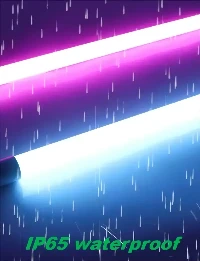
| IP65 | Dust-tight | Low-pressure water jets | Sheltered outdoor areas |
| IP66 | Dust-tight | Powerful water jets | Stadiums, fields, high masts, open outdoor sites |
| IP67 | Dust-tight | Temporary immersion | Areas that may flood briefly |
For most elevated stadium and sports field installations, IP66 is the practical standard. Fixtures on a pole are exposed to rain and spray, but they do not sit underwater. IP67 is mainly worth considering for ground-level or in-ground applications.

IP66 Is Not the Whole Story
An IP rating describes the enclosure. It does not tell you everything about long-term reliability. When comparing 1000W floodlights, also look at:
1. Housing material and heat dissipation. A 1000W fixture generates a lot of heat, and heat is the main enemy of LEDs. An aluminum alloy housing with a well-designed heat sink pulls heat away from the LED chips and driver, which helps maintain brightness and extends service life. It also resists corrosion better than many alternatives.
2. Sealing quality. The rating depends on gaskets, cable glands, and lens seals. Ask whether the manufacturer can provide an IP test report, not just a label on the datasheet.
3. Real brightness and beam control. High lumen output only helps if the light lands where you need it. Check the available beam angles and the photometric (IES) files, especially for sports lighting, where uniformity and glare control matter. The Illuminating Engineering Society publishes recommended practices for sports and recreational area lighting that designers often use as a reference.
4. Driver and surge protection. Outdoor power supplies face voltage fluctuations and lightning-induced surges. A quality driver is as important as the LED chips.
5. Warranty. A longer warranty usually signals manufacturer confidence. Check what it covers and how claims are handled.
A Practical Option: The AOSAY 1000W LED Stadium Floodlight
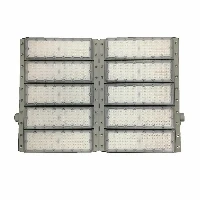
If you are looking for a high-power fixture built around these points, the AOSAY 1000W LED Stadium Floodlight combines:
- IP66 waterproof and dustproof protection for rain, spray, and dusty environments
- Aluminum alloy housing for heat dissipation and durability
- Ultra-high brightness output of 【160000 lumens / 160 lm/W】 for large-area illumination
- A 5-year warranty for long-term peace of mind
It suits football and baseball fields, tennis courts, ports and container yards, airports, large parking areas, and industrial sites. Replacing older metal halide or high-pressure sodium fixtures with LED can also cut energy use and reduce maintenance visits.

Quick Checklist Before You Order
- Is the IP66 rating supported by a test report?
- Does the housing material handle heat and corrosion?
- Are multiple beam angles available for your layout?
- Is photometric data (IES file) available for your lighting design?
- Does the warranty cover driver and LED components?
- Can the supplier support OEM/ODM, custom packaging, or project-based quotations?
Get a Quote for Your Project
Planning a stadium, sports field, or large outdoor lighting project? Our team can help with fixture selection, lighting layouts, and bulk pricing.
Send us your project details (site type, mounting height, area size, voltage, and quantity) and we will reply with a recommended solution and quotation.