What Is Color Temperature? What's the Real Difference Between 2700K and 6500K Light?
1. What Exactly Is Color Temperature?
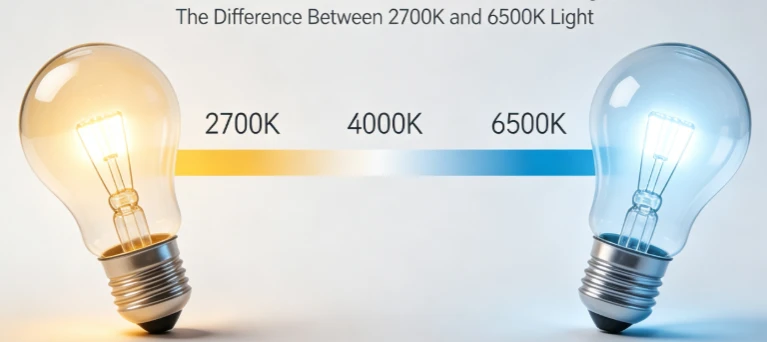
When choosing LED lamps, you often see numbers like "2700K", "4000K", or "6500K" on the packaging. These numbers don't mean how hot the bulb gets-they describe the colour tendency of the light, a physical quantity called colour temperature, measured in kelvin (K).
The concept comes from the blackbody radiation theory proposed by the 19th‑century British physicist Lord Kelvin. Scientists imagine an ideal "perfectly black object" that absorbs all the heat falling on it and re‑emits that energy entirely as light. As this blackbody is heated to higher temperatures, the colour of its emitted light changes: at lower temperatures it glows reddish or yellowish, then becomes white as it warms, and at still higher temperatures it turns bluish‑white.
When the colour of light emitted by a light source matches the colour radiated by a blackbody at a certain temperature, that temperature is defined as the colour temperature of the source.
The lower the colour temperature value, the warmer (yellow/red) the light appears; the higher the value, the cooler (white/blue) it looks. This may seem counterintuitive-higher numbers feel "cooler"-but it makes perfect sense once you understand the "heated blackbody" origin.
2. 2700K – Warm Yellow Light, Like Candlelight at Sunset
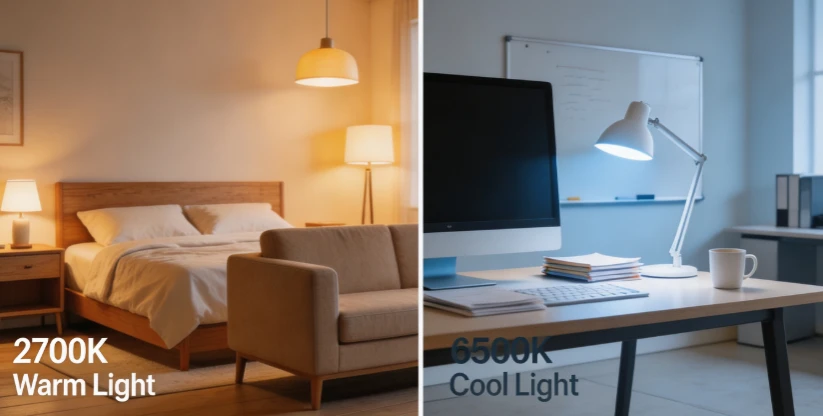
2700K is a typical warm white light, very close to the colour of traditional incandescent bulbs. Its light has a warm yellowish tone that feels cosy, relaxing, and comfortable.
Where is 2700K best used?
- Bedrooms – Warm light promotes melatonin secretion and helps you fall asleep.
- Living rooms – Creates a homely, welcoming atmosphere for relaxation.
- Dining rooms – Warm lighting makes food look more appetising and encourages a pleasant social mood.
- Hotels and lounge areas – Builds an intimate, cosy spatial feel.
European and American households generally prefer this warm yellow light. 2700K resembles the light just after sunrise or before sunset, or the glow of a traditional incandescent lamp. In natural rhythms, the light at dusk shifts from the cool white of midday to the gentle 2700K warmth.
However, 2700K has limitations-reading or doing fine work under this light can make text edges seem soft and less sharp, requiring extra effort from your eyes to focus.
3. 6500K – Cool White Light, Like Clear Noon Sunshine
6500K is a cool white light with a bluish‑white cast, similar to sunlight at midday on a clear day or light from an overcast sky. It feels refreshing, crisp, and stimulating.
Where is 6500K best used?
- Offices and workplaces – Areas that need bright, high‑colour‑rendering illumination.
- Kitchens – Food preparation requires clear colour recognition and label reading.
- Factories and workshops – The preferred choice for high‑definition visual environments.
- Laboratories and museums – Places where accurate colour rendering is essential.
- Photography – 6500K is known as "neutral daylight colour temperature" and serves as the reference light source for many professional photographers.
6500K cool white light is known to boost energy levels and alertness, making it particularly suitable for work or study environments that demand concentration. In industries such as textiles, printing, and dyeing, 6500K is also used as the international standard artificial daylight source for colour matching and quality control.
4. 2700K vs 6500K – A Quick Comparison
| Aspect | 2700K (Warm White) | 6500K (Cool White) |
|---|---|---|
| Light colour | Warm yellow, like candlelight/incandescent | Cool bluish‑white, like noon sunlight |
| Visual impression | Warm, comfortable, relaxing | Crisp, bright, stimulating |
| Psychological effect | Promotes relaxation, aids sleep | Increases alertness, improves focus |
| Best uses | Bedrooms, living rooms, dining rooms, hotels | Offices, kitchens, factories, laboratories |
| Blue light content | Low | High |
| Night‑time use | Suitable – does not disturb melatonin | Not recommended – may suppress melatonin |
5. Choosing the Right Colour Temperature Matters More Than Choosing Brightness
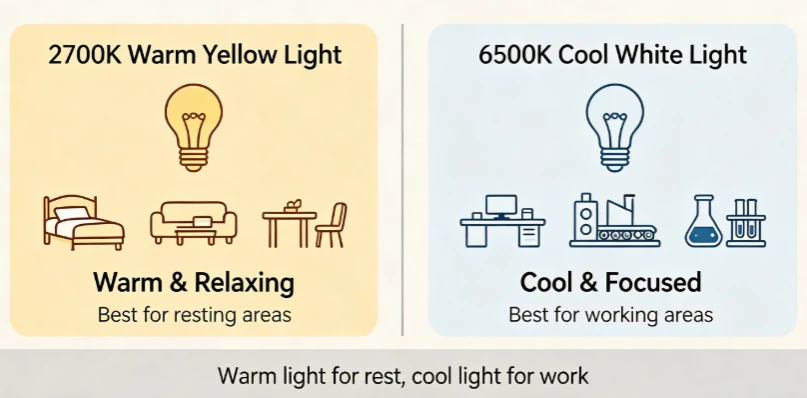
Choosing the wrong colour temperature is one of the most common and overlooked mistakes in lighting design. A cosy bedroom fitted with 6500K cool white will feel as cold as a hospital corridor; while a quality‑control workstation lit only with 2700K warm yellow will hide the very defects that inspectors need to see.
A simple rule of thumb: choose warm light (2700K–3000K) for spaces meant for relaxation, and cool light (5000K–6500K) for places where you need to concentrate. The International Commission on Illumination (CIE) has incorporated colour temperature into its visual comfort assessment framework-it's not about brightness alone; it's about the right colour for the right context.
Are you planning a project and unsure whether to go with 2700K or 6500K? We offer a full range of LED lighting solutions covering every colour temperature-from cosy residential warmth to industrial precision. Feel free to reach out for a free, tailored colour‑temperature recommendation and product selection guide based on your specific application. We look forward to hearing from you!