Different kinds of lights that are utilized in manufacturing facilities
In the beginning
In industrial facilities, adequate lighting is not just an issue of sight; it is also an essential component that has an effect on the safety of workers, the efficiency of the production process, and the overall quality of the product. There are a variety of conditions that determine the lighting needs for various manufacturing activities. These conditions include the type of the job being done, the size of the area, and the particular tasks that are being carried out. For the purpose of catering to these various requirements, companies make use of a wide range of different lighting systems. The purpose of this article is to examine the many kinds of lights that are often utilized in manufacturing facilities, as well as their characteristics, advantages, and appropriate uses within industrial environments.

(HID) Lights, which stand for high-intensity discharge
Halide Lights Made of Metal
Metal halide lamps are a well-liked option in a lot of manufacturing facilities. They create a bright, white light that is comparable to the light that is produced by natural sunshine, which is extremely useful for activities that need precise color perception and careful visual examination. An electric current is sent via a combination of mercury vapor and metal halide salts that is contained within a quartz arc tube within order for these lights to function. When the metal halides are activated by the electrical discharge, they evaporate and mix with the mercury, which results in the emission of a light of a very high intensity.
Workers are able to easily differentiate between the many colors of materials, components, and products because metal halide lamps have a color rendering index (CRI) that is reasonably high. The CRI typically ranges from 65 to 90. When it comes to sectors like textile production, electronics assembly, and automobile painting, where color accuracy may have a substantial impact on the quality of the finished product, this is of utmost importance.
When it comes to energy efficiency, metal halide lamps are able to provide a high number of lumens per watt, which results in a brilliant lighting that has the ability to cover wide regions. In manufacturing facilities with high ceilings, such as warehouses and big production halls, they are frequently utilized since they are able to cover broad floor surfaces with a single fixture, hence decreasing the total number of lights that are required. They do, however, have a somewhat long warm-up time, which means that it takes several minutes for them to achieve maximum brightness. This is something that should be taken into mind in certain applications.
(HPS) Lights, which stand for high-pressure sodium
Another form of high-intensity discharge (HID) lighting that is frequently utilized in manufacturing facilities is high-pressure sodium lighting. It is well known that they have an amazing energy efficiency and that they emit a light that is yellow-orange in color. To function, high-pressure sodium (HPS) lights generate an electrical discharge by passing a combination of sodium vapor and mercury vapor through an arc tube made of either ceramic or glass. It is because of the high pressure atmosphere that the sodium is able to create a light output that is extremely efficient.
As a result of their exceptionally high lumen-to-watt ratio, these lights are an excellent option for large-scale industrial lighting since they are highly cost-effective. In facilities where general lighting of vast open areas is necessary, such as outdoor storage yards and loading docks, as well as in some regions of major production plants where color fidelity is not a main issue, they are frequently utilized. Because the hue of the light does not interfere with the activities of material handling and operating heavy machinery, for instance, high-performance fluorescent lights (HPS) may be utilized in a steel production facility to illuminate the huge factory floors where the primary activities entail operation of heavy machinery and material handling.
They have a relatively low CRI, which is often between 20 and 30, which implies that they do not represent colors properly. This is one of the downsides of high-performance lighting (HPS) lights. Because of this constraint, its usage is restricted in applications that include work that is susceptible to color sensitivity. Furthermore, similar to metal halide lights, they also have a warm-up period, but in most cases, it is less than the time required for metal halide lights to reach their full brightness.
Emitting Diode (LED) Lights are the type of light.
Illumination LEDs on a General Level
In recent years, LED lights have brought about a revolution in the lighting of factories due to the various advantages they provide. An electric current is sent through a semiconductor material, which then emits photons, in order to generate light in a light-emitting diode (LED). They provide a high level of energy efficiency, the ability to convert a significant portion of electrical energy into light while wasting just a small amount of energy as heat. This not only lowers the amount of power that is consumed, but it also reduces the amount of money that a plant spends on cooling.
LEDs have a long lifespan, often lasting 50,000 hours or more, which considerably decreases the expenses associated with maintenance; these costs are typically associated with periodically changing bulbs. They also have the ability to switch on instantly, which means that they provide maximum brightness as soon as they are turned on, in contrast to HID lights, which take a period of time to warm up. current LEDs may be engineered to have a high CRI, which means that they are suited for a broad variety of factory jobs, including assembly work and quality control inspections. This is because current LEDs can be specifically built to have a high CRI.
The fact that these lights are offered in a wide range of color temperatures enables plant managers to select the light that is most suitable for each individual location. In areas where workers need to be alert and focused, such as production lines, for instance, cooler color temperatures (around 5000K to 6500K) are frequently preferred. On the other hand, warmer color temperatures (around 2700K to 3500K) can be used in break rooms or administrative areas to create an atmosphere that is more comfortable.
LEDs that are specific to the task
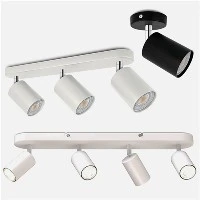
Moreover, LEDs are frequently utilized in factories for the purpose of providing task-specific lighting, in addition to providing general illumination. LED lights that are task-specific are meant to give powerful lighting that is focused on a single workstation or process rather than general illumination. These can take the shape of compact, movable fixtures that can be put directly on workbenches, machinery, or inspection tables. They can also be mounted on inspection tables.
When it comes to precise manufacturing processes, such as watchmaking or the assembly of microelectronics, task-specific LED lights that are able to provide lighting that is both high in intensity and free of shadows are absolutely necessary. Workers are able to see minute details more clearly thanks to these lights, which in turn reduces the probability of making mistakes and improves the quality of the items that are ultimately produced. Additionally, they may be outfitted with characteristics such as a brightness and color temperature that can be adjusted, which gives workers the ability to personalize the illumination in accordance with the particular requirements of the jobs they are performing.
Fluorescent Lights (FL )
Lights that are fluorescent, T8 and T5
In the illumination of factories for a considerable amount of time, fluorescent lights have been the standard. Two of the most frequent types of fluorescent lights used in industrial environments are the T8 and T5 varieties. The operation of these lights is accomplished by directing an electric current via a tube that is filled with mercury vapor and inert gas respectively. The electrical discharge causes the mercury atoms to generate ultraviolet (UV) light, which then strikes a phosphor coating on the interior of the tube, resulting in the production of visible light.
When compared to T5 fluorescent lights, T8 fluorescent lights have a diameter that is significantly larger. These lights are frequently utilized in older manufacturing installations. They are suitable for general illumination in medium-sized factory areas because they have a good energy efficiency and a decent light output. This makes them suitable for areas such as office spaces within the factory, smaller production rooms, or areas where workers perform repetitive tasks that do not require extremely high-quality lighting.
On the other side, T5 fluorescent lights allow for greater energy efficiency while also being more compact. Due to the fact that they have a smaller diameter, it is possible to install a greater number of fixtures in a given area, which results in improved coverage. When compared to T8 lights, T5 lights offer a greater lumen-per-watt ratio, which makes them a more cost-effective and ecologically responsible solution for industrial lighting. T5 lights also provide more light per watt than T8 lights. They are frequently utilized in locations where space is restricted, such as in hallways that are tight, storage spaces that have low ceilings, and contemporary factory design that place an emphasis on energy economy.
Fluorescent Lights Mounted High in the Bay
Specifically developed for use in manufacturing environments with high ceilings, high-bay fluorescent lights are a great option. It is possible for these lights to provide enough illumination across a considerable distance in the vertical direction since they are bigger and more powerful than conventional fluorescent lights. The majority of the time, they are utilized in manufacturing facilities that have production sections that are located on many stories, huge warehouses that have storage racks that are elevated, and factories that have equipment that is positioned at substantial heights.
To place high-bay fluorescent lights, suspension systems are often utilized. These lights are normally put on the ceiling. In order to guarantee that the illumination is consistent over the whole space, they might be grouped in arrays. Because of their relatively long length and strong light output, they are an efficient alternative for illuminating huge volumes of area without the need for an excessive number of fixtures, which in turn reduces the expenses associated with installation and maintenance.
Lights for Emergencies and Ways Out
Lights for Emergencies
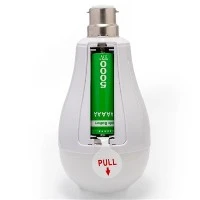
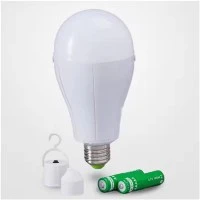
The emergency lights that are installed in factory lighting systems are an essential component. In the event that there is a power outage or any other emergency circumstance that results in the loss of normal lighting, these lights are designed to switch on by themselves automatically. They offer the necessary illumination to protect the safety of workers, enabling them to safely escape the plant and carry out any emergency measures that may be required.
The majority of the time, emergency lights are powered by batteries, and they are needed to conform to particular safety regulations. It is required that they are able to supply a minimum amount of light for a specific amount of time, which is normally at least ninety minutes. It is common practice in manufacturing facilities to install emergency lighting at key locations throughout the building. These locations include corridors, stairwells, exits, and places where essential equipment is situated. Certain emergency lights also come equipped with self-testing capabilities, which enable them to do routine checks on the battery's condition and the performance of the light to guarantee that they are always ready for use.
The Exit Lights
There is a tight connection between exit lights and emergency lights, and the particular purpose of exit lights is to show the position of exits within the manufacturing facility. These lights are quite noticeable, and they frequently have bright, lighted placards that either contain the word "EXIT" or a symbol representing an exit. They can be powered by the standard electrical supply in conjunction with a battery backup, or they can be powered simply by the power of the battery.
In the event of an emergency, exit lights are an essential component in directing personnel to a safe location. At regular intervals throughout hallways, as well as in situations where the exit might not be immediately visible, they are needed to be erected. Additionally, they must be installed above every exit door. During evacuations, the brightness and clarity of exit lights are carefully adjusted to ensure that they can be seen clearly even in smoky or low-light settings. This helps to prevent confusion and panic from occurring.
Final Thoughts
For the purpose of satisfying the various lighting requirements of the numerous processes that take place in factories, it is common practice to utilize a combination of different kinds of lights. Depending on the degree of color accuracy that is required, high-pressure sodium lights and metal halide lights are examples of high-intensity discharge lights that are ideal for large-scale general lighting in a variety of settings. The use of LED lights, which are becoming increasingly popular for both general and task-specific illumination due to their energy efficiency, extended lifespan, and the ability to be customized, is becoming increasingly widespread. There is still a role for fluorescent lights in factory lighting, particularly T8, T5, and high-bay varieties. This is because fluorescent lights are more cost-effective and have the ability to provide more light than other types of lights. In addition, emergency and exit lights are very necessary in order to guarantee the safety of workers in the event of an emergency. It is possible for manufacturers to establish a well-lit, secure, and productive working environment by carefully selecting and installing the suitable lighting systems.
Industrial Construction Lights http://https://www.benweilight.com/industrial-lighting/industrial-construction-lights.html