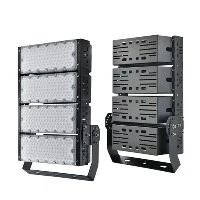
Stadium lighting is one of those applications where mistakes are hard to hide. A dim corner on the field shows up on every broadcast camera, a flickering fixture disrupts play under slow-motion replay, and a failed light mid-match isn't something you can quietly fix later. That's why stadium and large sports-venue lighting has moved almost entirely to LED over the past several years - the technology solves problems that metal halide lighting simply couldn't. Here's what actually sets a well-built LED stadium light apart.
High Output for Large-Area Coverage
Stadiums need to light a large field evenly from fixtures mounted high up on poles or roof structures, often 20 to 50 meters away from the playing surface. LED stadium lights are built with high-power chips packed into a single fixture, commonly delivering anywhere from 500W to over 1500W per unit, so a relatively small number of fixtures can cover an entire pitch without leaving dark patches near the edges or corners.
Broadcast-Grade Light Quality
Sports lighting standards for televised events typically call for a high color rendering index (CRI 90+) and specific color temperatures, usually in the 5000K–6000K range, so that grass, uniforms, and skin tones look accurate on camera. Good LED stadium fixtures are designed to meet these broadcast specifications directly, along with flicker-free output that holds up under high-frame-rate slow-motion replay - something older metal halide systems were never able to guarantee.
Instant On/Off, No Warm-Up Delay
Metal halide stadium lights need several minutes to reach full brightness after being switched on, and even longer to restart if they're turned off mid-event. LEDs reach full output instantly and can be switched on or off without any warm-up period. This matters for events with tight schedules, sudden weather delays, or situations where lighting needs to be adjusted quickly between different uses of the venue.
Precise Beam Control
LED stadium lights are typically available with multiple beam angle options - narrow, medium, and wide - allowing each fixture position around the venue to be matched to the distance and angle it needs to cover. This reduces wasted light spilling outside the field of play and light pollution affecting nearby properties, while still delivering consistent brightness across the entire playing surface without noticeable hot spots.
Built for Extreme Outdoor Conditions
Mounted high up and exposed to wind, rain, and temperature swings year-round, stadium fixtures need a rugged build. Quality LED stadium lights are usually rated IP65 or higher for dust and water resistance, use die-cast aluminum housings for durability, and include surge protection to handle lightning-related power spikes - a real consideration for fixtures mounted on tall exposed structures.
Lower Energy Costs at Scale
A stadium running dozens or hundreds of high-wattage fixtures for training, matches, and events sees energy costs add up fast. LED fixtures typically use 40–60% less power than equivalent metal halide setups while producing comparable or better output, which translates into a meaningful reduction on electricity bills for venues that run lights several nights a week throughout the season.
Long Lifespan Reduces Maintenance Risk
Replacing a bulb on a stadium light means sending a crew up 30+ meters with specialized lift equipment - not a quick job, and not something anyone wants to do mid-season. LED stadium lights are commonly rated for 50,000+ hours of operation, dramatically cutting how often that kind of maintenance is needed compared to metal halide bulbs, which typically need replacement every 1–2 seasons of regular use.
Summary
What sets a well-designed LED stadium light apart comes down to a combination of factors working together: enough output to properly cover a large field, light quality that holds up to broadcast standards, instant response with no warm-up lag, beam control that puts light where it's needed, rugged construction for constant outdoor exposure, lower running costs, and a service life long enough to avoid frequent high-risk maintenance work. For venues weighing metal halide against LED today, these differences are largely why LED has become the standard choice for new and retrofit stadium projects alike.
If you're planning a new stadium lighting installation or upgrading an existing metal halide system, feel free to reach out to our team with your venue's specifications - we can help you work out fixture count, beam angles, and mounting layout for your project.