WHY PAR IS IMPORTANT TO YOUR GROW LIGHTS
The Importance of PAR for Grow Lights
Photosynthetically Active Radiation is known as PAR. It especially refers to the visible light wavelengths that green plants primarily require to power the chlorophyll that nourishes the plants. It may be tempting for managers of indoor plant growing facilities to simply boost all light wavelengths in order to optimize PAR and hence promote plant growth. That approach might be effective, but those managers might get even greater growth by regulating the relative amounts of various visible light wavelengths in their growing environments using a spectrum that is specially tuned to feed plants at each step of the grow cycle. That is how OpticPARTM adjusts the color spectrum of your light to produce the most PAR for growth and yield.
Putting PAR into Context
In discussions about grow lights, photosynthetic photon flux (PPF), and photosynthetic photon flux density (PPFD) are frequently mentioned in addition to PAR. PPF measures the amount of light that reaches a plant in a specific period of time, and PPFD indicates the amount of light that strikes a specific plant surface area.
To ensure optimal production, a professional grower must first confirm that the facility's grow light system is producing the proper relative concentrations of light wavelengths that correspond to the plants' requirements at particular stages of the growing cycle. For greatest benefit to your particular crop, LED engineers can adjust this color spectrum. Once everything is set, the following step is to make sure that enough light is actually reaching the plants in the proper amounts to enhance crop yield.
The best example of how this functions in real life is indoor plant cultivation. Chlorophyll A and B concentrations are present in plants, with the two forms having distinct functions in the growth of the plant. A cultivator can change the PAR of a grow light source to concentrate on chlorophyll A, which responds better to light in the red to violet visible light range with wavelengths between 430 and 600 nm, in order to promote more strong vegetative development.
The cultivator will change PAR as the plants mature and enter their budding stage to incorporate a wider spectrum of wavelengths that produce a varied balance of chlorophylls A and B. Additionally, secondary substances that activate chlorophyll A and B differently are essential to plants. Armed with this information, a cultivator can adjust the PAR concentrations of the grow light source to maximize crop development and output.
The Optics Hold the Secret
The amount of quality light that reaches the plant surfaces will be weak even though some grow lamp systems offer superb PAR control. This is especially true because undirected beams scattering down aisles and over walls wastefully lose light. Application of cutting-edge optics is the engineering element that distinguishes a high quality LED grow light from the knockoffs. The optics of your fixture must direct the entire beam toward the crop without waste or sloppy spill in order to make the most of the light it emits (and the energy it uses).
Cultivators can evaluate PPF and PPFD at various points around their facility to make sure that plants are receiving enough PAR-optimized grow lights. For instance, LED grow lighting systems may have high PAR ratings when measured immediately in front of a fixture, but as measurements are made at oblique angles or in the lower canopy of the crops, the rating will substantially decrease. You are losing energy and the yield will suffer if your fixture doesn't take control of the beam and direct 100% of the PAR onto the surface area of the plants.
Next-Generation Optics for Advanced LED Grow Lights are Available from OpticPARTM.
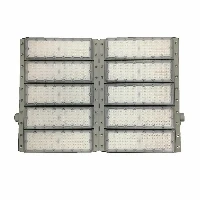
With our new Canna, Verta, and Linea grow lighting systems, each of which features cutting-edge OpticPARTM Technology, BENWEI has addressed this issue. Each of these three systems has been carefully designed to provide growers complete control over the PAR that is available while also enhancing PPF and PPFD across an indoor growing facility.
Large commercial indoor growth facilities are the intended target market for the Canna grow light system. The company's Linea system is ideal for linear greenhouses, and its low profile Verta is tailored for the vertical growing racks that are rising in popularity in urban locations. Our grow light systems, like all of BENWEI LED's systems, provide more than 100,000 hours of excellent indoor lighting and require no maintenance thanks to an easy, modular design.
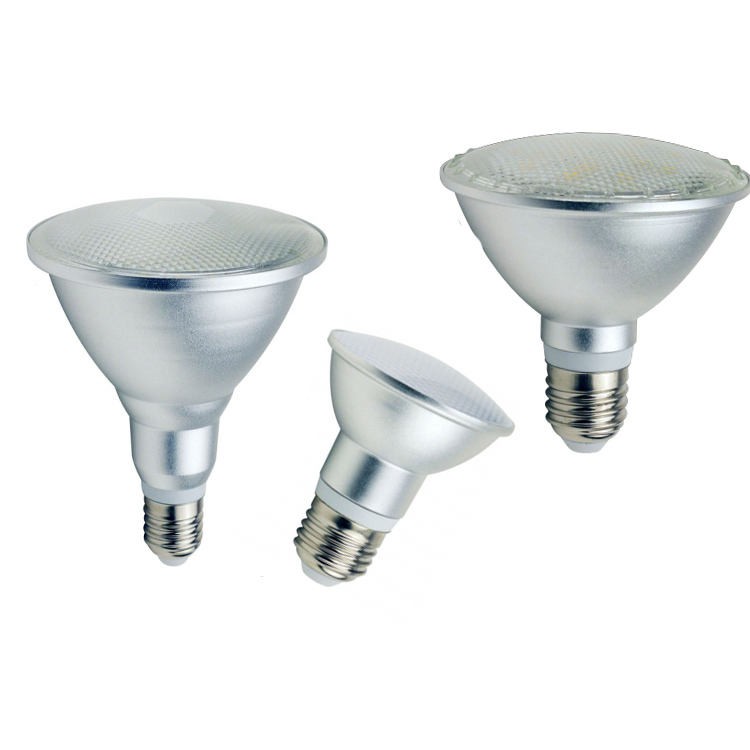
Warm White Par38 Floodlight Bulbs
Feature:
● BENWEI Warm White Par38 Floodlight Bulbs offer outstanding energy efficiency, long-lasting performance and just-right brightness, all in one package.
● They're dimmable and illuminate your home's exterior and interior with warm white light.
● They feature all-weather construction that's rated for wet locations. Protect and beautify your home with Warm White Par38 Floodlight Bulbs.
Specification:
| Product Name | Warm White Par38 Floodlight Bulbs |
| Wattage | 13 Watts |
| Replacement | 90 Watt |
| Brightness | 1200 lumens |
| Color | Warm White |
| Base | E26 |
| Lifespan | 15,000 |