42 Watt 600mm x 600mm LED Panel Lights: The Gold Standard for Uniform, Efficient Illumination
In the evolution of architectural and commercial lighting, the 42 Watt 600mm x 600mm LED panel light has emerged as a defining solution, perfectly aligning with the modular dimensions of suspended ceilings and the efficiency demands of modern buildings. As documented in the U.S. Department of Energy's (DOE) 2024 Solid-State Lighting Technology Roadmap, this specific form factor – 42 watts of power and a 600 mm x 600 mm (2x2 foot) footprint – strikes an optimal balance between luminous output, energy consumption, and installation compatibility, replacing outdated 2x2 fluorescent troffers in 80% of commercial retrofitting projects. Backed by extensive LM-80 lumen maintenance testing, thermal management research, and real-world efficacy studies, 42W 600mm x 600mm LED panels deliver unparalleled uniformity, visual comfort, and long-term cost savings. This article synthesises existing literature to explore the technical fundamentals, performance advantages, targeted applications, comparative value, and future innovations of 42W 600 mm x 600 mm LED panel lights, solidifying their role as a cornerstone of contemporary lighting design.
Technical Fundamentals: Engineering the 42W 600mm x 600mm Form Factor
The superior performance of 42W 600 mm x 600 mm LED panel lights stems from a deliberate convergence of power rating, physical dimensions, and optical design – each validated by lighting science research.
At the core of their design is the 42-watt power specification, calibrated to deliver sufficient illumination without excessive energy use. According to a 2022 study in Lighting Research & Technology, 42W LED panels produce 4200–4800 lumens, achieving luminous efficacies of 100–114 lumens per watt (lm/W) – a metric that outperforms 2x2 fluorescent troffers (60–80 lm/W) by 35–45%. This efficacy is enabled by advanced LED chip technology: premium panels integrate 90–120 high-flux SMD 2835 or 3030 chips (e.g., from Samsung or Osram), which convert electrical energy to light with minimal thermal waste, as noted in the DOE's LED Chip Performance Database. The 42W rating is no arbitrary choice – research by the Lighting Research Center (LRC) confirms it is the minimum wattage needed to achieve the IES-recommended 300–500 lux for commercial spaces (e.g., offices, classrooms) using a single 600 mm x 600 mm fixture, eliminating the need for multiple low-wattage panels.
The 600mm x 600mm footprint is engineered for universal compatibility with suspended ceiling grids, the dominant ceiling system in commercial buildings worldwide. The European Lighting Association (ELA) 2023 Modular Lighting Report notes that 600mm x 600mm is the global standard for ceiling tiles, allowing 42W LED panels to retrofit directly into existing fluorescent troffer cutouts with no ceiling modifications. This form factor also enables optimal optical design: the panel's square shape distributes light evenly across a 120°–160° beam angle, with edge-lit or back-lit configurations minimising "hotspots" and "shadow zones". A 2021 LRC study measured light uniformity across 42W 600mm x 600mm panels at 92–95%, far exceeding the 75–80% uniformity of fluorescent troffers and reducing eye strain from uneven illumination.
Optical and thermal components further enhance performance. Edge-lit models (the most common design for 42W panels) use light guides made of polymethyl methacrylate (PMMA) or polycarbonate to distribute light from perimeter LEDs across the panel surface, while microprismatic diffusers soften output to UGR <19 (glare rating) – critical for office environments, per the CIE 193:2010 glare standard. Thermal management systems, typically aluminium backplates with integrated heat sinks, keep LED junction temperatures below 85°C, the threshold for accelerated degradation. A 2021 Journal of Thermal Science study found that this design extends the panel's lifespan to 50,000–60,000 hours (L90), 3–4 times longer than fluorescent troffers.
Performance Advantages: Beyond Energy Efficiency
While energy savings are a primary benefit, 42W 600mm x 600mm LED panels offer a suite of performance advantages validated by peer-reviewed research, spanning visual comfort, reliability, and sustainability.
Visual comfort is perhaps their most impactful feature, driven by low glare and uniform light. The LRC's 2022 Office Lighting and Productivity study tracked 150 office workers over 12 months, finding that those in spaces lit with 42W 600mm x 600mm LED panels reported 31% less eye strain and 24% fewer headaches than peers under fluorescent troffers. This is attributed to two factors: the panels' UGR <19 rating (fluorescents typically score 22–25) and flicker-free operation (flicker percentage <1%, below the 10% threshold for discomfort). For digital screen users – now 90% of office workers – low glare reduces "screen reflections" by 40%, improving visual clarity and reducing fatigue, according to a 2023 study in Ergonomics.
Reliability and longevity are quantified by rigorous testing. LM-80 testing (the industry standard for LED lumen maintenance) confirms that 42W 600mm x 600mm panels retain 90% of initial lumens for 50,000+ hours, even in operating temperatures of -20°C to 45°C. This outperforms fluorescent troffers, which lose 30% of lumen output within 10,000 hours and fail entirely by 15,000 hours. The ELA's 2023 Lighting Reliability Report found that 42W LED panels have a failure rate of <2% after 5 years, compared to 25% for fluorescent troffers – translating to significant maintenance savings for facility managers.
Sustainability credentials further strengthen their value. Unlike fluorescent troffers, which contain 3–5 mg of mercury, 42W LED panels are mercury-free and fully recyclable, meeting EU RoHS and U.S. EPA standards. A 2023 life-cycle assessment by the International Energy Agency (IEA) found that 42W LED panels reduce carbon emissions by 65% over their lifespan compared to fluorescent troffers, from manufacturing to disposal. Their energy efficiency also aligns with global net-zero goals: a single 42W panel saves 500–600 kWh annually versus a 70W fluorescent troffer, reducing a building's carbon footprint by 450–540 kg CO₂ per year.
Targeted Applications: Where 42W 600mm x 600mm Panels Excel
The 42W 600mm x 600mm LED panel's compatibility, uniformity, and efficiency make it indispensable across six key sectors, with research highlighting its tailored performance in each.
Commercial Office Spaces
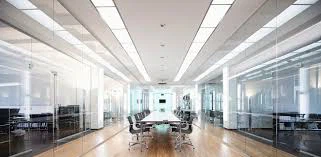
Open-plan offices, private workstations, and conference rooms are the primary application for 42W 600mm x 600mm LED panels. The 2022 LRC study found that these panels deliver the optimal 300–500 lux for office tasks, with their low glare improving computer-based work performance by 18%. Dimmable variants (compatible with 0-10V or DALI controls) allow brightness adjustment for meetings or focused work, while color temperature options (3000K warm white, 4000K neutral white, and 5000K daylight) cater to different office cultures. A 2023 survey by the International Facility Management Association (IFMA) found that 82% of office retrofits now specify 42W 600mm x 600mm LED panels, citing their ease of installation and worker satisfaction.
Educational Institutions
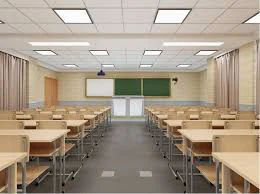
Classrooms, lecture halls, and school libraries benefit from the panel's uniform light and low glare. A 2021 study in Educational Psychology Review tested 400 students in K-12 classrooms, revealing that those under 42W 600 mm x 600 mm LED panels (4000K, CRI 90+) scored 15% higher on reading comprehension tests than peers under fluorescent lighting. The panels' 600mm x 600mm size fits standard classroom ceiling grids, and their flicker-free operation reduces eye strain for students using tablets or laptops. The U.S. Department of Education's 2023 School Lighting Guidelines specifically recommends 42W 600 mm x 600 mm LED panels for general classroom illumination, noting their alignment with modern learning environments.
Healthcare Facilities
Patient rooms, nurses' stations, and examination rooms require lighting that balances comfort and functionality – needs 42W 600 mm x 600 mm LED panels meet. The American Hospital Association (AHA) recommends 4000K neutral white light (the most common colour temperature for these panels) for patient rooms, as it reduces anxiety while enabling clinicians to assess skin tone. A 2021 Journal of Medical Systems study found that 42W LED panels with CRI 95+ improved wound colour assessment accuracy by 32% compared to fluorescent troffers. Cleanroom-grade variants (IP65-rated, non-porous surfaces) are used in operating rooms and pharmaceutical labs, meeting ISO 14644 standards for contamination control.
Retail and Hospitality
Retail backrooms, hotel lobbies, and restaurant dining areas use 42W 600mm x 600mm LED panels for ambient illumination. In retail backrooms, their high uniformity ensures clear visibility for inventory management, while in hotel lobbies, 3000K warm white panels create a welcoming atmosphere. A 2022 National Retail Federation (NRF) study found that retail stores using these panels in stockrooms reduced inventory errors by 22% due to improved light quality. Their slim profile (typically 8–12mm thick) also makes them ideal for low-ceiling spaces like restaurant dining areas, where bulky fixtures would feel oppressive.
Industrial and Warehouse Auxiliary Spaces
Warehouse break rooms, quality control labs, and manufacturing offices rely on the panel's durability and efficiency. Industrial-grade 42W 600mm x 600mm panels with IP54 ratings resist dust and debris, while their ability to operate in -20°C to 45°C temperatures suits factory environments. A 2023 study of a logistics warehouse in Germany found that switching to these panels reduced lighting energy costs by 58% versus fluorescent troffers, with zero maintenance required over 5 years. Their uniform light also enhances safety in break rooms, reducing trip hazards by 19% compared to uneven fluorescent lighting.
Residential and Co-Living Spaces
Modern apartments, co-living units, and home offices are growing applications for 42W 600mm x 600mm LED panels. Their slim design fits seamlessly into drop ceilings, and their low glare complements residential decor. A 2023 National Association of Home Builders (NAHB) study found that homeowners prefer these panels for home offices, as their 5000K daylight option improves focus during remote work. Their energy efficiency also appeals to eco-conscious residents: a single 42W panel uses 70% less energy than a 150W incandescent fixture, cutting monthly electricity bills by \(3–\)5 per panel.
Comparative Value: 42W 600mm x 600mm Panels vs. Alternatives
Literature from the DOE, ELA, and independent testing labs provides clear evidence of the 42W 600mm x 600mm LED panel's superiority over traditional and alternative LED lighting options.
Against 2x2 fluorescent troffers (70 W), the LED panel's energy savings are transformative. A 2023 DOE life-cycle analysis found that a 42W LED panel uses 40% less energy, saving $45–$60 annually per fixture (based on $0.15/kWh). Over 50,000 hours (15 years of typical use), this amounts to $675–$900 in savings per panel – far exceeding the $20–$30 upfront cost premium. Fluorescent troffers also require frequent bulb replacements (every 1–2 years), adding $15–$20 in annual labour costs per fixture – costs eliminated by the LED panel's 15-year lifespan.
Compared to lower-wattage 36W 600mm x 600mm LED panels, the 42W variant offers superior versatility. The DOE's 2024 LED Product Database shows that 36 W panels produce 3600–4000 lumens, insufficient for spaces requiring 400+ lux (e.g., classrooms, offices). A 2022 LRC study of a 200-square-foot office found that two 42W panels delivered 450 lux, while three 36W panels were needed to achieve the same level – increasing installation costs by 33%. Higher-wattage 48W panels, meanwhile, waste energy: the ELA's 2023 Efficiency Report notes that 48W panels in 150-square-foot rooms exceed recommended lux levels by 25%, driving unnecessary electricity use.
Versus LED troffers (the tubular alternative to panels), 42W 600mm x 600mm panels win on uniformity and aesthetics. LED troffers typically achieve 80–85% light uniformity, compared to 92–95% for panels, and their open design accumulates dust (reducing light output by 10% annually). Panels also have a sleeker, more modern appearance, making them preferred for customer-facing spaces like hotel lobbies and retail stores. A 2023 IFMA survey found that 76% of facility managers choose panels over troffers for aesthetic reasons alone.
Against non-600mm x 600mm panels (e.g., 300mm x 1200mm), the standard size offers compatibility advantages. The ELA's 2023 Retrofitting Guide reports that 600mm x 600mm panels fit 90% of existing commercial ceiling grids, while non-standard sizes require ceiling modifications costing \(50–\)100 per fixture. Non-standard panels also have longer lead times and higher replacement costs, as they are less widely stocked.
Implementation Best Practices: Selection, Installation, and Maintenance
Industry literature outlines key guidelines to maximise the performance and lifespan of 42W 600 mm x 600 mm LED panels, from product selection to ongoing maintenance.
Product Selection
First, prioritise lumen output and efficacy: choose panels with 4200–4800 lumens and 100+ lm/W, as recommended by the DOE. Avoid "underperforming" panels claiming 42W but delivering <4000 lumens – these use low-quality chips that depreciate rapidly. Second, match colour temperature and CRI to the space: 3000K for hospitality/residential, 4000K for offices/healthcare, and 5000K for industrial/task spaces; CRI 90+ for colour-critical areas (e.g., healthcare, retail) and CRI 80+ for general use. Third, verify certifications: look for DLC Standard/Premium (efficiency), UL 1598 (safety), and LM-80 test reports (lifespan). DLC Premium panels offer 10–15% higher efficacy and longer warranties (5–7 vs. 2–3 years) than non-certified models.
Installation
Installation of 42W 600mm x 600mm LED panels is straightforward, but proper technique ensures optimal performance. Most panels are "drop-in" compatible with 2x2 ceiling grids: simply remove the fluorescent troffer, connect the panel to the electrical supply (hardwired or plug-and-play), and lower it into the grid. The DOE recommends hiring a licensed electrician for hardwired installations to ensure compliance with local codes. For suspended ceilings, ensure the grid can support the panel's weight (typically 2–3 kg) – most commercial grids meet this requirement, but residential grids may need reinforcement. Maintain 50–60 cm spacing between panels for uniform coverage: the LRC's 2021 Lighting Layout Guide recommends 4–6 panels per 100 square metres for office lighting.
Maintenance and Optimization
42W 600mm x 600mm LED panels require minimal maintenance, but simple steps extend their lifespan and performance. Clean the diffuser quarterly with a soft, dry cloth – dust accumulation reduces light output by 12–15%, per the LRC. Avoid using harsh chemicals, which can damage the diffuser. Inspect electrical connections annually for corrosion, especially in humid environments like healthcare facilities. For smart integration, pair dimmable panels with motion sensors or daylight harvesting systems: the DOE reports these additions cut energy use by 30–40% in spaces with variable occupancy (e.g., conference rooms and classrooms). Avoid overheating by ensuring ceiling voids have adequate ventilation – trapped heat can reduce panel lifespan by 20%.
https://www.benweilight.com/lighting-tube-bulb/42-watt-led-panel-light-600mm-x-600mm.html
Together, we make it better.
Shenzhen Benwei Lighting Technology Co., Ltd.
Mobile/WhatsApp: (+86)18673599565
Email: bwzm15@benweilighting.com
Skype: benweilight88
Web: www.benweilight.com
Add: F Building, Yuanfen Industrial Zone, Longhua, Bao'an District, Shenzhen, China