Many customers, when asking about converting fluorescent lamps to LEDs, immediately think, "Just replace the tubes, right?" However, after buying the bulbs, they find that either they can't be installed, or they don't light up, or they flicker or skip. The problem often lies in not understanding the original wiring structure of their lamps and buying the wrong type of T8 tube. This article aims to summarize several key points to understand before converting fluorescent lamps to LED T8, helping you avoid common pitfalls.
Differences between Type A/B/C Conversion Methods
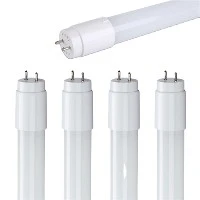
The industry categorizes LED T8 tube conversion methods into three types. Type A is the "plug-and-play" type, which retains the original ballast; the tube is simply plugged into the original socket. This is the easiest conversion, but it requires a good ballast; an aging ballast may cause flickering or a shortened lifespan. Type B is the "ballast-free direct connection" type, which requires removing the original ballast and connecting the tube directly to the mains. The installation is slightly more complicated, but the wiring is simpler, and there are no concerns about ballast aging later. Type C requires an additional dedicated LED driver and represents the most thorough modification, typically used in large-scale projects requiring dimmable or network-controlled lighting. Choosing the wrong type is the most problematic step; it's recommended to clearly define your needs before purchasing.
How to Determine Ballast Compatibility
If you choose to retain the original Type A ballast, compatibility is an unavoidable issue. Ballasts on the market are mainly divided into inductive and electronic types. Inductive ballasts generally have better compatibility, but some electronic ballasts (especially fast-start types) clash with certain LED tube driver schemes, resulting in anything from the tube not lighting up to damage to the internal circuitry. A safer approach is to test on a small batch first, or directly choose LED tube models labeled "widely compatible with electronic ballasts" to avoid discovering incompatibility after large-scale purchase.
Installation Details of Lamp Pin Wiring
T8 lamps have two power supply methods: single-ended and double-ended. This detail is easily overlooked. Dual-ended power supply fluorescent tubes have power at both ends. If installed incorrectly or only at one end, the tube may not light up or may even short-circuit. Single-ended power supply fluorescent tubes only have power at one end, with the other end used for support. Wiring is simpler, and they are more suitable for Type B retrofits that connect directly to the ballast. Before purchasing, confirm that the power supply method of the fluorescent tube matches your lamp holder wiring to save a lot of on-site rework.
Comparison of Luminous Efficacy and Actual Illuminance
T8 fluorescent tubes of the same specifications typically have a power output between 18-36W and a luminous efficacy of around 60-70 lm/W. Replacing them with LED T8 tubes reduces the power consumption to 9-18W for the same brightness, while the luminous efficacy generally reaches over 130 lm/W. In other words, for the same illuminance requirement, the actual power consumption of the LED version can be reduced by 40%-50%. However, it's important to note that some low-priced LED tubes may overstate their lumen output to make their specifications look better, resulting in lower actual illuminance. When selecting a model, it's best to refer to third-party testing reports or request actual measurement data from the supplier, rather than relying solely on the numbers on the packaging.
Environmental Protection and Mercury Containment Issues
Fluorescent tubes contain trace amounts of mercury vapor, which is why they must be treated as special waste and cannot be disposed of indiscriminately. Mercury vapor leakage after breakage also poses certain health risks. LED tubes, by their very material structure, do not contain mercury, making disposal relatively simple. For places with high environmental hygiene requirements, such as hospitals, schools, and food processing workshops, this is often a major reason why they decide to replace them entirely, rather than simply considering energy savings.
Long-Term Cost Comparison
Fluorescent tubes typically have a lifespan of around 8,000-10,000 hours, with noticeable brightness decay. Later on, they often exhibit issues like blackening and flickering at both ends, requiring frequent replacement. LED T8 tubes, on the other hand, generally have a lifespan of 30,000-50,000 hours. Based on 10 hours of daily use, they can last 8-10 years or more, requiring almost no replacement or maintenance. Although the unit price of LED tubes is higher than fluorescent tubes, considering replacement frequency and labor costs, the overall long-term cost is actually lower. This is the primary decision-making factor for large-scale commercial lighting retrofits.
Summary
Converting fluorescent tubes to LED T8s may seem like a simple "trade-in," but it actually involves several technical details prone to pitfalls, such as choosing the type of retrofit, ballast compatibility, and wiring methods. Understanding these is crucial for a smooth retrofit and long-term stable operation. The improved luminous efficiency, environmental advantages, and long-term cost reduction are the core reasons why most customers ultimately decide to make a complete replacement.
If you are evaluating fluorescent lighting renovation plans for your office, factory, or shop and are unsure which type of renovation is suitable for your lighting fixtures, please tell us the specifications of your existing lighting fixtures and the wiring details. We can help you identify suitable products and renovation methods.
https://www.benweilight.com/lighting-tube-bulb/high-lumen-t8-led-tube/tube-led-bulb.html