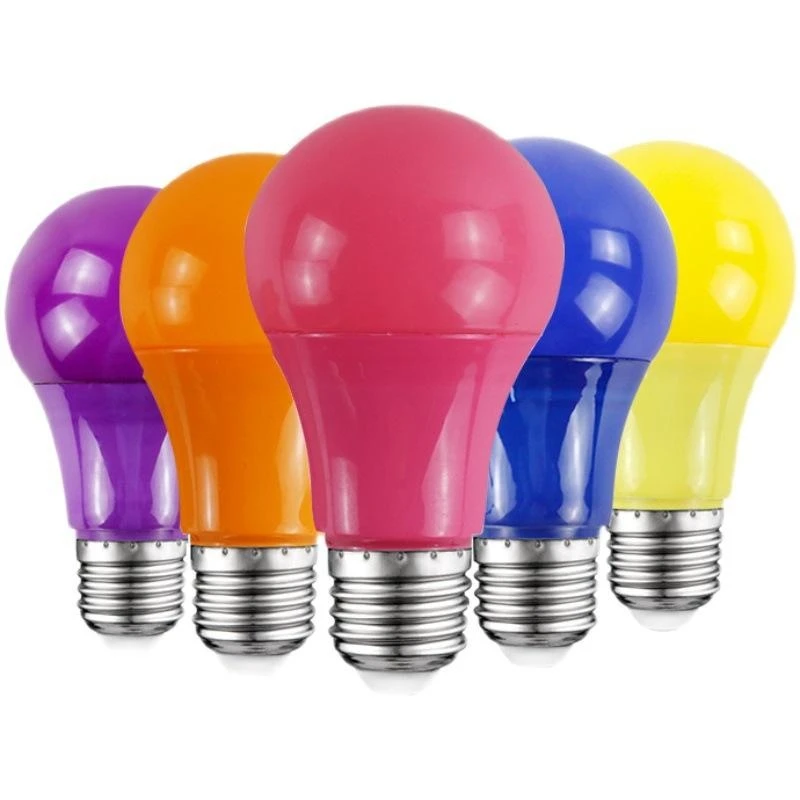
When decorating their children's rooms, many parents are drawn to color-changing LED bulbs: they can serve as warm-orange nightlights, shift to soft pinks or purples during bedtime story sessions, or even switch to a "rainbow mode" for birthday parties. Yet, when it comes time to make a purchase, doubts often arise: Could these lights harm a child's eyes? Might they interfere with sleep? What about the risks of overheating or electrical leakage?
The bottom line: Color-changing LED bulbs are not inherently dangerous.
LEDs are low-heat, low-energy light sources that contain no mercury. Their glass or plastic housings are also less likely to cause burns compared to traditional incandescent bulbs. In terms of basic technology, color-changing LEDs are no more hazardous than standard white-light LEDs.
Safety is ultimately determined by the product's build quality, official certifications, and how it is used. A high-quality color-changing bulb can be safely used in a nursery, while a poorly made one might be unsafe even in a living room. The following sections outline the key factors for distinguishing between the two.
Electrical safety: Certifications and construction are the non-negotiable baseline.
Since these bulbs connect directly to the mains (household electricity), there is absolutely no room for compromise when they are used in a child's room.
Check for certifications: Look for standards relevant to your region-such as UL or ETL for North America, or CE (including LVD and EMC directives) and RoHS compliance for Europe. These certifications indicate that the product has passed essential electrical safety tests.
Examine the internal driver: A poorly designed internal driver circuit can lead to overheating, short circuits, or voltage instability. Look for products with drivers that include overvoltage and overcurrent protection.
Verify the flame-retardant rating: The bulb base and plastic components should ideally be made from flame-retardant materials-a particularly important feature for a child's room.
Ensure a secure fit: The bulb base should fit tightly into the socket; a loose connection can cause localized overheating.
If you are a wholesaler or represent a brand, it is advisable to request full test reports from your suppliers, rather than relying solely on a certification logo.
Heat and Materials: Surfaces Within a Child's Reach Must Be Cool and Durable
While ceiling lights in a nursery are generally out of a child's reach, other types-such as table lamps, floor lamps, or nightlights-may be accessible.
Surface Temperature: High-quality LED bulbs remain significantly cooler during operation than incandescent bulbs. However, low-cost products with poor heat dissipation designs can still become hot to the touch after prolonged use. When purchasing, pay attention to the heat-dissipation structure and the materials used for the casing.
Shatter Resistance: Standard glass bulbs pose a risk if broken. Opt for bulbs made of polycarbonate (PC) or those with a shatter-resistant coating, which are better suited for environments with children.
Absence of Harmful Substances: Unlike older energy-saving lamps, LED bulbs do not contain mercury. Additionally, the plastic used for the casing should comply with relevant material safety standards.
The Issue of Flicker: Invisible to the Naked Eye, Yet Still Present
To achieve dimming and color-changing capabilities, many colored LED bulbs utilize Pulse Width Modulation (PWM). If the driving circuitry is poorly designed, the light may flicker at a speed too fast for the human eye to perceive.
While this might only cause mild visual fatigue for adults, it is better to be cautious when it comes to children, whose eyes are still developing; choose products with minimal or no flicker.
Prioritize bulbs labeled as "flicker-free" or "low-flicker."
You can test for flicker by using your smartphone's slow-motion video mode to record the light; if distinct scrolling bands appear on the screen, the flickering is significant.
Flicker issues are often more pronounced at lower brightness settings, so do not rely solely on testing at maximum brightness.
Color and Brightness: Choosing the Right Light for the Right Setting
This is often the primary concern for parents. Safety extends beyond preventing electric shocks or burns-how light is used is equally important.
Before Bedtime and During the Night
Opt for warm tones, such as warm white, amber, deep red, or warm orange.
Avoid prolonged exposure to colors with a high blue-light component-such as blue, cool white, or cyan-in the time leading up to sleep. There is significant research on the impact of blue light on the human biological clock; using such light before bed may interfere with falling asleep.
When feeding or changing a baby's diaper at night, a low-brightness, warm-toned light is more comfortable and less likely to fully wake the baby.
Daytime Play and Reading
For reading or doing homework, use white light that provides sufficient brightness and natural color rendering. Colored light is not suitable as a primary light source for study.
Colored light modes are better suited for creating ambiance-for example, during playtime, birthday parties, or holiday decorations.
Brightness Control
Regardless of the light color, children should be prevented from looking directly at the bulb. Choosing products with lampshades or frosted covers can help reduce glare.
Bulbs that support stepless dimming make it easier to lower the brightness sufficiently for specific situations.
Smart Controls and Remote Controls: Don't Overlook These "Hidden Risks"
Many colored bulbs come with remote controls or mobile apps-accessories that are often overlooked.
Remote Control Batteries: Many remotes use button-cell batteries. If swallowed by a young child, these can have serious consequences. It is safer to choose remotes with screw-secured battery compartments or child-resistant covers.
Apps and Privacy: If a bulb requires an internet connection, pay attention to the app's permission requests and data policies. Do not grant permissions that are unnecessary.
Wireless Signals: Bluetooth and Wi-Fi bulbs operate at very low radio-frequency power. Compliant products must pass relevant wireless certification standards, so there is generally no need for excessive concern.
Accidental Operation: Children are naturally curious and might change the light color or set it to flash. Some products offer fixed-scene settings or "lock" modes, which can help prevent unwanted adjustments.
Summary
Colored LED bulbs can be used in children's rooms and nurseries, provided that the right products are chosen and used correctly.
Product Standards: Ensure the product has full certification, a reliable driver, a shatterproof and flame-retardant casing, and minimal flicker.
Usage: Use warm-toned, low-brightness light at night; white light for study; and colored light for ambiance.
Accessories: Be mindful of remote control batteries and app permissions to minimize the risk of accidents. By following these guidelines, colored lighting becomes more than just an aesthetic choice-it also serves as a safe and comfortable option for home environments.
If you are representing a brand, retail store, or project and are looking for colored LED bulbs suitable for children's rooms or nurseries, please get in touch. We can provide certification documentation, samples for testing, and customized product specifications tailored to your target market. Simply send us your requirements, and we will respond within one business day.
https://www.benweilight.com/lighting-tube-bulb/rgb-led-blub/color-led-bulbs.html