When you spend money on something, you expect to receive exactly what you were promised. As a buyer, that is not asking for a lot. However, many a time retailers break a customer’s trust by selling them a sub-standard item after promising them a certified product. Sadly, this is seen far too often with festoon string lights. Many Australian retailers claim their festoon string lights have an SAA certificate for IP44 or IP65, but in truth they sell products that do not meet the SAA certification requirements. In short, they sell poor-quality festoon lights because they are cheaper. To earn a few extra bucks, they are willing to put you and your family at risk.
We want to put an end to such shoddy practices. Through this detailed blog post, we want to empower customers so that they get their money’s worth every time they buy festoon string lights and can sleep easy knowing that the product is 100% safe.
In this post, you will learn:
How many Australian retailers are misleading customers by selling them festoon string
How you can ensure the festoon string lights you are buying are indeed SAA certified?
What is SAA certification and why it is important? What are IP44 and IP65 ratings and the dangers of buying a sub-standard festoon string lights
|
Key Takeaways: · Many Australian retailers sell low-quality festoon lights (passing them as SAA certified for IP44 or IP65 ratings when that is not the case) · Just because a retailer claims their products are SAA certified doesn’t mean that is so. Customers must check whether the festoon lights they are buying are indeed SAA certified for IP44 or IP65 · As per Australian Standards, only 1.5mm rubber cable is suitable for outdoor use. If the cable is made of PVC, or if the thickness is less than 1.5mm, the string lights do not meet SAA requirements (no matter what the retailer claims) · Downgraded festoon lights are a health hazard, so should be avoided |
How Many Australian Retailers are Misleading Customers?
Before we get to the meat of the topic — how retailers are misleading customers — it is important to give a basic explanation of three technical terms: SAA, IP44, and IP65.
SAA Certification – All electronic products sold in Australia (and New Zealand) should have SAA certificate. Think of the SAA is a seal of quality. It is a proof that the product you are buying meets the Australian (and New Zealand) standards for electrical requirements and is electrically safe. Since string lights are electrical products, any string light sold in Australia and New Zealand must be SAA certificate. It is illegal to sell string lights that do not have SAA certification in Australia (and New Zealand). Festoon string lights that are not SAA certified are made of poor materials and can put you and your family at risk. Avoid them at all costs.
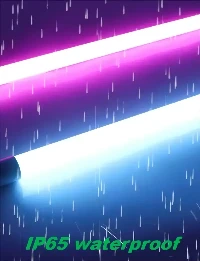
IP44 and IP65 – Without going into technical mumbo-jumbo, it is suffice to say that IP rating is a numerical value that is assigned to an electrical device — like festoon lights — to indicate how resistant they are to solids and water. The higher the number, the better the protection. When it comes to resistance to solid particles, both IP44 and IP65 are equal. But IP65 is better than IP44 when it comes to waterproofing protection. Both IP44 and IP65 string lights are approved for outdoor use in Australia.
The average buyer needs to remember only these three things (and nothing more) in regards to festoon lights and SAA certification for IP44 and IP65:
Only SAA certified festoon lights can be legally sold in Australia (and New Zealand)
Both IP44 and IP65 certified festoon lights are 100% safe for outdoor use. Since IP65 has a comparatively higher waterproofing rating, it is more suitable than IP44 for an area that is exposed to elements. But if you want outdoor lighting for a covered patio or porch, you can use either of them.
Only festoon lights that have 1.5mm rubber cables are given the SAA certification. So, if the cable is made of PVC instead of rubber or its thickness is less than 1.5mm, it is not SAA certified (even if the retailer claims otherwise)
How many Australian retailers are duping unsuspecting customers?
To get the SAA certification, the manufacturer submits the correct product for testing — that is, string lights with 1.5mm rubber cables. Once the factory receives the SAA certification, retailers buy downgraded festoon lights — for example, 1.00mm PVC cables or 0.75 PVC cables — and then push their products as SAA-certified.
You might be wondering: How does a little compromise on cable’s thickness matter? Or what is such a big deal about buying PVC cables in place of rubber ones?
Oh, these things matters a lot. Using a downgraded product can put you and your loved ones at danger. We are sure you would never want that—right?
Difference between 1.5mm and 1.00mm or 0.75mm cables
Thicker cables can carry more current, which basically means they deliver power more efficiently. To put things into perspective, a 1.5mm wire can carry 4 times more current than 0.75mm wire. If you use a thin cable, the risk of a fire is too high. So, it is important that you use only 1.55mm thick cables.
Difference between PVC and Rubber Cables
Rubber wires are of higher quality than PVC wires and as such are more suitable for outdoor use. Technically speaking, rubber has better heat resistance, bending resistance, and abrasion resistance than PVC.