Can LED Color Temperature Adjustment in Hospital Wards Really Help Patients Sleep Better and Cut Electricity Bills in Half?
– 6 Actionable Insights from a 2026 Empirical Study
1. Higher Color Temperature = Patients Staring at the Ceiling All Night? – The Secret of Melatonin
1.1 Blue light is public enemy #1 for sleep
High color temperature (above 5000K) LED chips are rich in blue light (450-480nm). Blue light directly suppresses the pineal gland's secretion of melatonin – the key hormone that makes you feel sleepy. In the experiment, patients exposed to 5000K for 30 minutes saw a dramatic drop in melatonin concentration.
1.2 Low color temperature = "hypnotic light"
When color temperature drops below 2700K, blue light content decreases significantly, and the spectrum is closer to candlelight or pre-dawn light. The research team found that patients reading under 2700K light for 15 minutes showed a marked increase in brain alpha waves (relaxation waves) and fell asleep faster.
Effect of different color temperatures on melatonin and sleep onset time
| Color temperature | Relative blue light intensity | Melatonin suppression rate (30 min exposure) | Average sleep onset time (minutes) |
|---|---|---|---|
| 5000K (cool white) | 100% | ~65% | 47 |
| 4000K (neutral white) | 60% | ~38% | 35 |
| 3000K (warm white) | 20% | ~12% | 24 |
| 2700K (extra warm) | 8% | ~5% | 18 |
| 2200K (amber) | 2% | ~1% | 14 |
Bottom line: Use 2200-2700K at night and patients will drift off much faster.
2. Dynamic Color Temperature Curve – It's Not Just About Flipping a Switch
2.1 Sleep has 5 stages, and lighting should change accordingly
Traditional hospital night lighting either leaves a small nightlight on all night (fixed color temperature) or turns lights off on a timer. The "dynamic color temperature curve" proposed in the paper divides the night into: pre-sleep, light sleep, deep sleep, REM sleep, and pre-awakening transition. Each stage has completely different requirements for color temperature and brightness.
2.2 Change speed should be "snail-like", not "flash-like"
If color temperature changes abruptly (e.g., jumping from 2700K to 3000K in an instant), patients can be startled awake by the "light shock". The research team found that when the rate of color temperature change is controlled at ≤50K per minute, patients are barely aware of it. This requires smooth, stepless dimming capability – ordinary two‑step switching won't work.
Recommended color temperature and brightness for each sleep stage
| Sleep stage | Recommended color temperature | Recommended illuminance (lx) | Typical duration | Color temperature change rate |
|---|---|---|---|---|
| Pre‑sleep (21:00-22:00) | 3000K → 2700K | 10 → 5 | 60 min | 5K/min |
| Light sleep | 2700K | 1-3 | ~90 min | Stable |
| Deep sleep | 2200-2500K | 0.5-1 | ~60-90 min | 10K/min (slow decrease) |
| REM sleep | 2500K | 1 | Intermittent | No active change |
| Pre‑awakening (05:30-06:30) | 2700K → 3000K | 3 → 10 | 60 min | 5K/min (slow increase) |
Key takeaway: A dynamic curve is the soul of a "sleep‑friendly" lighting system.
3. Energy Optimization – Lower Color Temperature, Slower Electricity Meter?
3.1 Linking brightness with color temperature lets you push power consumption to "extreme lows"
Many worry that lowering color temperature requires higher‑power LEDs. The opposite is true. The core of the paper's solution is: during deep sleep, brightness is reduced to 0.5 lx (about the light level of a full moon night). At that point, the fixture consumes only 1‑2% of its rated power. In contrast, traditional solutions often use a fixed 3‑5W nightlight that stays on all night.
3.2 The hidden energy saving from reduced air conditioning load
High‑color‑temperature LEDs, though more efficient in lumens per watt, generate more heat. Low‑color‑temperature, low‑brightness operation keeps the fixture temperature close to room temperature, reducing the cooling load on the ward's air conditioner. The paper's measurements show that each ward can reduce cooling energy consumption by about 120 kWh per year.
Energy consumption comparison – traditional nightlight vs. dynamic color temperature solution (single double‑bed ward)
| Item | Traditional nightlight (fixed 3000K, 3W) | Dynamic color temperature solution (2200-3000K adaptive) |
|---|---|---|
| Total nighttime lighting hours | 10 hours (all night) | 10 hours |
| Average operating power | 3W | 0.9-1.2W (varies by stage) |
| Nightly lighting energy | 30Wh | 9-12Wh |
| Nightly additional AC load (fixture heat) | ~15Wh | ~3Wh |
| Total nightly energy | 45Wh | 12-15Wh |
| Annual electricity cost (@ ¥0.6/kWh) | ~¥9.9 | ~¥3.3 |
| Annual electricity cost for 100 wards | ~¥990 | ~¥330 (saving ¥660) |
Note: The bigger savings come from air conditioning – 120 kWh less cooling per ward per year saves ¥72. Add lighting savings, and each ward saves nearly ¥100 annually.

4. Intelligent Sensing – Teach the Light to "Read Minds" and Know When the Patient Is Asleep
4.1 Timers are too "dumb" – lights don't adapt when patients toss and turn
If the lighting schedule is fixed by the clock, it will be completely mismatched for an insomniac or someone who falls asleep early. The paper recommends using millimeter‑wave radar or mattress pressure sensors to non‑invasively monitor respiration rate, body movements, and heart rate variability.
4.2 The system should "remember" the patient's habits
After recording sleep data for 3‑5 nights, the controller generates a personalized dimming curve. For example, if a patient habitually falls asleep at 23:00, the system automatically delays the start of color temperature reduction. This "learning" algorithm makes the lighting adapt to the person, not the other way around.
Sensor selection and performance requirements
| Sensor type | Parameters monitored | Sleep stage classification accuracy | Suitable for | Estimated cost per ward |
|---|---|---|---|---|
| Millimeter‑wave radar | Respiration rate, body movements, heart rate | Deep/light sleep accuracy ≥90% | General wards, geriatrics | ¥150-200 |
| Mattress piezoelectric film | Body movements, heart rate variability | Extremely sensitive to turning over | Rehabilitation, ICU | ¥100-150 |
| Smart wristband (patient‑worn) | Heart rate, blood oxygen, sleep stages | High, but requires patient compliance | Willing patients | Not recommended |
| Infrared thermal imaging | Body surface temperature, movements | Low interference at night | Isolation wards (contactless) | ¥300-500 |
Takeaway: Millimeter‑wave radar currently offers the best cost‑performance ratio – patients don't need to wear anything.
5. Glare and Uniformity – Low Color Temperature Puts Fixture "Basics" to the Test
5.1 Low color temperature + high glare = more eye strain
At low color temperatures (2200-2700K), the human eye becomes more sensitive to light‑dark contrast. If the fixture has glaring bright spots (e.g., exposed LED chips), patients will feel discomfort even at very low overall brightness – making it hard to relax.
5.2 Three hard metrics for anti‑glare design
The fixtures recommended in the paper must meet:
UGR (Unified Glare Rating) ≤ 10 (typical office UGR is 19; UGR ≤ 10 is barely perceptible)
Deep anti‑glare baffles (shielding angle ≥45°)
No flicker at 1% dimming (flicker percentage <1%)
Glare and patient satisfaction for different optical designs
| Fixture type | Typical UGR | Shielding angle | Flicker at 1% brightness | Patient complaint rate for "light disturbance" |
|---|---|---|---|---|
| Standard LED downlight (no baffle) | 22-25 | 30° | 5-10% | 67% |
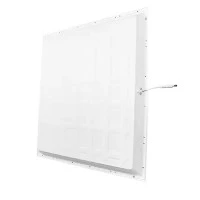
| Panel light with frosted diffuser | 16-19 | No direct view | 2-5% | 32% |
| Deep anti‑glare baffle downlight | 10-13 | 45° | 1-2% | 18% |
| Indirect cove lighting (upward on wall) | <10 | No direct line of sight | <1% | 4% |
| Paper's recommendation: deep anti‑glare + indirect | ≤10 | ≥45° | <1% | <5% |
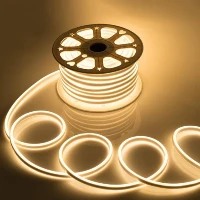
Smart trick: The best solution is to install upward‑facing LED strips on the wall above the bed. Light bounces off the ceiling and diffuses evenly – zero direct glare.
Looking to customize a sleep-aiding, energy-saving LED smart lighting system for your hospital, nursing home, or high-end ward?
We offer a one-stop service, from sleep cycle analysis and sensor selection to dimming curve programming and installation. Hospitals shouldn't just focus on electricity costs; they should consider the comprehensive value of "lighting intervention in healthcare."