Causes of discoloration of LED lamp beads
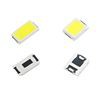
ED is a light-emitting diode, which is a semiconductor solid-state light-emitting device that converts electrical energy into light energy. Its core is a PN junction. In addition to the forward conduction, reverse cut-off and breakdown characteristics of a general PN junction, under certain conditions , it also has luminous properties. Figure 1 is a representative appearance diagram of a 3528 white LED lamp bead produced by a company. Its structure mainly includes the following parts: leads, brackets, packaging glue, bonding wires, LED chips, die-bonding glue and phosphors. The discoloration failure of LED lamp beads is closely related to its material, structure, packaging process and use conditions. The following will analyze the reasons for its discoloration through specific cases.
The reason for the encapsulant
1. Residual foreign matter in the encapsulant
The appearance of the failed lamp beads showed local discoloration and blackening, as shown in Figure 2. When the encapsulant was uncovered, it was found that there was a black foreign matter mixed in the encapsulant. The components of the foreign matter were analyzed by scanning electron microscope and energy dispersive spectrometer (SEM&EDS) to confirm that its main components were aluminum (Al), carbon (C), oxygen (O) ) element, and also contains a small amount of impurity elements, the test results are shown in Figure 3. Combined with the failure background reported by the user, it can be seen that the foreign matter was introduced during the packaging process.
2. The encapsulant is eroded by chemical substances and colloidal discoloration occurs
The failed product is a glass light tube lamp. The internal LED light strip is bonded and fixed on the glass tube with one-component room temperature curing silicone rubber. The LED lamp beads on the light strip at the solid glue part turn yellow and darken. The material of the failed lamp bead encapsulant is silicone rubber. SEM&EDS was used to test the element composition of the encapsulant, and it was found that more sulfur (S) elements were detected than the normal lamp bead encapsulant. The test results are shown in Figure 4.
Usually, sulfur-containing substances such as sulfur, organic disulfides and polysulfides can be used as vulcanizing agents to cause the rubber to undergo a vulcanization and cross-linking reaction, thereby changing the structure of the rubber, showing the phenomenon of yellowing and darkening in color and an increase in thermal decomposition temperature. . Through the TGA test of the thermal decomposition temperature of the lamp bead encapsulant, it can be seen that the temperature of the failed lamp bead encapsulant at weight loss of 2%, 5%, 10%, 15% and 20% is higher than that of the same batch of good encapsulant. Above 25°C, the thermal decomposition curve of the encapsulant is shown in Figure 5, which confirms that the thermal decomposition temperature of the encapsulant increases due to vulcanization and crosslinking. The chemical composition analysis of the immobilized one-component cured silicone rubber was further carried out by ICPOES, and it was found that it contained about 400ppm of sulfur (S) element.
It can be seen that the reason for the yellowing and darkening of the LED lamp beads is that the gas containing sulfur (S) volatilized during the curing process of the single-component room temperature curing silicone rubber used for bonding and fixing in the glass lamp tube intrudes into the LED encapsulant. , the encapsulant undergoes further vulcanization and cross-linking reaction, and the re-vulcanization and cross-linking causes the encapsulant to turn yellow and dark. Subsequent users switched to plastic lamps that did not use one-component cured silicone rubber, and no discoloration of the lamp beads appeared. Therefore, LED manufacturers should consider the compatibility of different materials used in various parts of the product when selecting materials for product design and manufacturing, so as to avoid subsequent reliability problems caused by material incompatibility.
Benwei Lighting is an LED Tube, LED flood light, LED Panel Light, LED High Bay, LED manufacturer with 12 years of experience. If you want to purchase a high-quality LED flood light or have a more in-depth understanding of the application of LED flood lights, please contact send us inquiry, our web:  https://www.benweilight.com/.