COMMERCIAL LIGHTING AND COMMERCIAL LIGHT FIXTURE BUYERS GUIDE
Buyer's Reference for Commercial Lighting
There are many different reasons why we need to light up our surroundings in today's society. Therefore, there are many factors to take into account when lighting our homes, workplaces, or other public buildings.
The word "commercial lighting," which is fairly broad, refers to lighting for all types of establishments, including offices, shops, institutions, hospitals, restaurants, hotels, warehouses, and shopping centers. Commercial illumination also includes lighting systems for public spaces like streets, bridges, and governmental structures. This can include industrial lighting and even production.
Why Industrial Lighting Is Used
Optimizing the environment for return on investment is the main objective of making the right investment in a reliable business lighting system. Your company will successfully strengthen and generate returns when you choose highly effective commercial lighting fixtures for your workspace, even though these benefits are frequently invisible and difficult to see. Your chosen commercial lighting provider should offer;
- Lighting that improves employee performance and productivity - Lighting that makes visitors feel welcome on your property - Lighting that facilitates smooth transitions between spaces within your company - Lighting that is highly effective but still conserves energy - Lighting that can incorporate other natural sources of light like the sun -
Installed industrial lighting warehouse lights
Lighting Designs and Layouts for Business Use
A "workforce centric" environment and maximum output are all enhanced by proper lighting. This ought to be accomplished, according to your lighting expert. Although installing LED lighting can be expensive initially, having the correct design ensures low maintenance costs over time.
Commercial building lighting plans should take into account the type of indoor activity that takes place there as well as lux levels and energy sufficiency standards that are set and upheld. Designers must therefore comprehend the idea of illuminance, or the quantity of light that strikes a surface. Why? Indeed, light has a profound impact on both our bodies and thoughts. Whether it's natural or artificial light, the correct amount of light has a positive effect on our health. Because communication, attitude, atmosphere, and the places around us are made more appealing, productivity is therefore increased when lighting levels are adequate.
In commercial environments, both inadequate and excessive lighting have negative effects on the task force's productivity. Therefore, expert standard handbooks on lighting design are available to help us make the best decisions. The IESNA Lighting Handbook is one such manual that directs designers on important particulars of lighting for commercial purposes. These ideas are;
The unit used to quantify illuminance is the foot candle (FC), also known as the lux. 1FC is the unit for measuring the quantity of light that is cast onto a surface when it is 1 foot away from it and 1 lumen bright. For instance, 10lux is approximately 1FC, so 400lux of illumination would be suitable for a well-lit office. The manual has a set table for the number of foot-candles needed for different spaces, but the words are technical and detailed.
The amount of lighting used per square foot of building space is known as the LPD (Lighting Power Density). This is expressed in watts per square foot in the Country. Once more, the IESNA lighting handbook contains established standards that allow a client to select and attain lower LPD estimates. It is essential because it provides you with a regular schedule for estimating your energy consumption in a commercial situation.
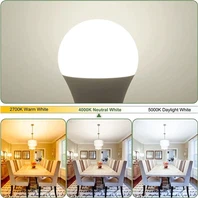
Temperature and Kelvins: When looking for lighting solutions, there are some uses that are suitable for particular business setups and others that are not. Kelvins are used to determine color temperature (K). Warm white light, or 2700–3000k, creates a comfortable, private atmosphere. Hotels and eateries would make excellent use of such applications.
The basic white color 3500k is warm, welcoming, and creates a mood that is well-balanced. Additionally, it encourages alertness, making applications in office settings perfect for this.
A concentrated and tidy aura is produced by the 4100k cool white light. It is best used when you need to concentrate clearly on your topic, and common applications include garages and grocery stores.
5000k Brilliant White exudes vibrancy and is perfect for business settings where accuracy is needed. In hospitals, sports arenas, and warehouses it has superb applications.
Pole spacing and layouts: As a general guideline, there should be 2.5 to 3 times as much space between light poles as there is actual pole height. When mounting poles closer to one another, the distance between them should be decreased where the poles are shorter. Typically, light posts are constructed of aluminum 6063-76 with walls that are 0.156 inches thick and 20 feet in height overall. It is typically 4 to 5 inches square, but it can also be curved, with a base diameter of 6 inches and a top diameter of 4.5 inches.
For exterior use, there are many different light poles that range in height from 10 feet to 100 feet, along with the fixtures mounted on each. Depending on the area to be lit, different features like timers, photocells, motion sensors, and other settings may be necessary. Other elements, such as the directional illumination in relation to the spacing, are planned to reduce light pollution.
Depending on the workspace, whether it is indoor or outdoor lighting, and the goal, other design, layout, lumen, and spacing, as well as other lighting variables, are involved. With the help of the aforementioned information, one can choose the ideal style to use for their commercial requirements.
installed parking area lights for commercial lighting
Choices for Commercial Lighting Mounts
Without lights, what would our universe look like? There wouldn't be any late-night sporting events, evening dinner dates at neighborhood eateries, or relaxing evenings spent at home reading on the couch. We must take the time to truly comprehend all that goes into ensuring that we can see where we are going once the sun sets because we frequently take for granted the significant effect lighting has on our daily lives. There are numerous purposes for lighting, as well as numerous mounting options, in everything from parking lots to warehouses, sports arenas to restaurants, homes to business buildings, and everywhere in between. Nothing can be installed without the proper supports.
The details you require to select the ideal mount for your commercial light fixture requirements are provided below.
choices for mounting outdoor lights
The Slide Fit Mount, also called a Slip Fitter Mount
Slip fit bolts are the most popular kind of mounting for floodlights, area lights, street lights, and parking lot lights. These mounts are widely used because they allow for the adjustment of the light's angle, making them a fluid and adaptable choice. These mounts enable the mount to be rotated on the pole and slide over it like a sheath. They can be fastened with bolts. A tenon adapter with a diameter of 2" to 2 3/8" will usually suit the most popular slip fit mount size. The wonderful thing about these mounts is that since the electrical wiring for the light will be carried inside the mount rather than externally, it will be much better protected from the elements and won't require any extra weatherproofing.
slip-fit supports for a pole adapter
Optional Straight Arm Mount or Pole Mount
The direct arm mount is an additional form of mount that is intended to be mounted directly on a metal surface, like a steel light pole. Two bolts, one on top and one on bottom, are usually used to fasten these kinds of mounts. These fasteners go all the way through the pole, into a bracket on the inside of the pole, and through the mount on one side of the pole. These mounts can be used with either round or square poles thanks to some modifications to the direct arm mount's construction. In order to protect the electrical wiring from the elements, these mounts are identical to slip-fit mounts in that they run the wiring internally through the mount.
light posts with arm mounts
U-bracket mounting or flood mounting
Flood mounts are a particular style of U-shaped bracket attachment that attaches to the light fixture on either side to allow the bracket to swivel around the light. For versatility in how and where it is mounted on a surface, the bracket usually has multiple mounting holes. These mounts are perfect for attaching lights to walls, ceilings, and roofs. Electrical wiring for flood mounts is typically run on the outside of the mount, unlike the direct arm mount and slip fit mount. This is advantageous in circumstances where wiring cannot be run through a wall or the surface the light will be mounted on.
mounted floodlight on the structure
Trunion Peak or Yoke Mount
The electrical wiring for the trunnion mount is also run externally, just like the flood mount. They usually only connect to one side of the light fixture and are smaller mounts. In contrast to flood mounts, which have a pivot point at the place where the mount attaches to the fixture, these mounts have a pivot point on them. In particular when installing heavier lights horizontally, trunnion mounts are not advised. They are frequently utilized for smaller fixtures or those positioned vertically.
fitted yoke or trunnion mount
Conduit Screw Mounts or Knuckle Mounts
Conduit mounts are the final form of mount for parking lots, area lights, and floodlights. These mounts screw into a conduit port and have electrical wiring that runs inside the bracket rather than outside. These mounts are distinctive because they can be installed by simply screwing them into the majority of regular junction boxes. Due to their inability to support heavy loads, they are not optimal for larger lights. Typically, they are only effective for lesser lights, like a 90 watt LED floodlight. The maximum brightness this device can produce is around 11,000 lumens. only causes a problem on sport court lights, in which case you should use a flood mount in its stead.
outdoor conduit attachment lighting
Lighting for high and low bays: common installation types
High and low bay lighting usually uses cable or chain mounts. In order to be mounted, LED UFO light fixtures typically have an eyehook at the top and are suspended by a cable or chain. LED linear lights are suspended from the ceiling using two cables that attach to the light fixture at various points along chains and/or cables.
For UFO high bay lights or linear lights, flood brackets are used to firmly attach the fixture to a ceiling as opposed to leaving it hanging. When there isn't enough space and the lights need to be as close to the ceiling as feasible, this is especially useful. There are flush mounted and semi-flush mounted choices for ceiling mounted lights. Semi-flush mounted lights are those that have a tiny space between the ceiling and the light fixture, while flush mounted lights are those that are completely flush with the ceiling. Ceiling mounted lights work well for ambient lighting in small rooms with low ceilings where it's important to take up the least amount of space possible to optimize the useable space.
A pipe that extends from the ceiling is also immediately attached to pendant or pipe mounts. Electrical wiring is carried inside the pipe and connected to a junction box for these kinds of mounts. Because the internal wiring is much safer than the exterior wiring, these mounts are perfect for hazardous locations. Because they offer excellent ambient lighting and enhance the look and feel of the space, pendant mounts are also frequently used over tables and kitchen islands.
tiny high bay light
Wall lights: Popular attachment designs
Although there are many different mounting choices for wall lights, they are all generally made to be mounted directly to a junction box. The majority of the time, junction boxes can be mounted externally on a surface, after which the wall lamp can be attached to the junction box. For the light fixture to be flush with the wall, junction boxes can also be placed in a concrete surface or a wall.
Since many wall lights are flexible, you can attach them to almost any wall by drilling holes in the back plate. In many instances, weatherproofing the mount to the surface in outdoor settings involves the use of sealants like silicone caulk. Sconces are another name for wall lights, and some mounts for them can help direct the light upwards or downwards or even diffuse it to produce more ambient illumination. If you need greater lumen counts, LED parking lot lights can be wall mounted using an adapter.
wall mounted led parking area lights
Optional stadium light mounting
Typically, stadium lighting is either flood or slip-fit. The most typical bracket is a flood, but a slide fipt may be required in some situations.
fitted led stadium lights
other factors to think about when selecting supports
There are a number of things you should take into account as you choose your light fixtures and suitable mounts, depending on the location of your lighting endeavor and what you anticipate your lights to do. You should first think about how your light is distributed. You may be able to better control the lighting in your space by using some surface-mounted fixtures that have a variety of choices for distributing light. For instance, some installations let you select the precise beam angle you want. A wide beam angle will enable the light to spread farther, whereas a narrow beam angle will offer more direct lighting. Some mounts also enable the light fixtures to direct their light upwards or downwards using reflectors, and they even have louvers that can soften the light for more ambient lighting.
Remember that you can select the precise type of performance you want your light fixture to have as you consult with a professional lighting specialist to determine what kind of light fixture and mount is suitable for your project. Dimmers, for instance, can be combined with surface mounts to give you more control over the lighting and ambiance in your space. This gives you the chance to reduce the amount of light you use during the day, which will enable you to save money. As you choose the best product for your project, bear in mind that the performance of your light fixture and mounts will also affect the general colors of the room or area that you are lighting.
Last but not least, to ensure that your fixtures and mounts blend in with your current design elements, you should think about both their aesthetic qualities. These items frequently have painted, powder-coated, and metal-plated finishes. The majority of makers produce fixtures and mounts in a variety of materials, with aluminum being the most popular due to its light weight and toughness. Because it can be painted, it is also perfect for people who might want to alter the aesthetics of their lighting over time without undertaking a complete makeover. Brass and steel, which are frequently more costly materials, are used to make some products.
The benefits of choosing LED commercial lights over conventional lighting systems
Incandescent bulbs, fluorescent lighting, halogen lighting, compact fluorescent lamps, and light-emitting diode (LED) lighting are the most widely used types of lighting. in 2020 LED is still only projected to be 60% of global light sales, so some may need a reminder as to why it should be 100%
There is a highly preferred variety among experts regarding commercial lighting, though; the LED lighting system. Below are some of those reasons:
a) LED lights consume 50% less energy than incandescent and fluorescent bulbs. LED lighting is incredibly efficient, particularly in locations where lights are left on for long periods of time.
b) LEDs have a lengthy lifespan and don't always burn out or stop working. Instead, they eventually fade away.
c) Rapid switching doesn't have an impact on LEDs. They work well with daylight sensing as well as flashing light displays.
d) Controllability: Depending on the situation, Lights can be easily adjusted for brightness or dimmer levels.
e) Intensity and brightness: LEDs produce very high brightness levels when compared to other kinds of lighting. Because of this, wattage isn't always a reliable indicator of brightness; instead, if you want to transition to LED lighting, take a look at the lumen output of the bulb.
In contrast to conventional lighting, LEDs provide a wide variety of colors and color temperatures without the need for filters or gels.
For more information,please pay attention to BENWEI official website