Designing Your LED Stadium Light Setup
Your Own LED Stadium Lights
Lighting is a unique form of art, and stadium lights are no exception. Sports events frequently foster ties between friends, family, students, and coworkers as they support their favourite teams. An important aspect of the game is being able to see everything clearly.
The first thing you should consider is whether you should install new lights or refit the ones you already have, and if the current ones are good enough to provide you the ideal stadium experience.
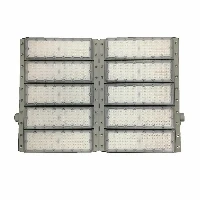
We make an effort to match up the old sports lights to equivalent or, if necessary, brighter lighting for existing lights. The fixture that has been installed the most frequently over the past 40 years is the 1500 watt Metal Halide sports light. A 500-watt LED stadium light is available to replace it, complete with all of its beam angles. It uses 1000 watts less and shines a little brighter. This is a simple one. We also have connections to other ones. We can also aid if it turns out that you need additional light rather than keeping the same level.
Newly installed?
Because stadium lighting heights vary depending on the application, different beam angles are available. Due to the requirements of the application, a light installed at a height of 30 to 40 feet might use a beam angle of 30 degrees. The area to be illuminated, the amount of light needed on the ground, and the height of the lights will all influence the selection of the right light and beam angle. Working with a lighting professional to plan out your application is crucial to a successful end since creating an appropriate light plan is key. Photometric analyses are frequently utilised to make sure the final product is flawless. The photo study may be created, frequently at no cost, by a lighting specialist.
Image-Based Design
Photometric analysis measures how our eyes interpret light. This gauges illumination changes brought on by movement or other causes in addition to brightness.
A pre-measured test run is a frequent technique for this. The proper instruments will feature strong adjustable mechanisms that will allow you to keep an eye on the lights during the test and adjust them as necessary.
Locations for LED Stadium Lighting
The many types and sections of stadium lighting can fluctuate dramatically due to the large variety of sporting activities and venues. Although there are virtually endless combinations, the major sports help to highlight the most common ones. Let's discuss what you could require for the major stadium performances.
1. Fields for outdoor football
Since outdoor football stadiums are the majority, lights are essential to ensuring that games don't have to end before dusk. A football stadium's lighting design must showcase the pitch from the spectators' point of view. Knowing the angle of the light you are employing is important since many stadium edges are angled. Outdoor stadiums must make sure that their lights are waterproof in addition to the angle. To prevent overheating, they also require a sufficient ventilation system. Make sure your glare rating is minimal because excessive glare from each bulb might be oppressive with such a broad coverage.
2. The Pickleball courts or extremely small tennis courts
Courts are much more contained, both in terms of the size of the field and in how frequently they are walled in to stop stray balls in a crowded area. Tennis courts are prominently located in many buildings since they are the focal point of country clubs and gated communities. Both excessive illumination and light pollution must be avoided. It may be preferable to make a concerted effort, direct its light within, and use several tiny lights. Fast becoming as a prominent sport, pickleball also requires appropriate illumination. Since these courts are so small, it's important to have even, natural lighting.
3. The Spacious Baseball and Cricket Fields
Baseball and cricket both frequently take place outside and have an organised diversity of motions. These are their two main similarities. Being outside need a broad variety of waterproof and robust lighting, just like in a football stadium. You'll want an equal distribution of lights for the moves, providing for effective lighting regardless of where the ball and players end up. In terms of focus, these two fields are different. Baseball will place more emphasis on the bases, with huge hits being the only times the outfield will be used. While there is a greater emphasis on where the ball is and where the runners go as they make plays in the game, cricket has a more dynamic movement and longer action.
4. Basketball courts inside
Basketball is a special sport since it is practised inside nearly exclusively by professionals. Due to the lack of available natural light, the lighting dynamic varies. Basketball is a dynamic sport that moves players almost constantly. This implies that your lighting setup must provide a uniform gloss on the floor. You must be careful with your lighting so that you don't cause too much glare during the event due to the shiny surface and closed, inside court.
You do not have as much room to add lights where they are most effective because of the enclosed setting. The majority utilise overhead lighting, which requires more extensive installation. Hockey shares several similarities with basketball in that both sports use reflecting surfaces and indoor settings, which are important considerations.
5. Quiet golf facilities
The dynamics on golf courses are special. Although most people play golf during the day, lighting a golf course is a good idea due to the novelty of playing at night as well as the more pleasant and cooler conditions. The largest game environments are golf courses, which are spread out across several, lengthy lengths of hills and hazards. The advantage of the size is that there are less lighting restrictions due to the laid-back nature of golf and the lack of spectators. You may still get the desired lighting impact for your golf course experience after daylight hours by lighting every few stretches and dispersing the lights to generate darker overall illumination.
6. Bright Light Anywhere You Want It
These 500 watts can be used anywhere, or the 1200 watts from 70 to 200 feet, with a sweet spot of 30 to 50 feet. Simply add Light.