Why Switch to LEDs for Stadium Lighting?
In stadiums, arenas, and other large venues, lighting is crucial. It's crucial for the performers who are in front of the audience as well as the spectators in the stands. A strong performance from the athletes on the pitch or the musicians on stage depends on proper illumination. Bright LED stadium lights will make any event, whether it be a sporting, musical, rodeo, or racing one, more pleasurable for all those attending.
Why are LED lights superior to other types of conventional lighting?
Due to the chemicals used in these lights, traditional light sources including incandescent, fluorescent, and HID lights contribute to global warming and pollution. These lamps contain toxic materials including mercury and lead. UV radiation is also produced by them. All of these hazards could be dangerous for players, spectators, and anyone else in the stadiums. These dangers are not present with LED stadium lighting. These are significantly more effective at producing light from the power supplied, using 90+% of the power supplied as light output, do not contain these hazardous materials, do not emit UV rays, and do not.
Efficiency in Energy Pays for Itself
There is a significant difference in the quantity of electricity utilised per fixture thanks to LED lights' far higher efficiency compared to earlier lighting technologies. A 1500-watt metal halide stadium light may be replaced with a 500-watt LED stadium light, saving 1,000 watts total, plus the energy used by the original ballast. You now have a light that uses around one-third of the prior metal halide light's power. The power savings are enormous when you consider that stadium lighting often comprises of several lamps on numerous poles. Around 40,000 watts of power could be saved by replacing all 40 fixtures.
New lighting installation may be quite expensive, especially if it involves covering a full stadium or more. You need a lot of benefits that pay for themselves in order to recover those expenditures. An obvious advantage of LEDs that could eventually pay for itself is their energy efficiency.
When compared to other types of bulbs used in large floodlights, LEDs consume a tiny fraction of the energy. You will make significant financial savings on each energy bill. The more time you have the longer-lasting bulbs fitted, the more money you will save. Your lighting bill will cease bleeding money the sooner you make the transition to LED.
Low Maintenance and Long Life
Compared to any of the other lighting technologies, LED lighting fixtures have substantially longer lifespans. Some have a rating of over 100,000 hours. This spans more than 45 years at 6 hours per night, 7 nights a week. A metal halide bulb would probably need to be changed eight or more times throughout that time. If you're lucky, they could survive 10 years, in which case you would still need to change the ballast four times. This depends on the type of ballast used. The expense of replacing bulbs and ballasts just drives up the overall cost of these outdated technology.
Speaking of having a favourable financial impact, compared to other traditional lights, LED stadium lights are far more durable and require considerably less upkeep.
No system is perfect, especially in the field where tens of thousands of factors might make a difference. In contrast to earlier lights, LEDs don't require complicated maintenance or regular replacement. Surge control systems should still be monitored since they require maintenance and replacement every 5 to 10 years. To remain ahead of issues, it is more than enough to keep those going.
Dimmable
Simple 0-10v dimmable solutions for stadium lighting are provided by LED Stadium Lights. Even inside the same location, various events could call for varied illumination. Some events even require different lighting as the day turns into night, changing from dusk to full darkness. The ability to instantly change the illumination is achievable with lights that have dimming capabilities. This not only enables diverse outcomes to be achieved with the same light but also has the potential to save energy costs since it consumes less power when the lights are lowered.
Built-in Power Supply
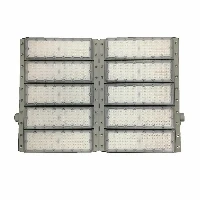
These lights are energy and money-efficient since there is no external ballast to enhance energy consumption. In comparison to a HID stadium light, this helps keep LED stadium light fixtures small and light-weight. A 1500-watt metal halide stadium light, for instance, would probably weigh between 55 and 60 pounds, but the 500-watt LED Stadium Pro Light is only 35 pounds, or around 40% less.
Lighting Pollution Reduction
Many other stadium types are located in residential neighbourhoods, while larger, commercial stadiums are located deep in the downtown areas of major cities. Because of this, light pollution is a serious issue in areas where residents want to obtain a decent night's sleep. Light pollution is drastically reduced by using LEDs. Due to the LEDs' fine focus, there is much less spillover into the surroundings and the night sky, providing coverage where it is needed.
LEDs will prevent late-night games from beaming into surrounding homes' windows, disturbing the neighbours, and turning a friendly neighbourhood against you. It's excellent to give back to smaller communities who use sports stadiums as a great core point of pride by keeping their own needs in mind.
Additional Stadium Lighting Ideas
This technology has the potential to completely change how you manage stadium lighting. Look over the critical elements listed below.
Electronic Control
People frequently ignore the ability of LEDs to more effectively integrate into digital systems, which is a powerful factor. With DMB boards, DALI, and zigbee wireless, 0-10v can be used. Given that power switches function whether they are analogue or digital, digital control may appear to be a minor advantage. When you can operate your lights remotely using a smartphone app, digital control might, however, prove to be a huge advantage. Insane degrees of control over lighting adjustments are also possible with digital control. You may achieve the precise brightness you like and adjust to changing weather and other factors by slightly dimming the lights. If you want to get fancy, you may also regulate which components of the lighting system are on, allowing you to selectively illuminate the areas that are required for tasks like maintenance or practise.
RGB
Stadium fittings may include red, green, and blue lights. Although expensive, they can significantly enhance shows and the overall fan experience. contact us for prices on them.
What is the Future of LED Stadium Lighting?
The future of stadium lighting is LED illumination. Many of the major sports leagues have already started replacing the outdated HID lighting systems in stadiums with LED ones. In 2016, stadiums like Petco Park in San Diego had all of their stadium lighting converted to LED, and other grounds throughout the nation have begun doing the same. As LED lights take over the industry, the stadium lighting market is anticipated to expand by over 40% by 2023. Smaller scale LED projects are being influenced by large scale LED conversions. Colleges, schools, parks, and other locations are now utilising LED Stadium Lights due to its high quality, extended lifespan, and cost effectiveness.