Do Rechargeable Bulbs Have a Shorter Lifespan Than Plug-in Bulbs?
The debate over whether rechargeable bulbs have a shorter lifespan than plug-in ones is more nuanced than a simple yes-or-no answer. It hinges on understanding how each type functions and the factors that influence their durability.
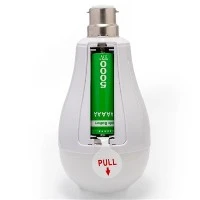
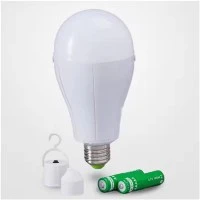
Rechargeable bulbs integrate a light source-typically LED-with a built-in battery, often lithium-ion. Their operation relies on stored energy, which means their lifespan is a composite of two elements: the LED's longevity and the battery's cycle life. LEDs themselves boast impressive lifespans, often rated for 25,000 to 50,000 hours. However, the battery is the Achilles' heel here. Most lithium-ion batteries degrade after 300 to 500 full charge cycles; frequent partial charges can extend this to around 1,000 cycles, but capacity loss is inevitable over time. This degradation manifests as reduced runtime, forcing replacement before the LED itself fails.
Plug-in bulbs, by contrast, draw power directly from the electrical grid. Without a battery, their lifespan depends primarily on the durability of their light source and voltage stability. LED plug-in bulbs share the same 25,000 to 50,000-hour rating as their rechargeable counterparts. Incandescent or CFL plug-in bulbs have shorter lifespans (1,000–10,000 hours), but this is due to their technology, not their power source. The grid's consistent power supply, when stable, minimizes stress on components, allowing the light source to reach its full potential lifespan.
Environmental factors further complicate the comparison. Rechargeable bulbs are often used in portable or emergency scenarios, exposed to temperature fluctuations, physical jostling, or improper charging-all of which accelerate battery degradation. A bulb left in a hot car or overcharged overnight may see its battery life cut in half. Plug-in bulbs, stationary and sheltered in fixtures, face fewer such stresses, though voltage spikes from poor wiring can damage their circuits.
Usage patterns also play a role. A rechargeable bulb used daily for 2 hours and recharged nightly will exhaust its battery cycles in 1–2 years. A plug-in bulb used identically, with stable power, could last 5–10 years. Yet, if the rechargeable bulb is used sparingly-say, as a backup during power outages-its battery might outlast the plug-in bulb in a high-usage area.
Technological advancements are blurring the gap. Modern rechargeable bulbs use batteries with improved chemistry, such as lithium iron phosphate, which offer 2,000+ cycles. Smart charging circuits prevent overcharging, while heat-resistant designs protect batteries. Meanwhile, cheap plug-in bulbs with shoddy components may fail prematurely, even without a battery.
In essence, rechargeable bulbs do not inherently have shorter lifespans. Their perceived fragility stems from battery limitations, which are context-dependent. For frequent, stationary use, plug-in bulbs remain more reliable. But for portability or emergencies, a well-maintained rechargeable bulb can offer comparable longevity-proving that the right choice depends on how, not just what, you light.