Introduction: Why Lifespan and Light Decay Matter for Emergency LED Bulbs
Unique Application Requirements of Emergency Lighting Bulbs
Ordinary household LED bulbs only need to meet daily fixed lighting needs, with relatively single working conditions and stable power supply environments. In contrast, rechargeable emergency LED bulbs bear dual functional responsibilities: long‑term daily mains lighting and intermittent emergency battery lighting during power outages. This dual‑mode working state puts forward higher requirements for product comprehensive durability. The bulb needs to adapt to frequent power switching, battery charge‑discharge cycles, and multi‑scene mobile use, which makes its lifespan evaluation more complex than ordinary LED bulbs. Inferior emergency bulbs often face problems such as rapid brightness attenuation, dim emergency light output after short‑term use, battery aging failure, and even circuit burnout, which completely lose emergency backup functions and bring hidden dangers to household power failure response, outdoor camping lighting, and temporary commercial lighting.
Consumer Pain Points of Inferior Long‑Life Lighting Products
In the consumer lighting market, most low‑priced emergency LED bulbs adopt low‑grade LED chips, simple heat dissipation structures, and unoptimized circuit protection designs. These products usually show obvious light decay after 5,000 to 10,000 hours of use, with brightness dropping by more than 40%. After 1 to 2 years of daily use, the emergency lighting function fails completely, and the bulbs need frequent replacement. Frequent product replacement not only increases the comprehensive use cost of households and merchants but also causes unnecessary resource waste. In addition, severe light decay will lead to uneven light emission, stroboscopic phenomena, and glare problems, which easily cause visual fatigue and affect eye health. Therefore, selecting high‑quality emergency LED bulbs with ultra‑long lifespan and ultra‑low light decay is the core way to solve long‑term lighting pain points.
Core Evaluation Standards for LED Bulb Lifespan
The industry has a unified professional definition for LED bulb service life, which is not based on whether the bulb is completely burned out and extinguished, but on the standard of lumen maintenance rate. According to IES (Illuminating Engineering Society) LM‑80 and TM‑21 international testing specifications, LED lifespan is divided into three core evaluation grades: L90, L80, and L70, representing the service time when the luminous flux decays to 90%, 80%, and 70% of the initial brightness respectively. Among them, L70 is the industry's recognized effective service life standard for household and commercial LED lighting products. When the LED bulb's luminous flux drops below 70% of the initial value, the human eye can obviously perceive the dimming phenomenon, and the lighting efficiency can no longer meet daily and emergency lighting needs. High‑quality commercial‑grade LED bulbs must pass standardized LM‑80 long‑term light decay testing and TM‑21 data prediction to ensure stable long‑term luminous performance.

Professional Definition: LED Lifespan and Light Decay Mechanism
Difference Between Nominal Lifespan and Actual Effective Lifespan
Many inferior lighting products on the market falsely mark ultra‑long lifespan, confusing nominal lifespan with actual effective lifespan. Nominal lifespan refers to the theoretical maximum service time of LED chips under laboratory constant temperature, constant voltage, and ideal heat dissipation conditions, while actual effective lifespan refers to the sustainable lighting time of the whole bulb in real complex application scenarios. In actual use, factors such as temperature fluctuation, voltage instability, frequent switching, battery charge and discharge loss, and dust accumulation will accelerate light decay and shorten the effective service life. Our high‑quality rechargeable emergency LED bulb strictly distinguishes theoretical parameters and actual application data. The product's official rated 30,000‑hour lifespan is the L70 standard effective lifespan verified by real scene testing, which is completely consistent with user actual use effect, eliminating the false standard problem of inferior products.
Three Core Causes of LED Light Decay
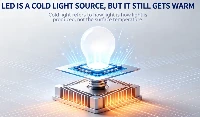
LED lumen attenuation is an irreversible physical aging process, and all light decay problems in emergency bulbs are derived from three core structural and working factors. First, chip aging attenuation: low‑grade LED chips have uneven crystal structure, and long‑term current impact will cause internal quantum efficiency decline, resulting in reduced luminous efficiency. Second, thermal aging attenuation: heat accumulation is the biggest killer of LED bulbs. Long‑term high‑temperature operation will accelerate the aging of chip phosphor and packaging glue, resulting in light yellowing and brightness reduction. Third, circuit and battery linkage attenuation: emergency bulbs involve battery charge‑discharge cycle work. Unstable current output caused by battery aging will lead to uneven chip current supply, aggravate local light decay, and affect overall luminous stability.
Light Decay Characteristics of Dual‑Mode Emergency Bulbs
Different from ordinary single‑mode LED bulbs, rechargeable emergency bulbs have unique light decay characteristics under dual working modes. In mains power supply mode, the bulb works with stable voltage and continuous heat generation, and the main decay source is chip thermal aging. In battery emergency mode, the bulb works with low‑voltage constant current, and the heat generation is low, but frequent charge and discharge will cause slight loss of circuit components. Most inferior dual‑mode bulbs only optimize single working conditions, resulting in rapid decay in emergency mode or mains mode. Our product adopts targeted anti‑decay optimization for dual working modes, realizing balanced low attenuation in both mains daily lighting and battery emergency lighting, and greatly extending the overall stable service cycle.
Lifespan & Light Decay Performance of Our High‑Quality Emergency LED Bulb
Ultra‑Long L70 Standard Effective Lifespan
Our rechargeable emergency LED bulb adopts high‑purity high‑efficiency LED light chips that pass LM‑80 standardized testing, with a professional L70 effective service lifespan of up to 30,000 hours, far exceeding the 25,000‑hour industry standard for high‑grade household LED lamps and the 15,000‑hour standard for ordinary decorative lighting bulbs. Based on the daily use habit of 8 hours of lighting per day, the bulb's stable service life can reach more than 10 years. In terms of key light decay data, the product maintains more than 80% of initial luminous flux after 20,000 hours of continuous use (L80 standard compliance), and the lumen attenuation rate is less than 30% after 25,000 hours of use, still meeting daily and emergency lighting standards. Even after reaching the 30,000‑hour L70 critical value, the bulb will not be completely extinguished, but maintain 70% of stable brightness, which is still usable for low‑intensity lighting scenarios, realizing ultra‑low long‑term use loss.
Industry‑Leading Low Light Decay Technical Advantages
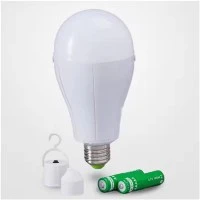
To solve the core pain point of rapid light decay of emergency bulbs, our product adopts four major anti‑decay core technologies to achieve full‑cycle stable luminous performance. First, optimized chip packaging technology: the LED chip is packaged with high‑temperature resistant and anti‑aging silica gel, which effectively isolates air oxidation and prevents phosphor aging and fading, ensuring long‑term pure and stable light color. Second, efficient heat dissipation structure design: the bulb body adopts hollow heat dissipation and high‑thermal‑conductivity engineering plastic shell structure, which can quickly export the heat generated by chip operation, reduce the internal working temperature by 15%‑20%, and fundamentally suppress thermal light decay. Third, constant‑current and constant‑voltage circuit protection: built‑in intelligent IC drive chip, automatically adjust current and voltage according to mains power and battery power supply modes, avoid chip damage and light decay caused by current surge and voltage fluctuation. Fourth, balanced battery charge‑discharge management: the replaceable AAA rechargeable battery module is matched with intelligent power management system, avoid overcharge, overdischarge and frequent high‑load work, reduce circuit linkage attenuation.
Long‑Term Performance Stability Data Comparison
Through professional comparative testing with ordinary emergency LED bulbs on the market, our products show absolute advantages in lifespan and light decay control. After 10,000 hours of continuous testing, ordinary emergency bulbs have an average lumen decay rate of 35%, with obvious light dimming, light color deviation and local stroboscopic phenomena, and the emergency battery lighting brightness drops sharply. In contrast, our product has a decay rate of only 12% after 10,000 hours of use, with uniform light emission and no stroboscopic glare. After 20,000 hours of testing, ordinary products basically fail to meet emergency lighting standards, while our product still retains 82% of initial brightness. This stable low‑decay performance ensures that the bulb can maintain consistent high‑quality lighting effect throughout the long service cycle, without frequent replacement and maintenance.
Auxiliary Performance That Extends Bulb Service Life and Reduces Loss
IP40 Dustproof Protection Reduces External Loss Interference
Most LED bulb light decay and service life attenuation are not only caused by internal component aging, but also by external environmental interference such as dust accumulation and moisture erosion. Our high‑quality emergency LED bulb adopts an integrated sealing structure and high‑precision assembly process, reaching professional IP40 dustproof protection grade. This protection level can effectively block solid dust particles from entering the bulb internal circuit and chip area, avoid short‑circuit hidden dangers and heat dissipation blockage caused by dust accumulation. In outdoor stalls, construction sites, warehouse storage and other dusty environments, ordinary unprotected bulbs are prone to internal dust accumulation after 3‑6 months of use, resulting in accelerated local overheating and light decay. Our IP40 dustproof design keeps the internal working environment clean for a long time, ensures stable heat dissipation and circuit operation, and indirectly extends the effective service life by more than 30%.
Replaceable Battery Design Reduces Overall Product Loss
Traditional integrated emergency LED bulbs abandon the whole lamp once the built‑in battery ages and fails, resulting in serious waste of lamp body, chip and circuit components, and increasing comprehensive use cost. Our product adopts a detachable and replaceable AAA rechargeable battery module with an independent pull‑out battery compartment structure, which can complete battery replacement in seconds without professional tools. The service life of LED chips and circuit structures is far longer than that of rechargeable batteries. When the battery aging causes insufficient emergency power supply capacity, users only need to replace the low‑cost battery instead of the whole bulb. This design makes the core lighting components of the bulb exert 100% lifespan value, avoids premature scrapping of high‑quality lamp bodies due to battery loss, and greatly reduces long‑term use and replacement costs.
Anti‑Aging Shell and High‑Transmittance Lampshade Durability
The bulb shell and lampshade are key structural components that affect long‑term lighting performance. Inferior bulbs easily suffer from shell yellowing, aging and brittleness after long‑term light exposure and temperature change, and the lampshade becomes blurred, resulting in reduced light transmittance and visual dimming. Our product adopts high‑grade anti‑aging engineering plastic shell with excellent anti‑oxidation and anti‑yellowing performance, which can maintain structural integrity and appearance stability after long‑term use. The high‑transmittance frosted lampshade has uniform light diffusion performance, no aging blur problem, and always maintains high light transmittance. While ensuring eye‑friendly soft light, it avoids luminous efficiency loss caused by structural component aging, and further guarantees long‑term stable lighting effect.
Practical Value and Purchasing Advantages of Long‑Life Low‑Decay Emergency Bulbs
Ultra‑High Long‑Term Cost‑Effectiveness
From the perspective of long‑term use economy, high‑quality long‑life low‑decay emergency LED bulbs have absolute purchasing advantages. Although the one‑time purchase cost is slightly higher than that of inferior products, the 10‑year ultra‑long stable service life and replaceable battery design completely avoid frequent replacement costs. A single high‑quality bulb can save 8‑10 times of product replacement costs compared with low‑priced inferior products within 10 years. At the same time, low light decay ensures no repeated energy consumption loss caused by reduced luminous efficiency, maintaining low‑power and high‑brightness energy‑saving effect for a long time, reducing household and commercial electricity costs, and realizing real low‑cost and high‑return lighting investment.
Stable Emergency Lighting Reliability
The core value of emergency bulbs lies in providing reliable lighting guarantee during sudden power outages. Inferior products with severe light decay will have dim emergency light output after short‑term use, unable to meet lighting needs for household power failure escape, outdoor camping night lighting, and stall temporary operation. Our product's ultra‑low light decay performance ensures that even after years of use, the emergency battery mode can still maintain stable and sufficient brightness output, with no attenuation of emergency lighting response speed and duration. Whether it is daily household standby or long‑term outdoor scenario application, it can provide consistent and reliable emergency lighting protection, eliminating the hidden danger of emergency function failure caused by product aging.
Multi‑Scene Adaptive Durable Lighting
Combined with IP40 dustproof protection, anti‑aging structure and dual‑mode stable working performance, this long‑life low‑decay emergency bulb is suitable for all complex application scenarios. For household use, it can be used as long‑term fixed indoor lighting, maintaining stable eye‑friendly light for many years; for outdoor camping, field operations and temporary stalls, it can resist environmental dust and temperature changes, and maintain stable performance in mobile frequent use scenarios; for rental houses, warehouses and workshops, it can reduce maintenance and replacement frequency, saving management costs. The excellent lifespan and light decay control performance make the product have far stronger scene adaptability and service durability than ordinary emergency bulbs.
Conclusion
The service lifespan and light decay performance of rechargeable emergency LED bulbs are the essential indicators that determine product quality, use value and long‑term reliability, and are also the core differences between high‑quality professional products and inferior low‑end products. Different from the false lifespan publicity of most products on the market, our emergency LED bulb takes IES international LM‑80 and TM‑21 testing standards as the basis, with a real L70 effective lifespan of 30,000 hours and industry‑leading ultra‑low light decay performance. Through optimized chip technology, efficient heat dissipation structure, intelligent circuit protection, IP40 dustproof design and replaceable battery structure, the product fundamentally solves the pain points of rapid aging, severe attenuation and short service life of traditional emergency bulbs. In terms of practical application, it has ultra‑high long‑term cost‑effectiveness, stable emergency lighting capability and multi‑scene durable adaptability. For users who pursue high‑quality, durable and low‑loss emergency lighting solutions, this high‑quality rechargeable emergency LED bulb is the most cost‑effective and reliable professional choice, realizing long‑term worry‑free lighting with one purchase.

How To Cooperate With Us?
Since we have our own facilities, we are pleased to have complete control over the production process and the quality of our goods. We are committed to giving our clients the finest prices since we are manufacturers rather than just brokers. We encourage buyers to see our samples first since we are certain that the cost and calibre of our items are transparent. Our dedication to excellence and client happiness motivates us to consistently provide superior products.
Our address
3rd Floor, 5th Building, Hebei Industrial Park, Hualian Community, Longhua District, Shenzhen, China